When an individual sits down to search for depression treatment alternatives on Google, they are operating with high clinical intent. They aren’t casually looking for lifestyle tips; they are likely in a severe mental health crisis, dealing with the exhausting side effects of failed pharmaceuticals.
As we detail in our performance search framework, The Transactional Blueprint: Why Therapist Google Ads Form the Core of Talk Therapy Marketing, capturing this exact moment of active crisis is critical. For an interventional practice, effective tms marketing means bypassing broad diagnostic terms and ruthlessly restricting keyword bidding to hyper-local, transactional search strings:
- “Treatment-resistant depression clinic near me”
- “Insurance-covered TMS therapy [Your City]”
- “Alternative depression treatments near me”
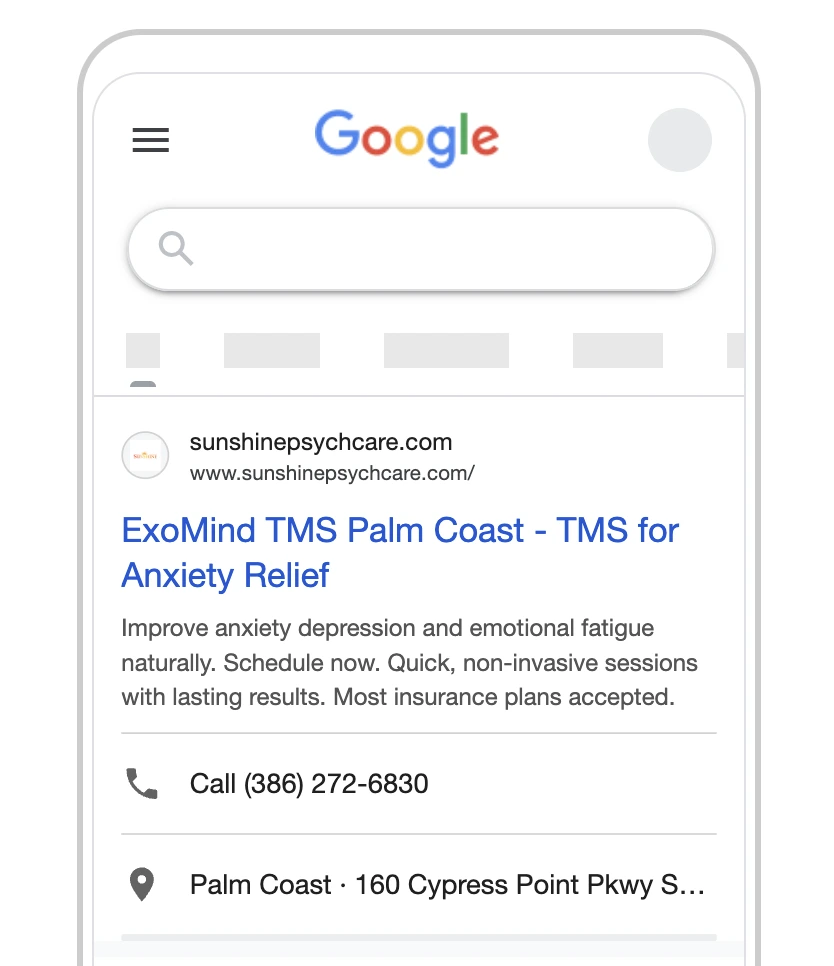
We also leverage specific device manufacturer terms (such as NeuroStar, Brainsway, or Magventure) because patients who have researched the technology online specifically look for localized practices hosting those exact systems. By capturing this pre-educated search traffic, we guide high-probability leads directly into your clinical onboarding pipeline.
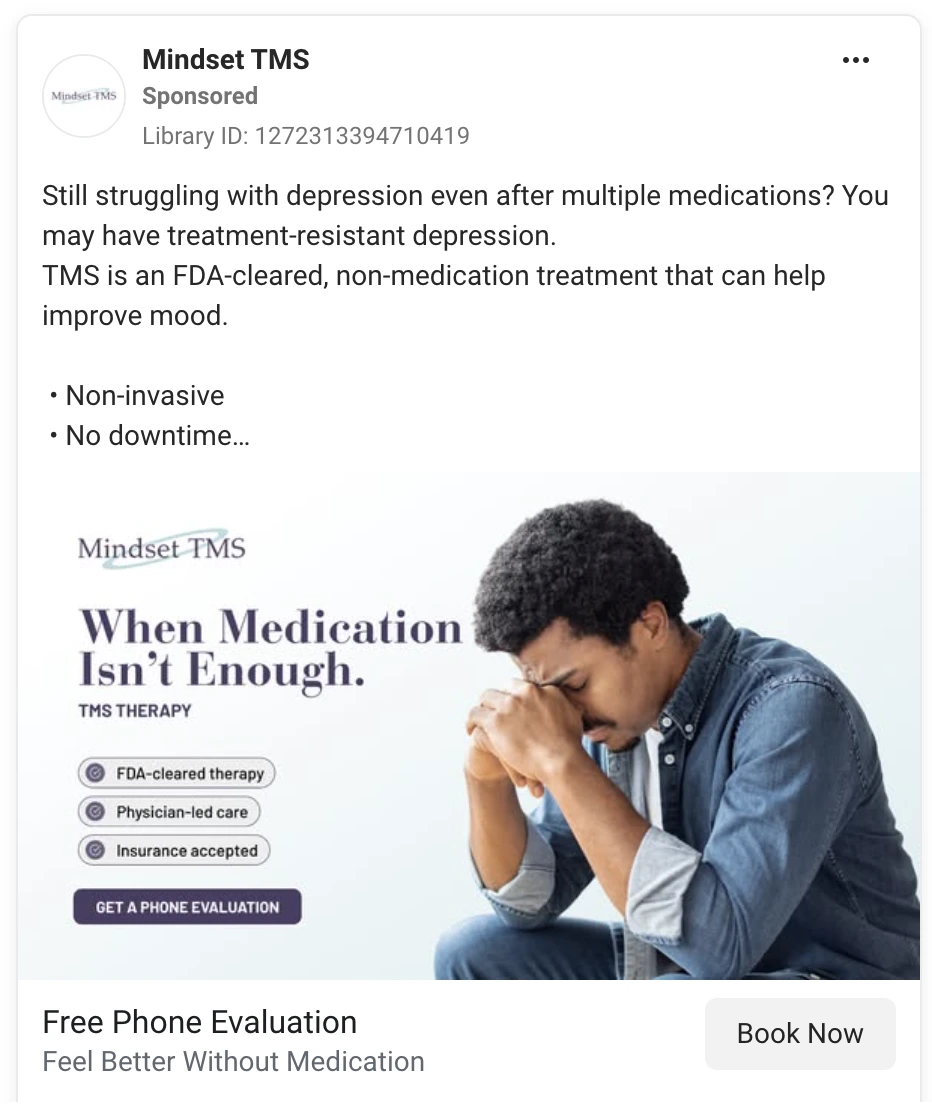
Nobody opens Instagram or Facebook with the active intention of booking an interventional psychiatric procedure. On social media networks, your target audience is casually scrolling through their feeds, often feeling isolated or completely numb due to ineffective oral medications.
Our specialized blueprint for The Retargeting Loop: Why Therapy Meta Ads Only Work as a Second Impression highlights why cold text ads fail on social feeds. For a complex treatment like TMS, tms meta ads require a disruptive, empathy-first framework:
- Ban Sterile Diagrams: We completely ban generic graphics of 3D brains with floating colorful magnets. This look appears clinical, intimidating, and corporate.
- Leverage Video Briefs: Instead, we guide your clinical team through recording soft, face-to-camera video briefs. The messaging focuses heavily on the raw symptoms of treatment-resistant depression, speaking directly to the individual who feels like their current antidepressant has flatlined their personality.
- The Retargeting Safety Net: Beyond top-of-funnel video education, we deploy tight, low-budget social media retargeting sequences. If a local user clicks your high-intent Google search ad but leaves your site without booking due to a distraction, your warm video creative follows them on Meta, gently answering their questions until they are ready to schedule.
To build an organic search presence that yields consistent weekly chair utilization, your search engine optimization must align with the physical realities of behavioral health operations. Standard TMS clinical protocols require patients to visit your brick-and-mortar facility 5 days a week for 4 to 6 weeks.
Because of this intense scheduling friction, convenience is the ultimate determining factor for retention. Patients will rarely drive more than 20 to 30 minutes for a single daily session. This means your true market is bounded strictly by a drive-time radius.
Following our proven layout guide, The Hyper-Local Footprint: Why Your Practice Needs a Dedicated Strategy for Therapy SEO, we build dedicated Location Pages for every single suburb and adjacent township within your 30-minute commuting circle.
To maintain a gorgeous, peaceful website aesthetic, we tuck these regional landing links cleanly into your website’s global footer section. This keeps the main header menu clean for human visitors while providing an open highway for search engine crawling spiders to pass domain authority down to every sub-page. When local residents search for advanced depression care in their specific neighborhood, your practice ranks directly at the top of organic results.
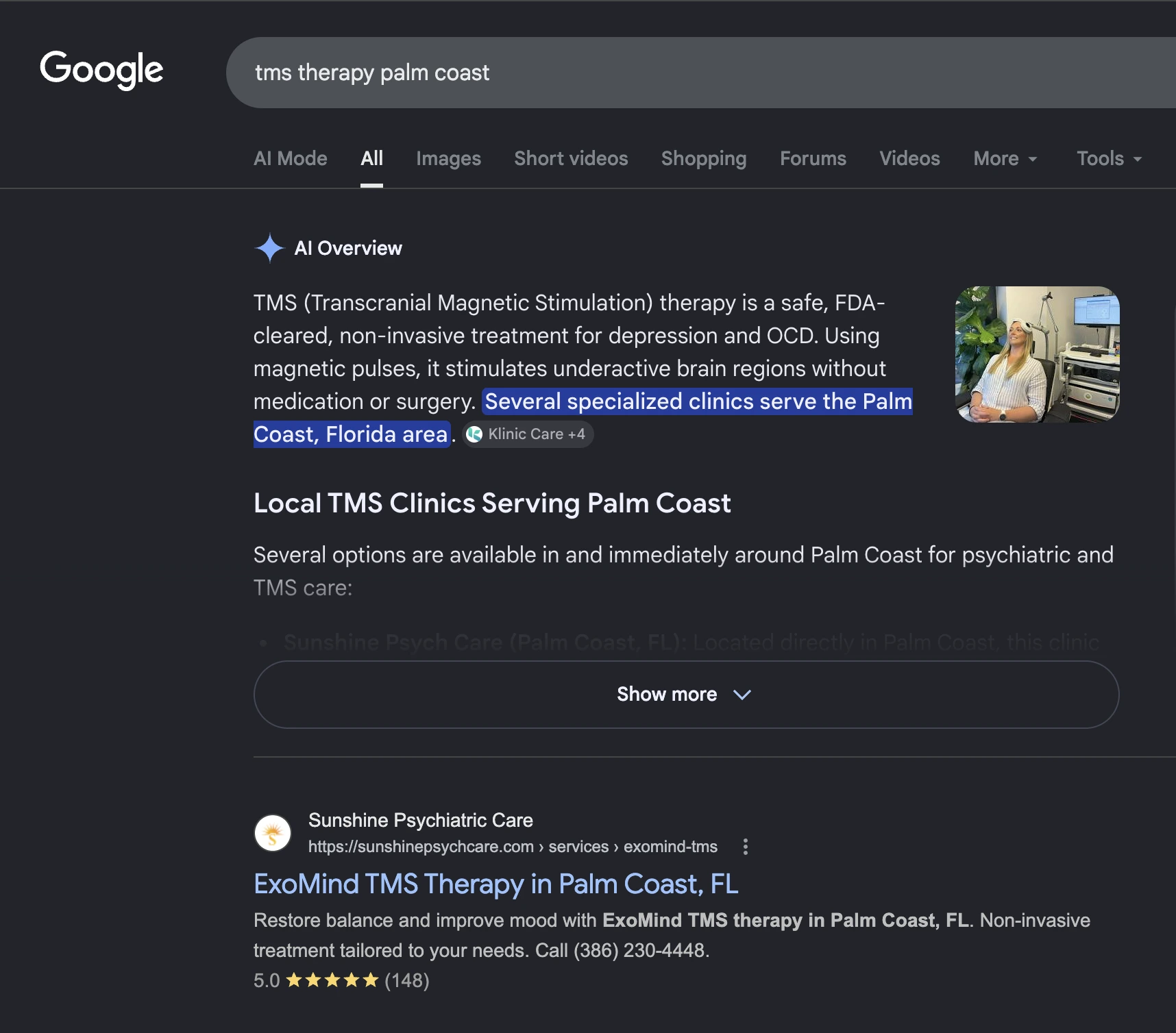
Winning the click via search engine optimization or precision Google Ads is only half the battle. If an emotionally exhausted user lands on a website layout that looks like a cold, industrial medical portal, they will back out immediately out of fear. Because a massive portion of the public still does not know what electromagnetic neural stimulation is, the actual patient conversion happens on the website layout, not the ad creative.
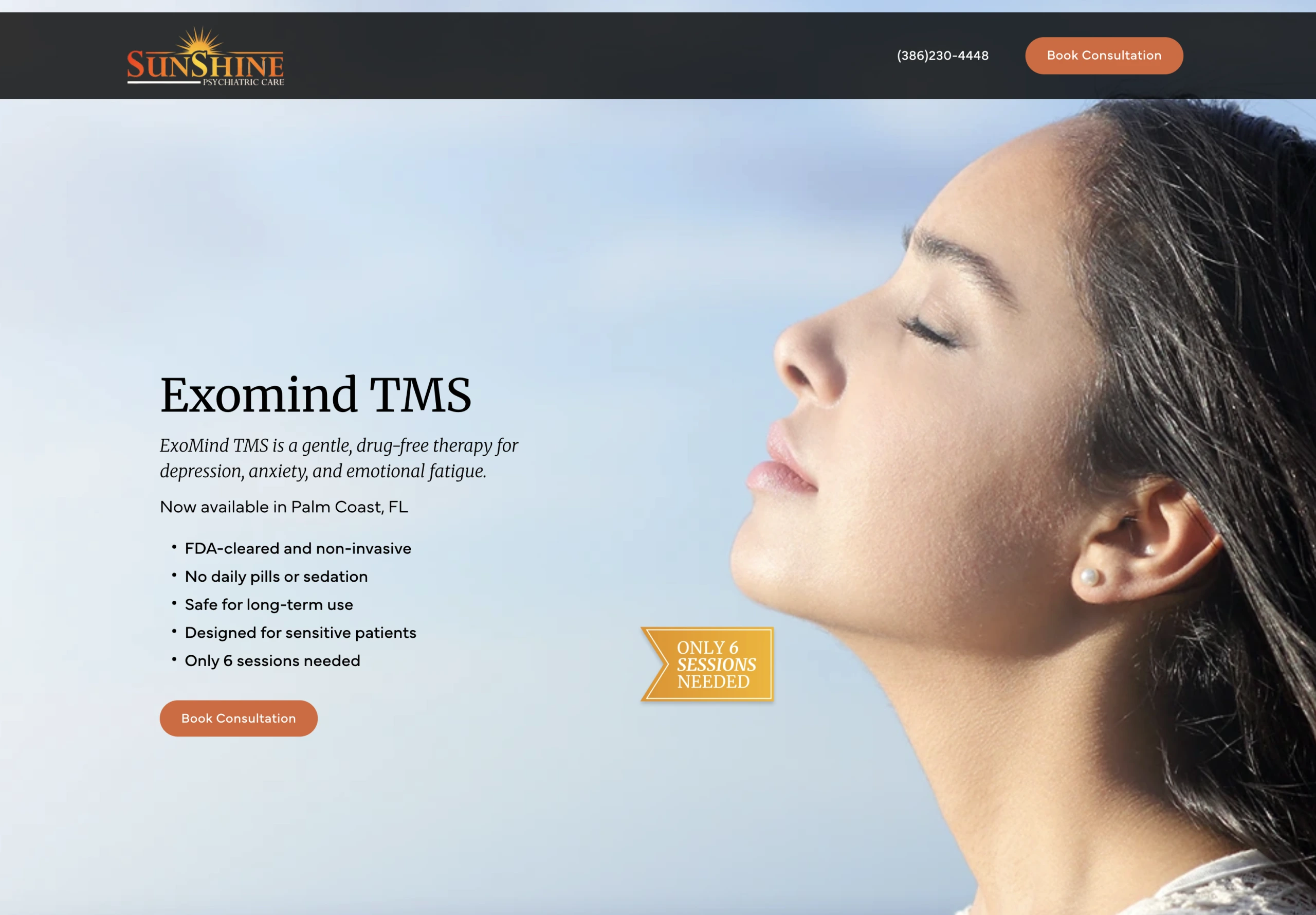
In our conversion manual, The Sanctuary Layout: Engineering a High-Conversion Therapist Website Design, we outline the visual signals that de-escalate patient anxiety. A high-performing tms website design balances warm aesthetics with transparent education:
- The Calm Palette: We throw out high-contrast clinical whites and harsh corporate blues, anchoring your layout in soft, grounded palettes like warm sand tones, muted sages, and soft creams.
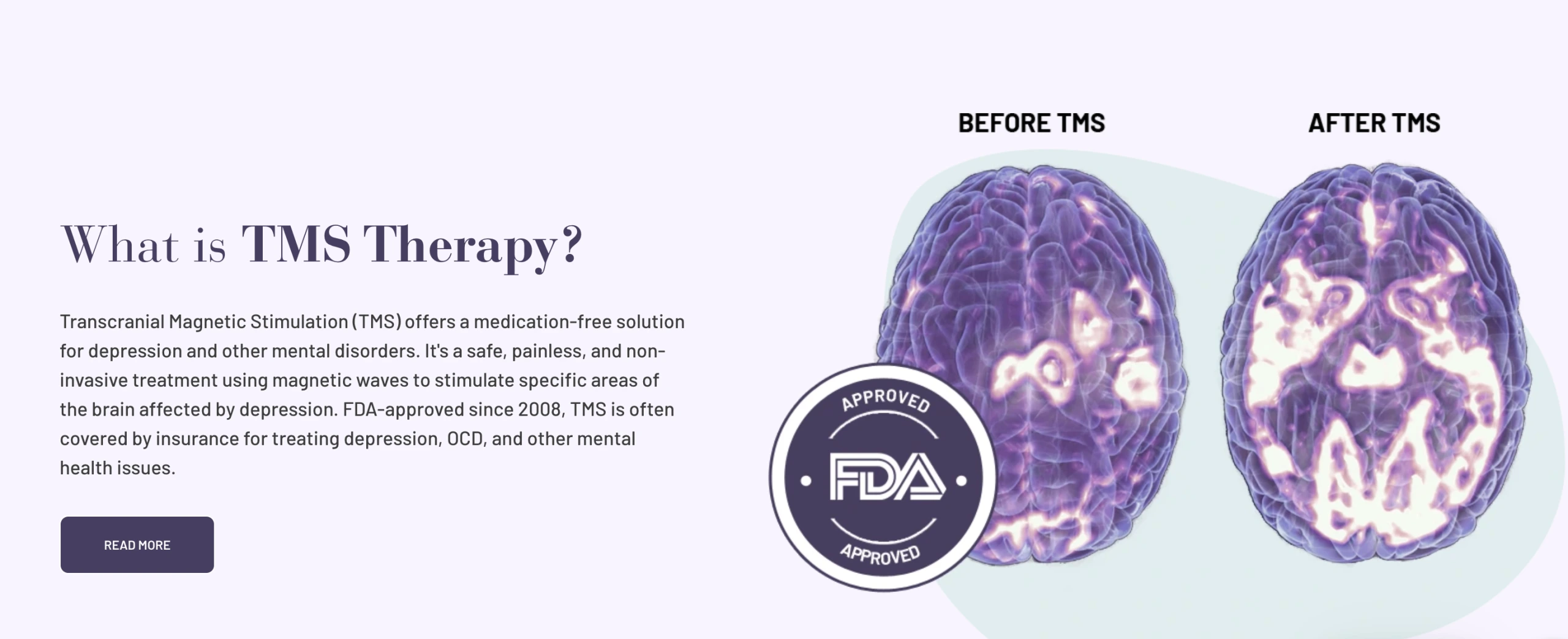
- Demystifying the Chair: We turn your website into an approachable, interactive educational hub that strips away the technical intimidation. We explicitly show what a patient experiences during a session: that they sit in a comfortable lounge chair, they can read or watch television, the process is entirely non-invasive, and there is zero anesthesia or downtime required.

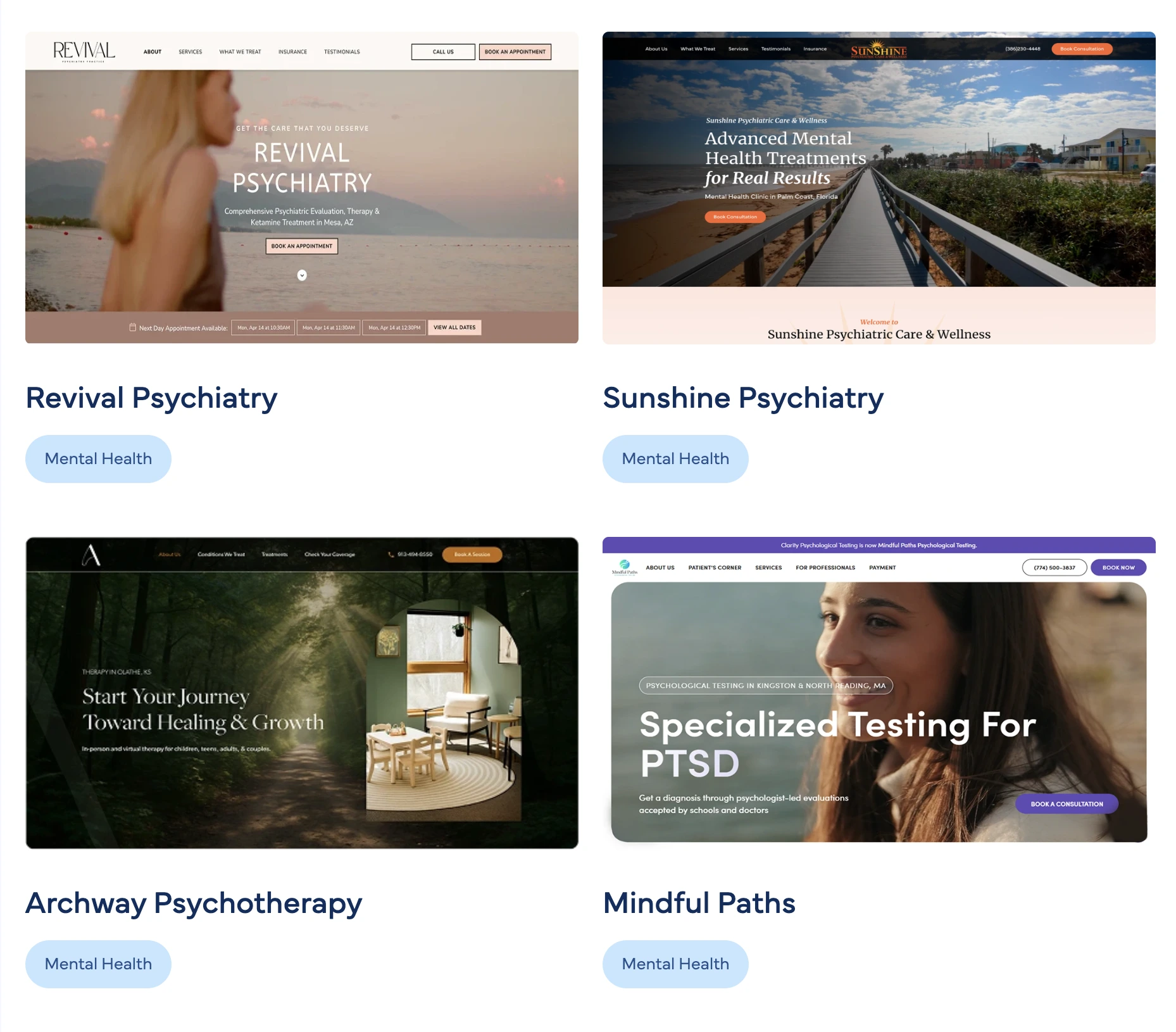
To see exactly how we build these specialized digital sanctuaries to turn traffic into active patients, look at live production examples running for our active clients:
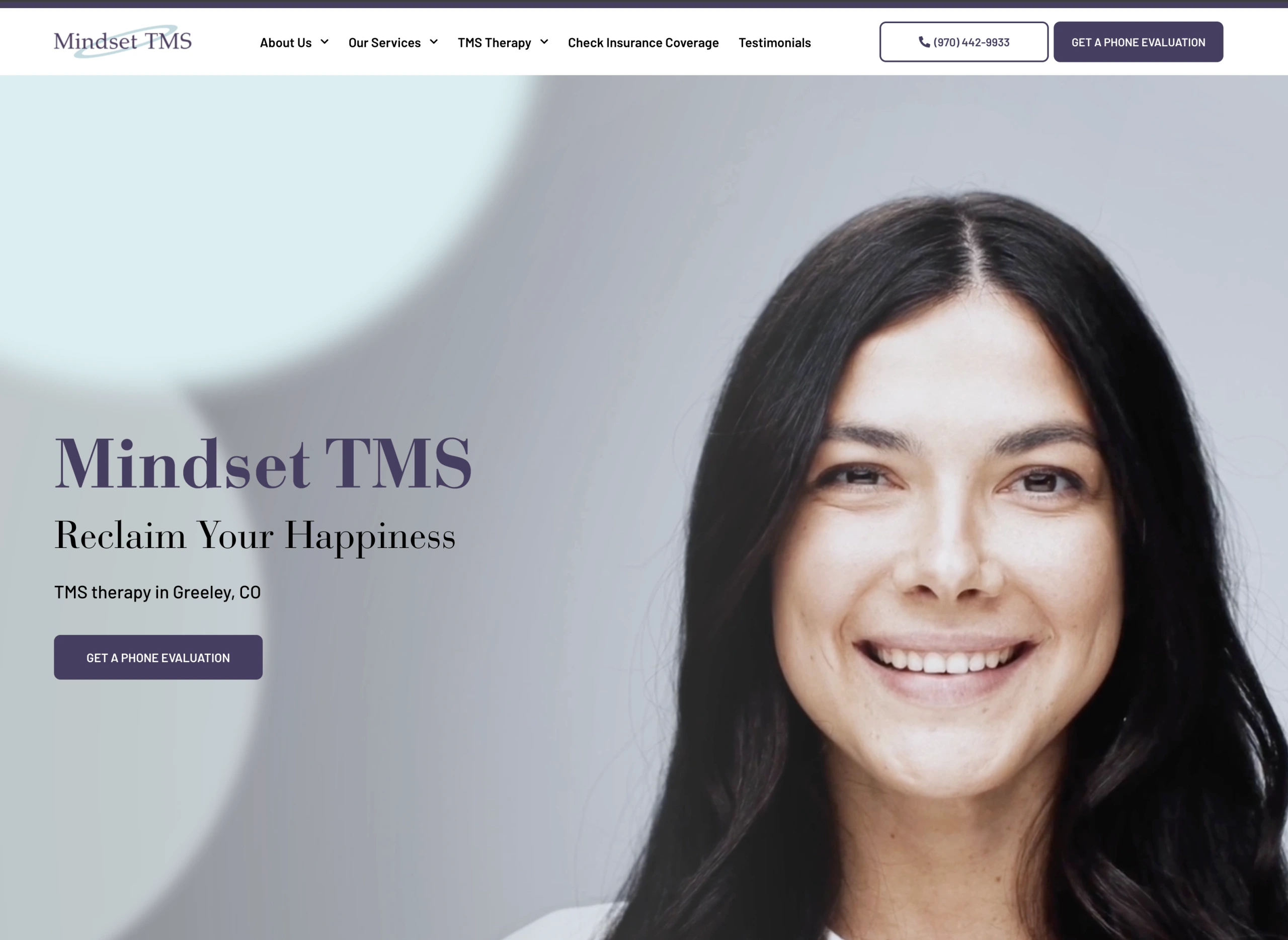
- Mindset TMS: Explore how they blend welcoming, high-trust visual cues with crisp, clear educational messaging at Mindset TMS.
- Brain Health Solutions: Review their distraction-free, clinical-grade conversion architecture at Brain Health Solutions.

Once your marketing ecosystem has successfully built trust, it must handle the cold, hard operational rules of qualifying a patient for care. To secure insurance coverage for TMS, patients must prove a documented history of clinical treatment resistance (usually having tried 2 to 4 different antidepressant medications from separate classes without success).
Interactive Pre-Qualification Screeners: We completely eliminate old-school “Contact Us” text boxes that force patients to type out their trauma or make manual phone calls during a personal crisis. Instead, we place automated, compassionate screening widgets directly on your landing pages. The website gently guides the user through checking their insurance compatibility and tracking their medication history, automatically filtering the lead before it ever touches your front-desk intake specialists.
Eliminating the CRM “Unknown” Gap: Because the qualified audience for an advanced interventional procedure is naturally tighter than general counseling, you cannot afford data blind spots. We implement Dynamic Number Pooling across your entire web architecture. When a local lead calls your office, the website dynamically maps that phone call back to the exact search keyword or social media video they interacted with. You see exactly which marketing channel is filling your physical chairs inside your CRM, eliminating tracking guesswork.
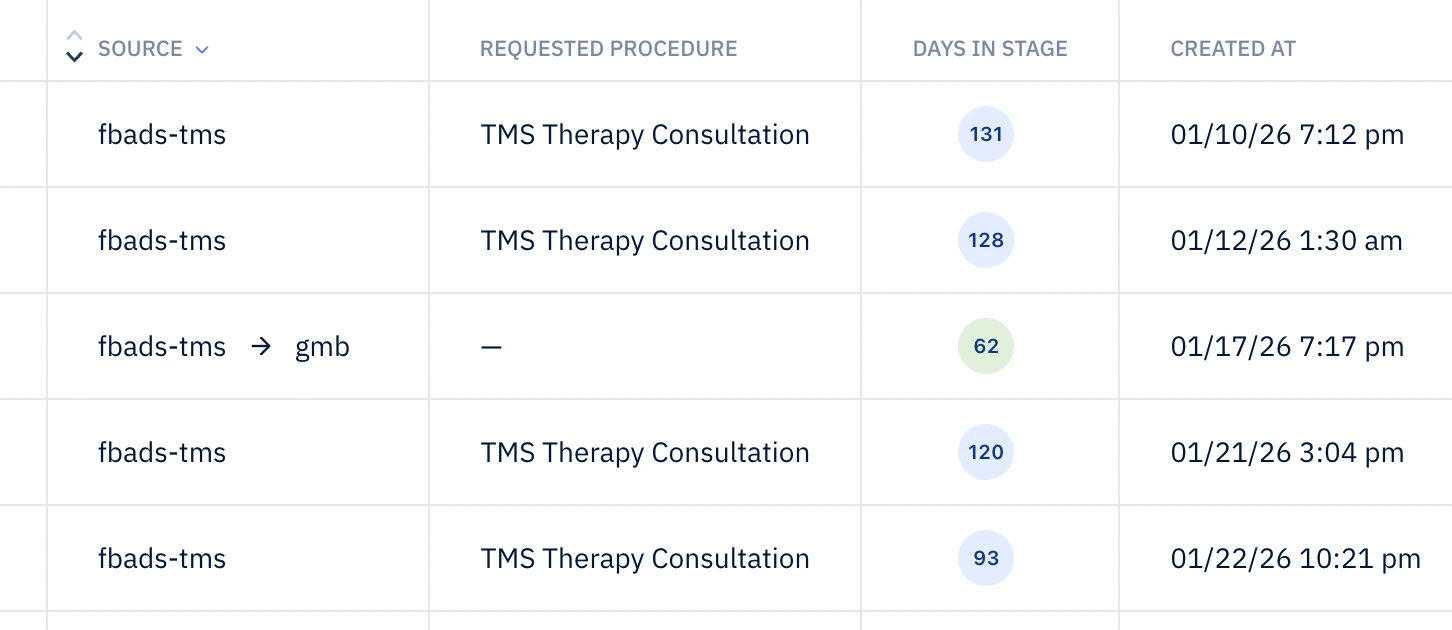
We don’t just build marketing frameworks based on guesswork. We engineer end-to-end local patient pipelines that structurally reduce lead costs, protect your profit margins, and keep your advanced treatment chairs consistently full.
If you want to view the real operational data, local ranking milestones, and growth histories we have generated for independent psychiatric and mental health clinics nationwide, explore our comprehensive project portfolio:
Explore Our Mental Health Marketing Case Studies Portfolio