Updated October 2026 · 8-minute read
In our core framework, TMS Marketing Strategy: How to Overcome Generic Medical Ad Failures and Fill Your Treatment Chairs, we broke down the entire multi-channel ecosystem required to keep your advanced therapeutic systems consistently utilized. We discussed how Meta campaigns excel at pattern-interrupting education and why your total website brand architecture must act as an empathetic, visual sanctuary.
But when it comes to launching a high-performance Google Ads campaign for TMS, your digital strategy must shift from broad mental health discovery to raw, mathematical precision.
There are over a hundred moving parts to a successful healthcare PPC campaign, from technical ad group structures, negative keyword pruning, and asset extensions to target demographic layering. However, the absolute number-one reason most interventional psychiatry campaigns bleed money is that generic agencies target broad, top-of-funnel psychiatric terms.
If your marketing provider is bidding on generic phrases like “depression treatment” or “anxiety help,” you are burning capital on search traffic that will never convert into an active chair. Here is the exact operational framework we use at PilotPractice to engineer high-ROI search campaigns exclusively for interventional mental health providers.
TL;DR
- Broad “depression treatment” terms buy uneducated clicks; bid on “TMS therapy near me”, device names and insurance-covered phrases.
- Traditional TMS needs a strict 20–30-minute radius; accelerated protocols can target a region or state.
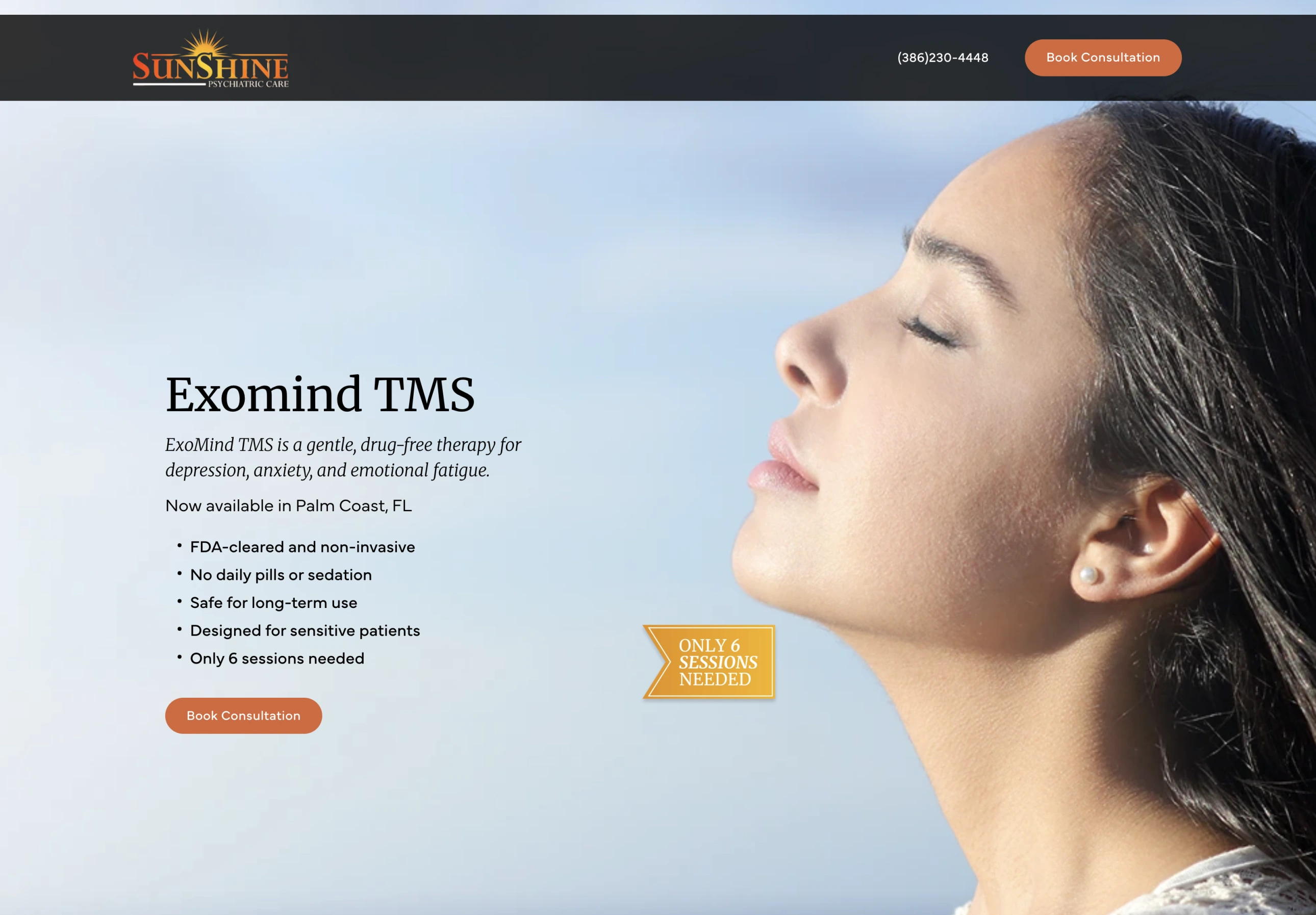
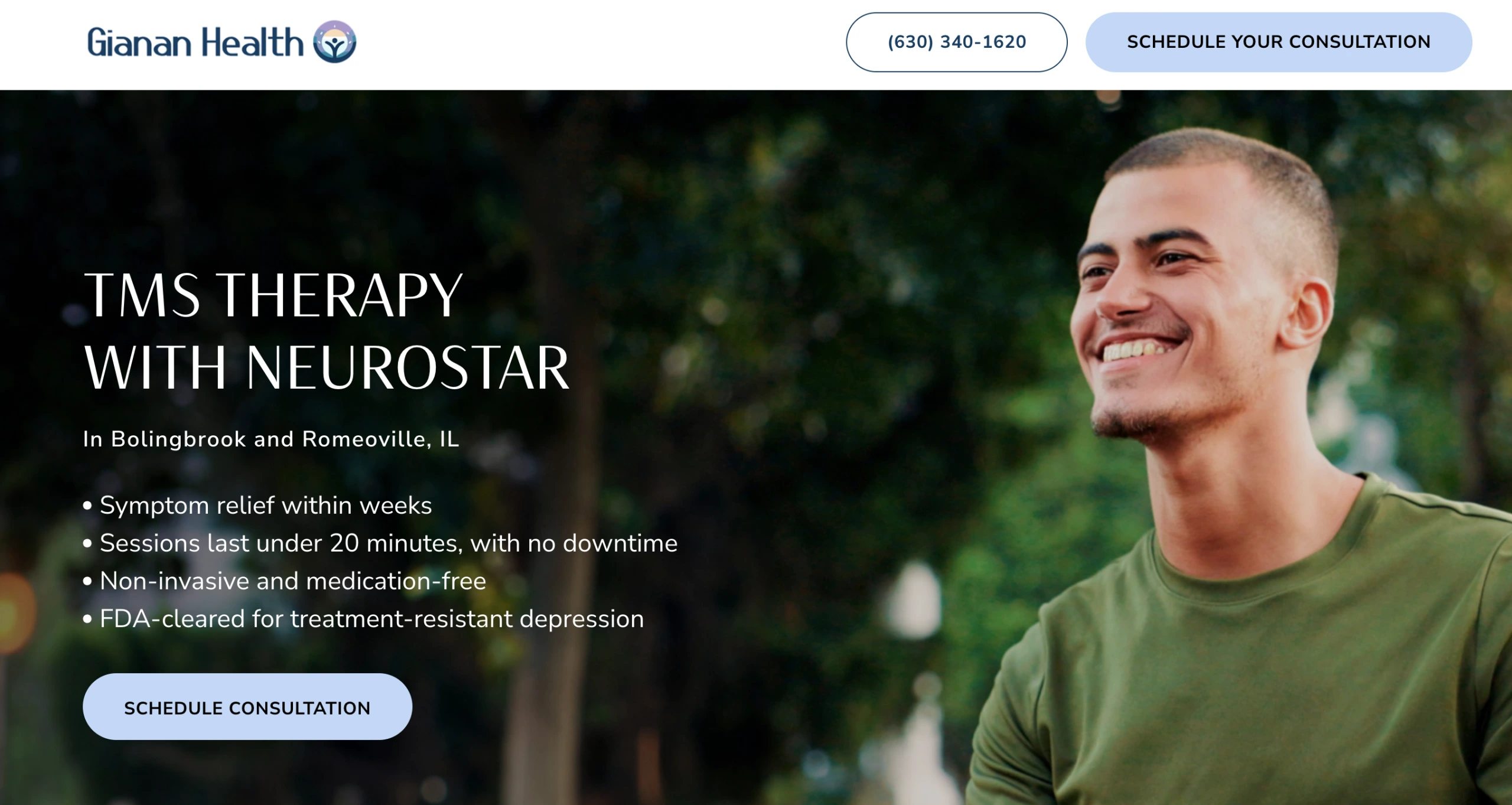
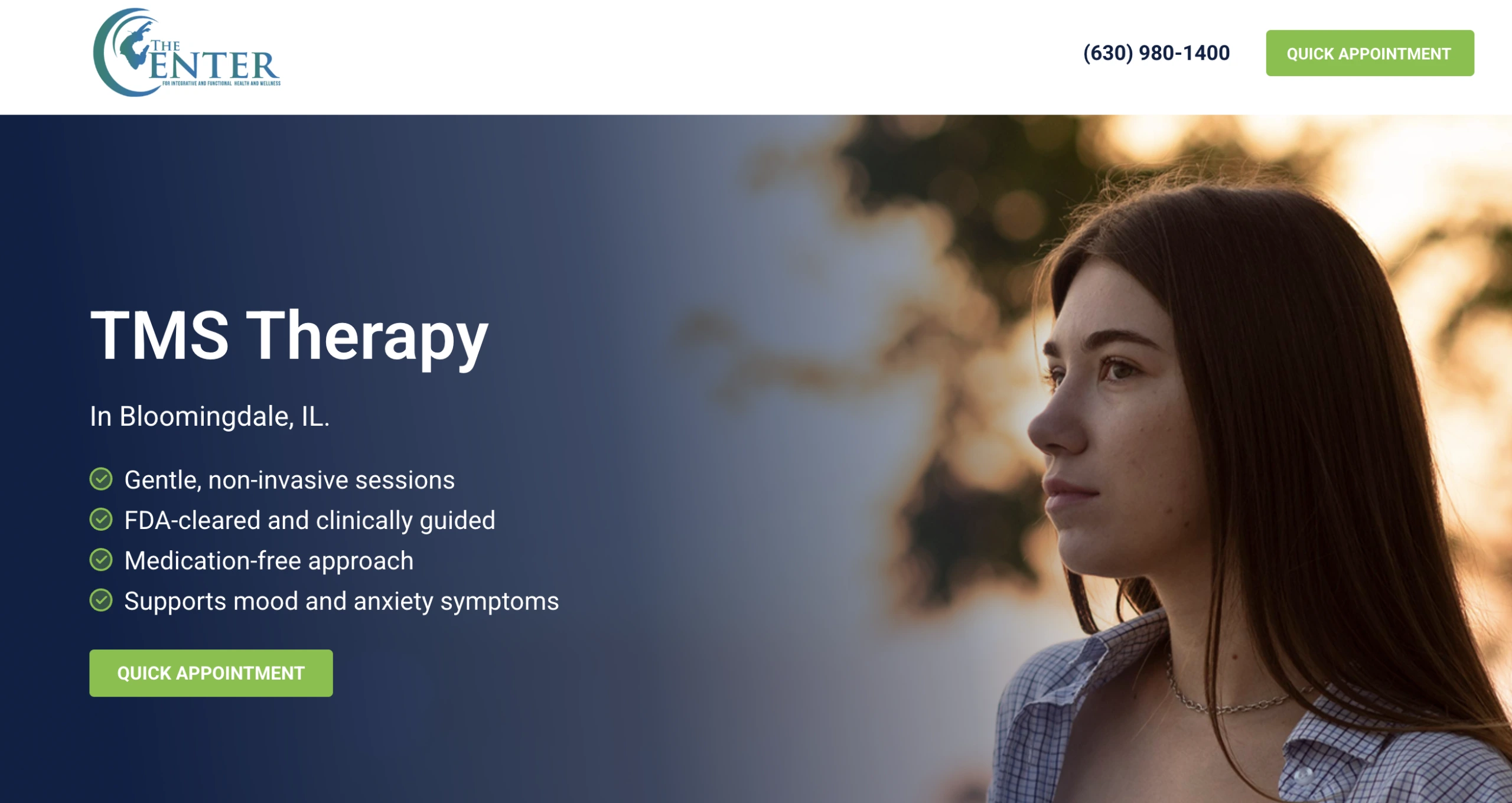
- The landing page leads with reassurance, “Covered by Most Major Insurance” above the fold and patient video testimonials.
- Patients audit your main website before they book, so it must match the landing page.
1. Targeting TMS Intent: How to Stop Buying Low-Value Clicks
When an exhausted individual searches Google for “depression treatment,” they are casting a massive, uneducated digital net. They could be looking for a self-help book, a local talk therapist, a lifestyle blog, or an adjustment in their current oral medication class.
Because a clinical protocol requires strict insurance and clinical pre-qualification filters, driving broad diagnostic traffic to your landing page results in an administrative nightmare of dead-end phone calls for your internal intake staff.
The TMS Keyword Matrix
When engineering premium Google Ads for TMS, we completely eliminate broad diagnostic terms from our active ad groups. Instead, we condense your campaign down to purely transactional, device-specific, and interventional intent:
- “TMS therapy near me”
- “Transcranial Magnetic Stimulation clinics in [City]”
- “NeuroStar provider / Brainsway treatment near me”
- “Insurance-covered TMS therapy [Your City]”
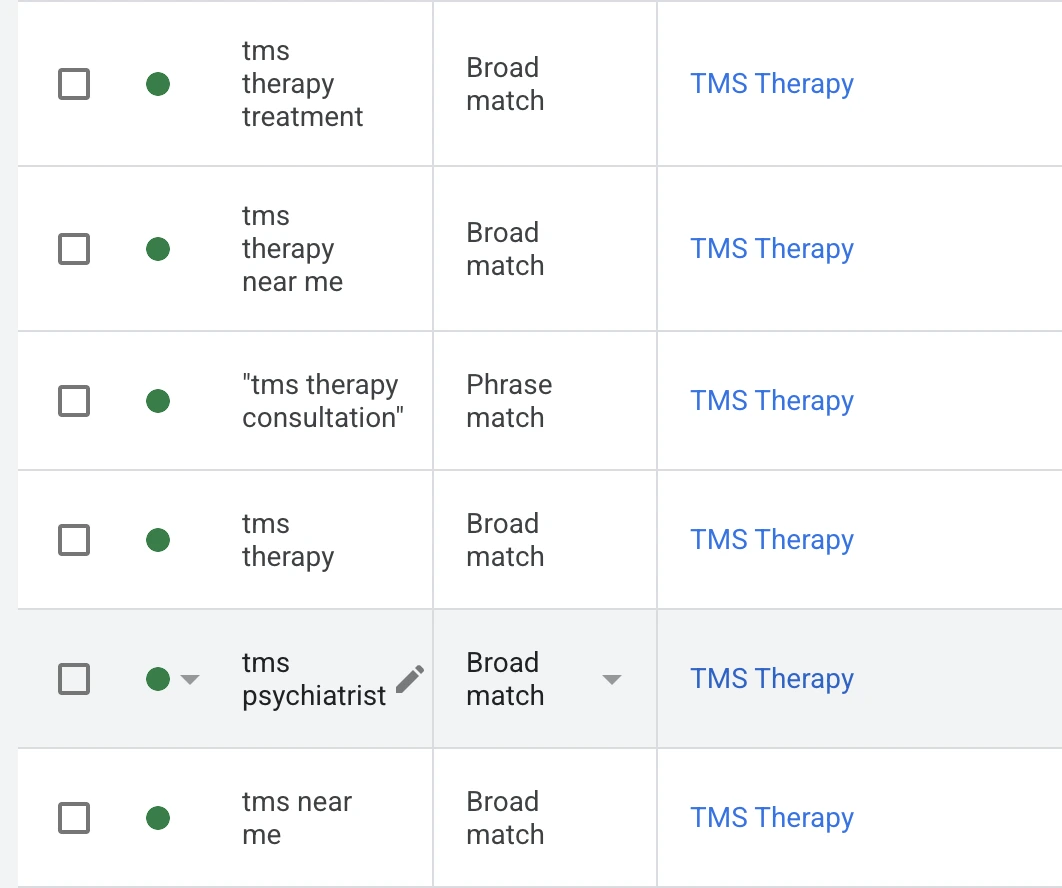
By focusing exclusively on these high-intent keyword strings, we completely bypass the expensive, noisy phase of public education. We are capturing the small, premium pool of local searchers who are already fully aware of what the magnetic coil does, understand that it is a non-invasive alternative to traditional pharmaceuticals, and are actively hunting for a localized clinic to begin immediate clinical care.
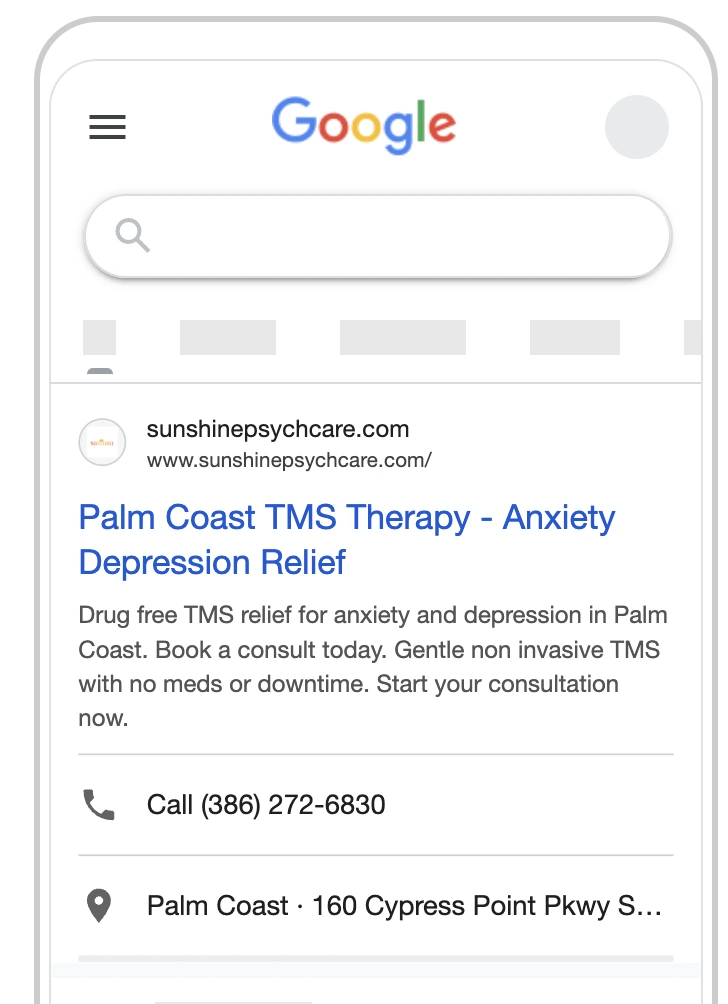
2. The Drive-Time Mapping Variable: Traditional vs. Accelerated Protocols
A successful paid search campaign requires a geographic footprint that perfectly mirrors your operational delivery model. If your geographic ad targeting doesn’t align with the logistical reality of your specific treatment protocol, your cost-per-acquisition will skyrocket.
[Traditional TMS Setup] ──> 5 Days/Week for 6 Weeks ──> Strict 20-30 Min Drive-Time Radius
[Accelerated TMS Setup] ──> Multiple Sessions/Day ──> Expansive Statewide / Regional Radius
Protocol A: Traditional TMS (The Commute Radius)
Standard clinical protocols require patients to visit your physical facility 5 days a week for 4 to 6 weeks. Because of this intense scheduling friction, patients will simply not commit to a 45-minute drive each way.
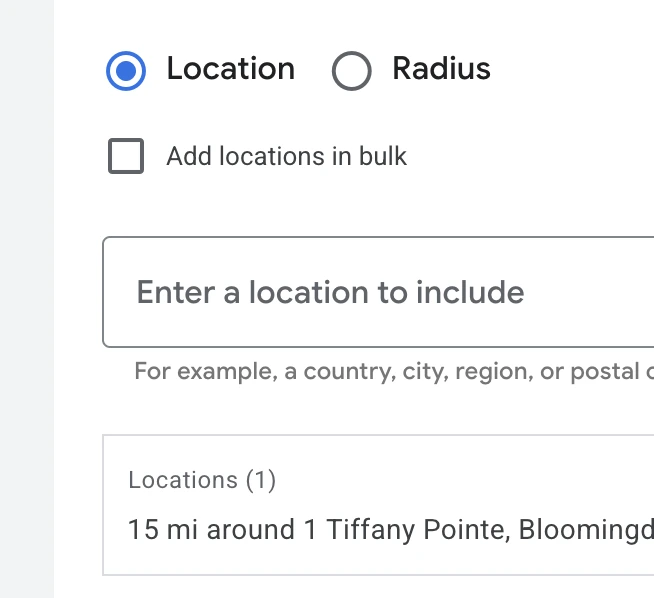
The Ad Setup: For clinics running traditional protocols, we restrict your TMS Google Ads geographic targeting to a strict 20-to-30-minute drive-time boundary or specific high-probability zip codes directly surrounding your facility’s front door.
Protocol B: Accelerated TMS (The Regional Pull)
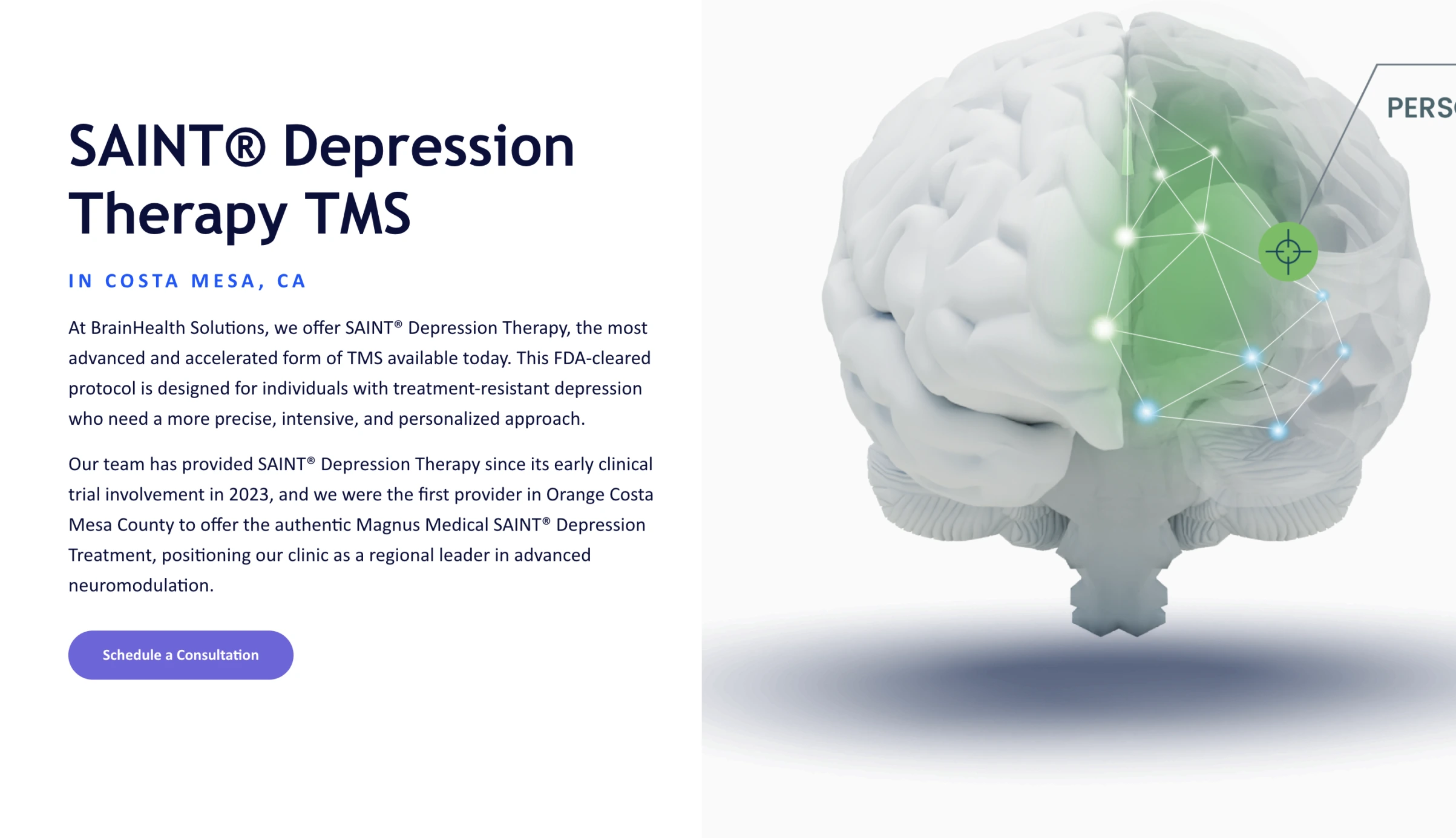
If your psychiatric practice offers accelerated protocols (such as the SAINT protocol, where the patient receives multiple neural treatments per day over a heavily compressed timeframe), the geographic rules change completely. Because the treatment duration is over in a matter of days rather than months, patients are highly willing to travel long distances, stay in local hotels, or cross state lines.
The Ad Setup: For accelerated campaigns, we expand your geographic radius to a regional or statewide level, shifting our search copy and landing page headers to emphasize speed, clinical efficacy, and out-of-town patient coordination.
3. The Anatomy of a High Conversion TMS Landing Page: Reassurance, Insurance & Proof
It is a baseline requirement in digital marketing to send your paid search traffic to a dedicated, custom landing page rather than your general website homepage. The landing page removes distracting navigation links and focuses entirely on getting the patient to request an evaluation.
However, because Transcranial Magnetic Stimulation is a technical procedure that can sound intimidating or scary to a vulnerable patient, your paid search landing page cannot feel sterile, industrial, or clinical. The tone must be benevolent, warm, and deeply reassuring. Our job is to metaphorically hold the patient’s hand and guide them away from fear.
Our high-conversion landing pages are built around three non-negotiable elements:
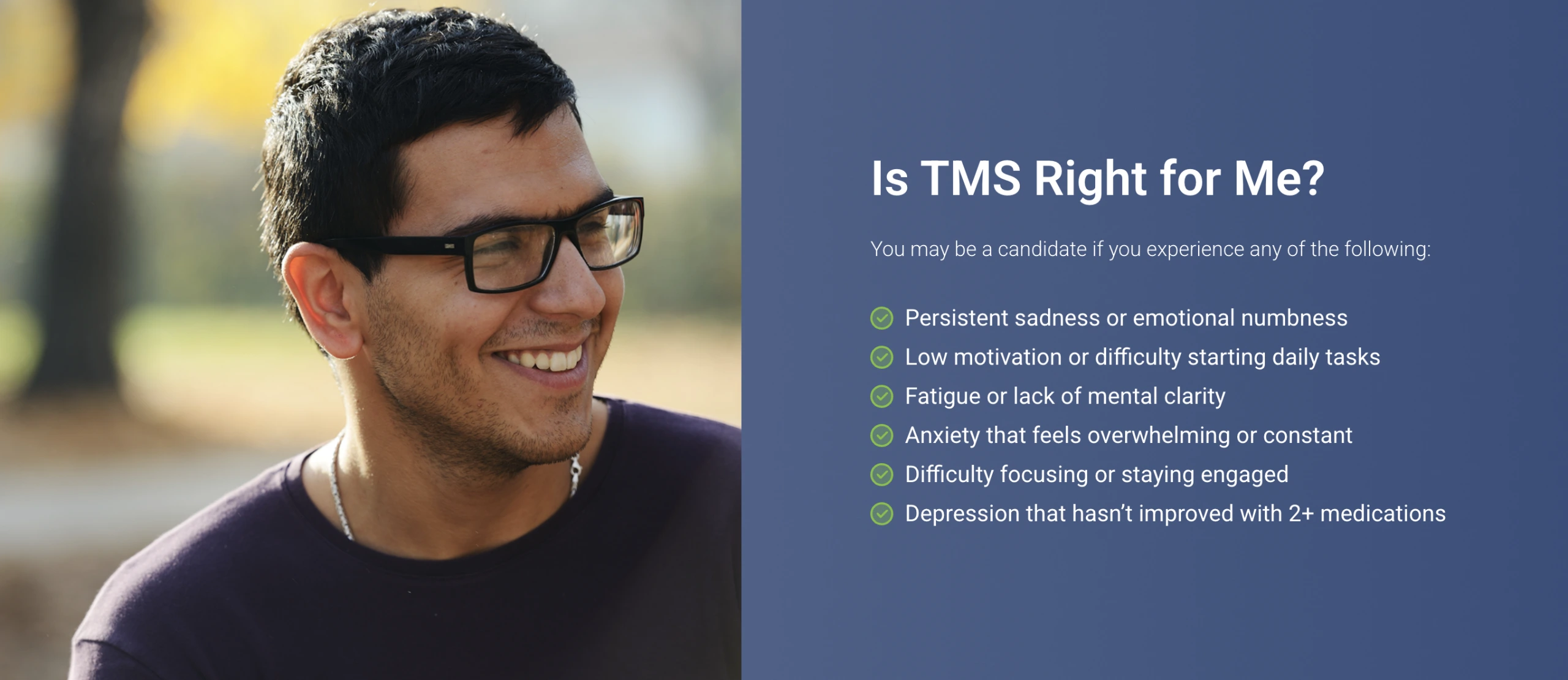
- Element A: Compassionate, Hand-Holding Copy: We intentionally avoid cold medical jargon or harsh, clinical imagery of machinery. The copy speaks directly to the patient’s exhausted state of mind, utilizing soft, welcoming color palettes and comforting headings like, “You’ve tried everything else. Let us show you a gentler path forward.” We demystify the physical experience immediately: explicitly explaining that the treatment is entirely non-invasive, requires no anesthesia, allows them to sit comfortably and watch TV, and has zero downtime.
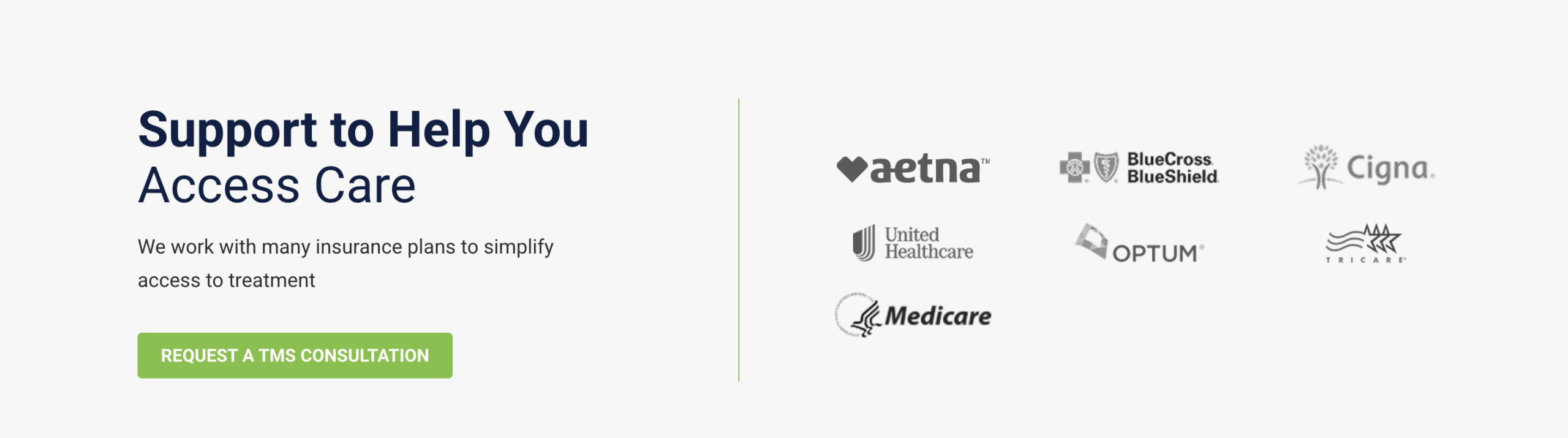
- Element B: Aggressive Insurance Prominence: The moment a page loads, the phrase “Covered by Most Major Insurance” must be impossible to miss. We place an interactive insurance verification tool right above the fold. By listing major commercial payers explicitly (Aetna, Cigna, Blue Cross Blue Shield, UnitedHealthcare, etc.) and highlighting Medicare coverage, we eliminate financial anxiety within the first three seconds of the click.
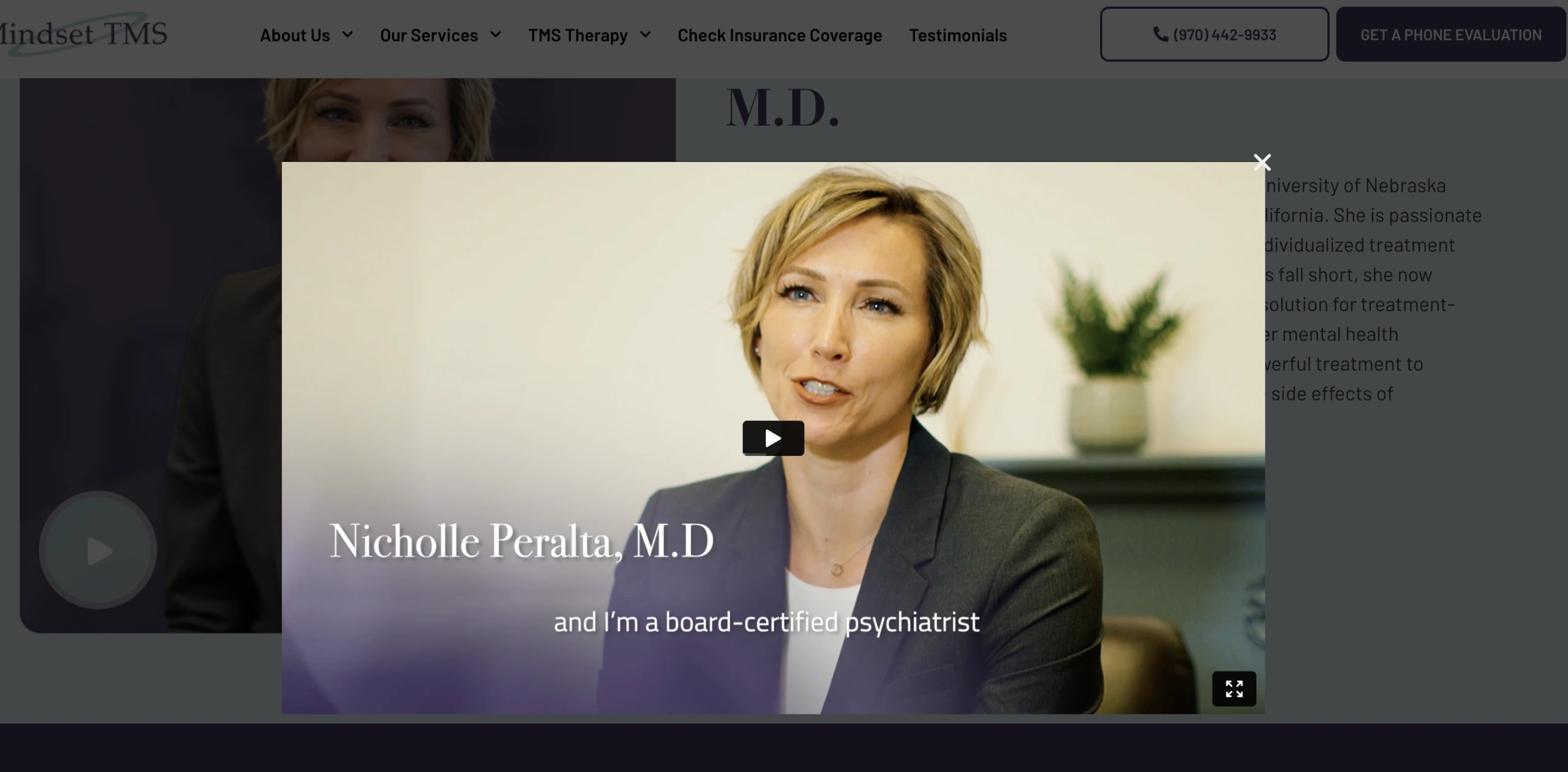
- Element C: Patient-Recorded Video Testimonials: Nothing converts a skeptical, depressed patient faster than seeing someone who was once in their exact shoes standing on the other side of recovery. Raw, emotional video proof cuts through fear in a way that text cannot. Hearing a real person describe the feeling of the “fog lifting” or finally escaping systemic medication side effects provides the ultimate emotional validation a prospective patient needs to safely hit submit.
4. The “Main Website” Double-Check Audit
While a dedicated landing page handles the initial click, generic agencies ignore a critical piece of patient behavior: The Main Website Audit.
Because a medical decision like interventional psychiatry requires immense personal trust, a high percentage of patients will not fill out an intake form on a standalone landing page immediately. Instead, they will click your logo, open a new tab, and thoroughly audit your main practice website. They want to see your full team bios, look at your clinical history, check your office map, and ensure you are a permanent, reputable fixture in the local medical community.
If your landing page is great, but your main website layout looks outdated, sterile, or confusing, your conversion rate will plummet. Your paid search strategy only works if your main website is fully optimized to reassure, educate, and mirror the exact premium branding, insurance clarity, and benevolent patient proof of your paid ad landing page.
To see exactly how we align high-intent Google search traffic with elegant, high-conversion web architectures, review these live production layouts running for our active clients:
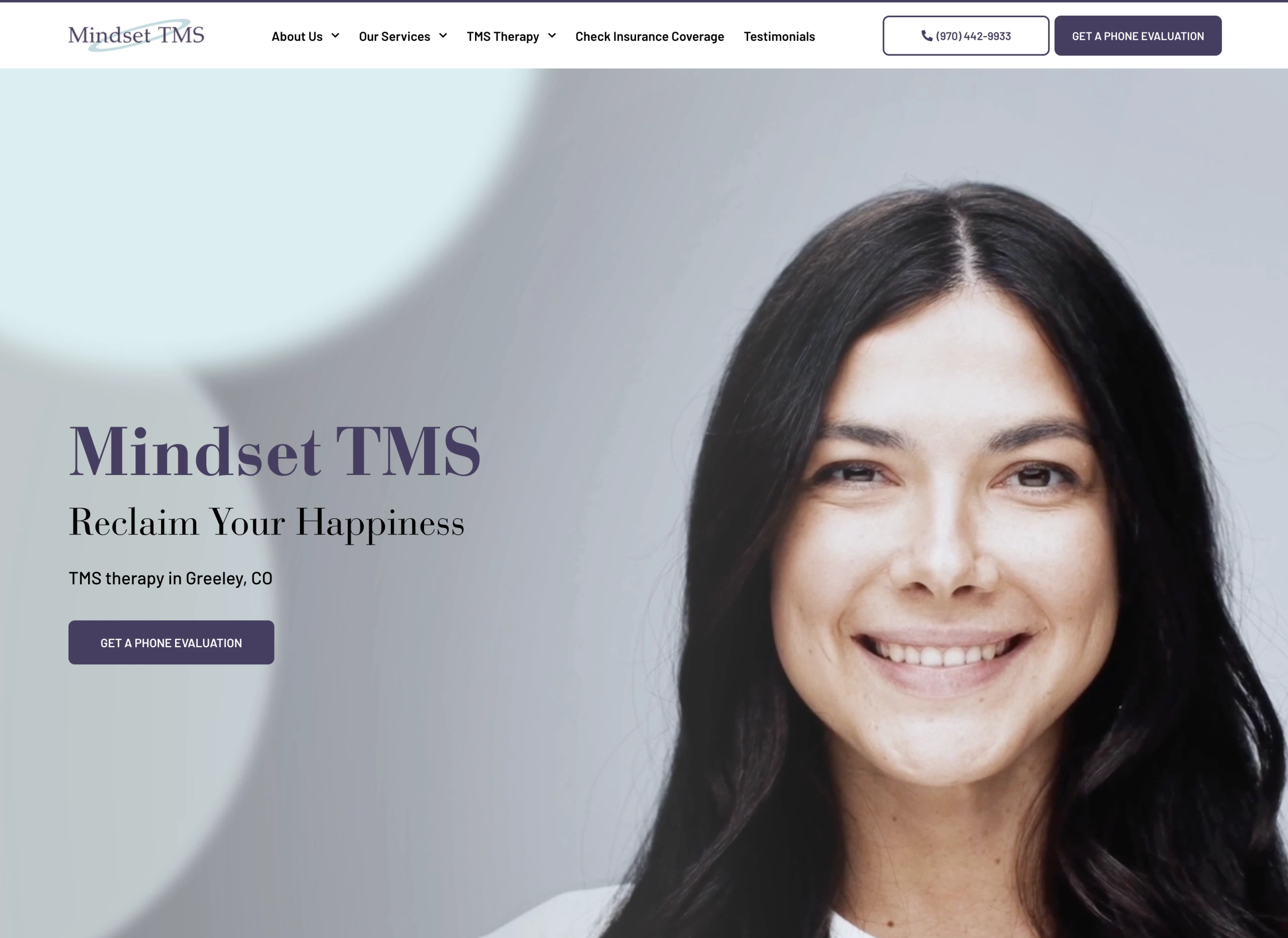
- Mindset TMS: View how they combine precise educational resources with warm, trusting design cues at Mindset TMS.
- Brain Health Solutions: Explore their optimized conversion path and distraction-free layout.
Premium Results in Mental Health Advertising
We don’t just specialize in search mechanics; we engineer full-funnel patient pipelines that consistently outperform industry benchmarks. By aligning precision keyword strategies with conversion-tuned design and backend intake automation, we keep interventional schedules consistently full.
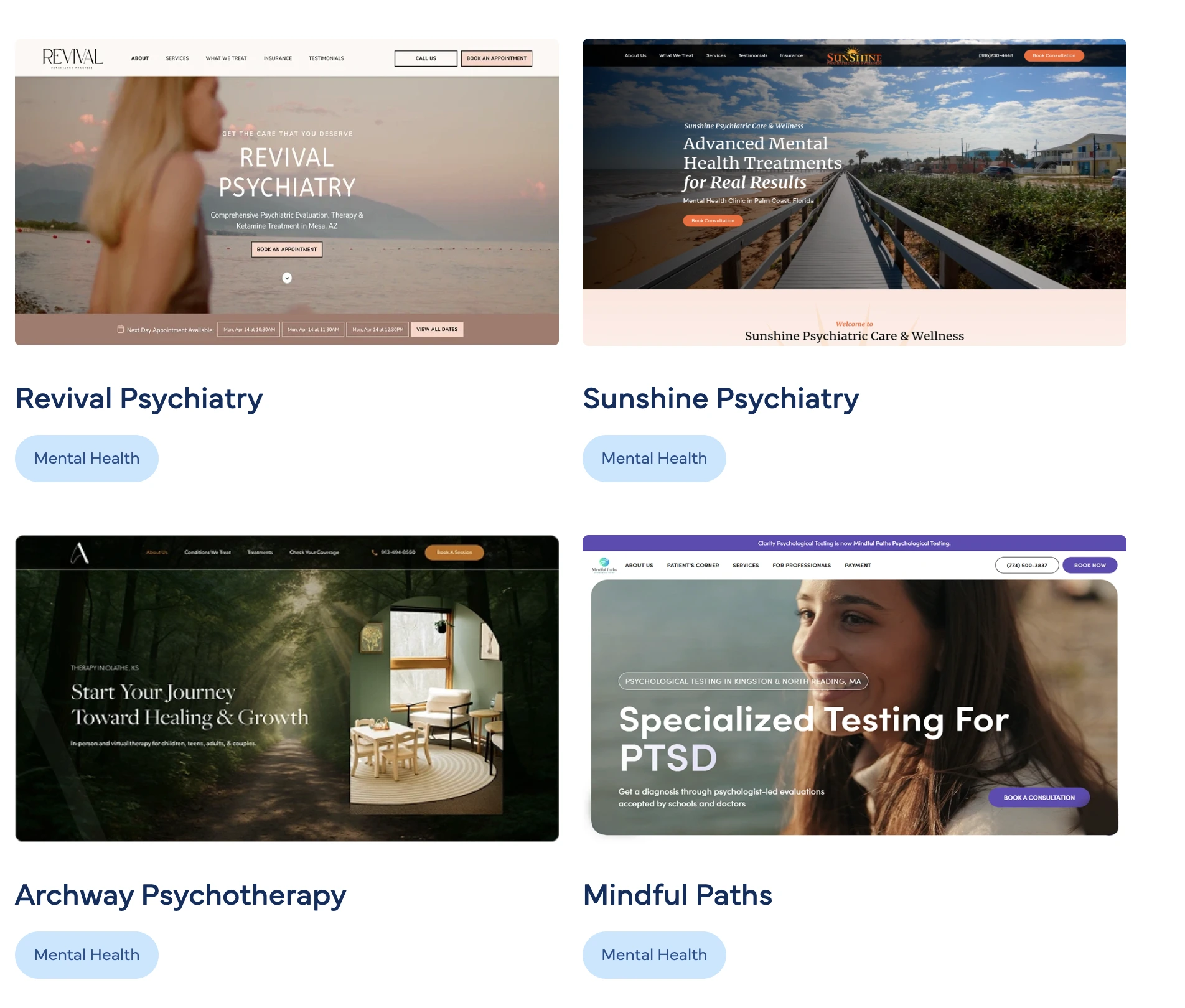
If you want to view the real operational data, local ranking milestones, and scaling histories we have generated for independent psychiatric and mental health clinics nationwide using specialized search frameworks, explore our comprehensive project portfolio:
 Explore Our Mental Health Marketing Case Studies Portfolio
Stop Paying for Clicks That Don’t Turn into Booked Chairs
Running Google Ads for TMS is a game of extreme, surgical precision. You cannot afford to run generic medical campaigns that guess at search intent, ignore landing page conversion mechanics, or miscalculate your local market’s drive-time threshold.
At PilotPractice, we blend our deep knowledge of interventional psychiatric operations with technical ad management to ensure every single dollar of your Google budget is hunting for high-intent, qualified patients.
[Schedule a Free, Data-Driven Google Ads Audit with Our Team Today]
Our Expertise in Mental Health: Therapy · TMS · Medication Management · Spravato / Ketamine