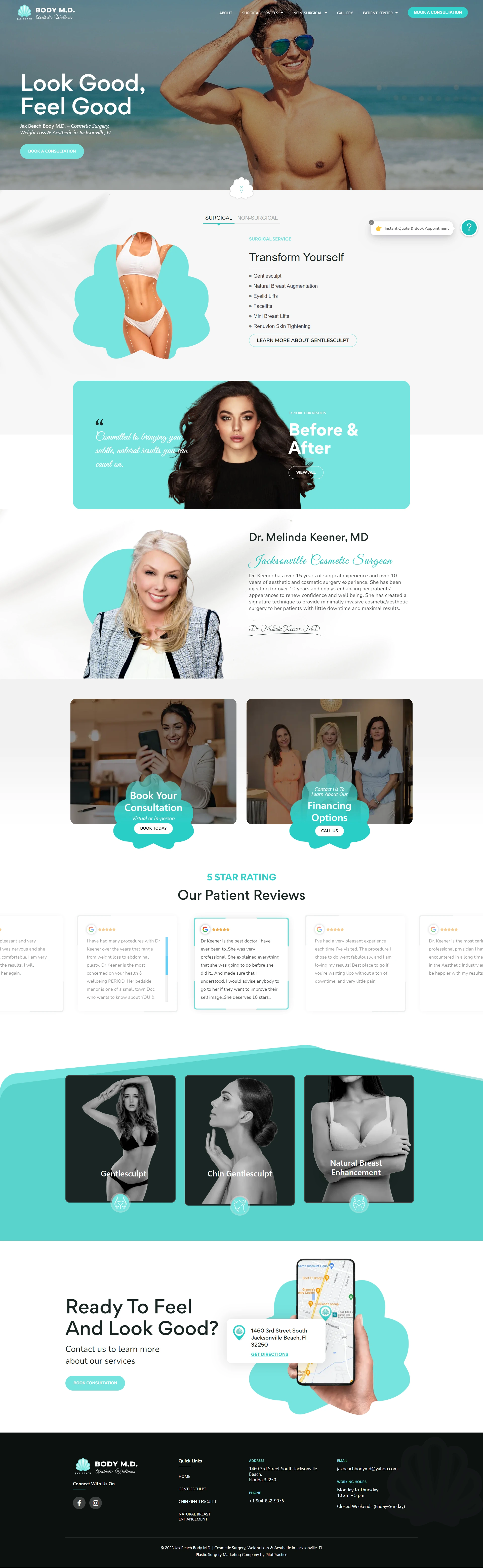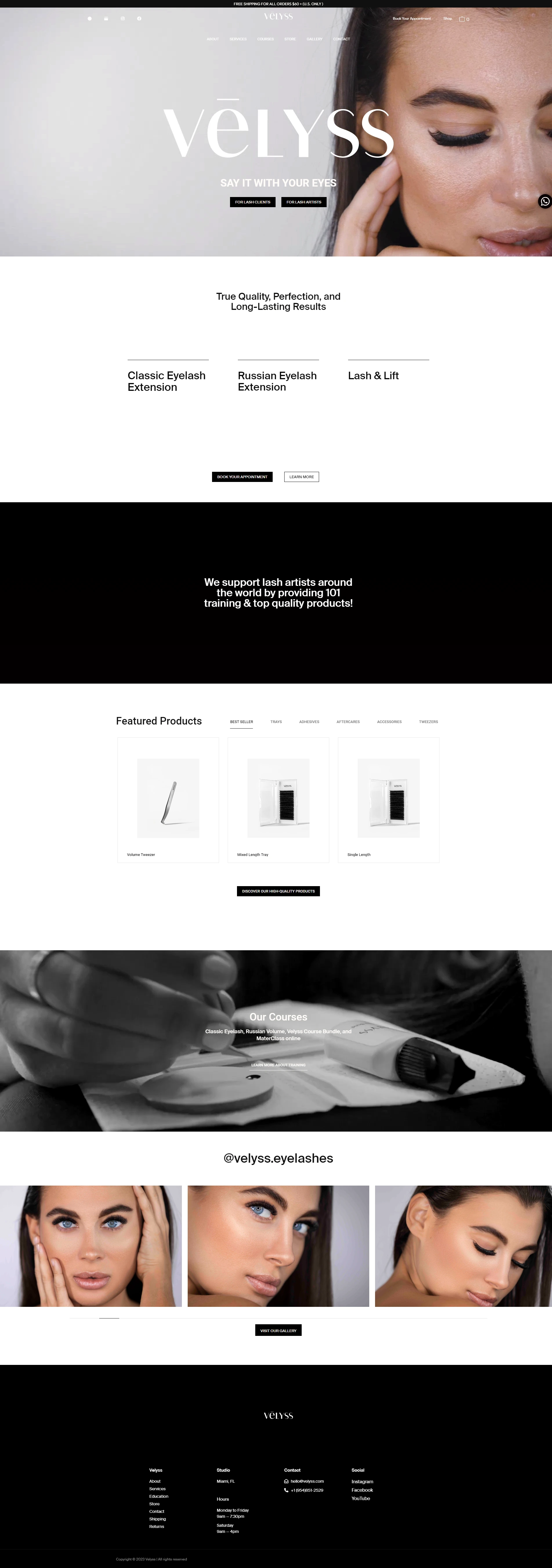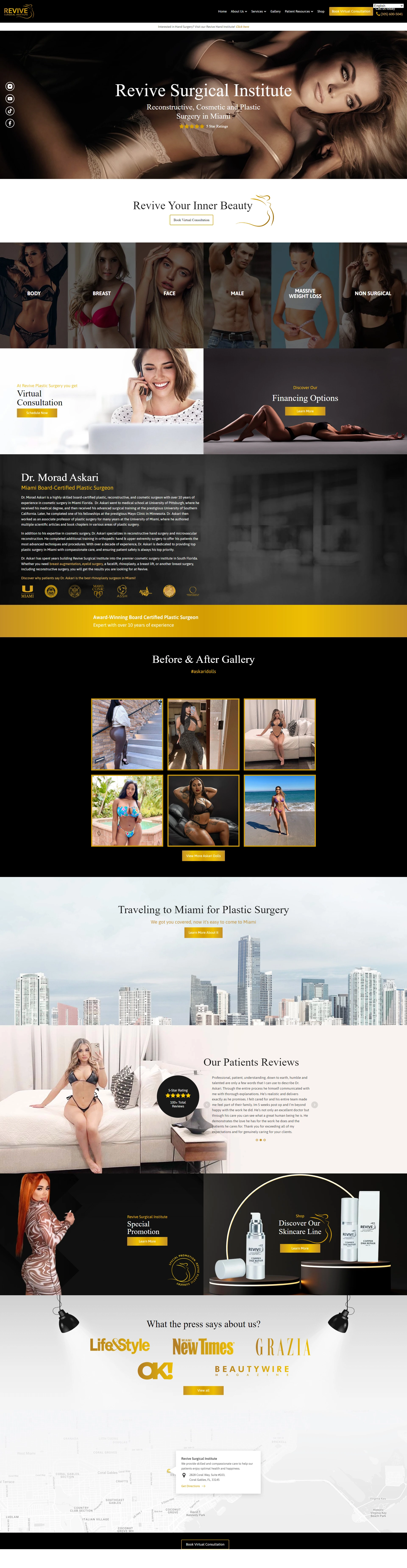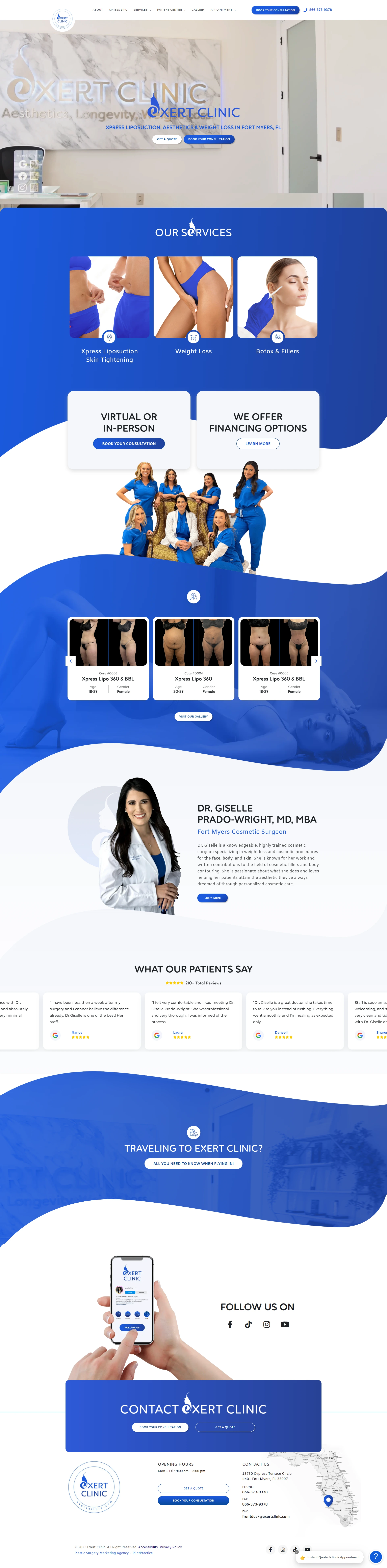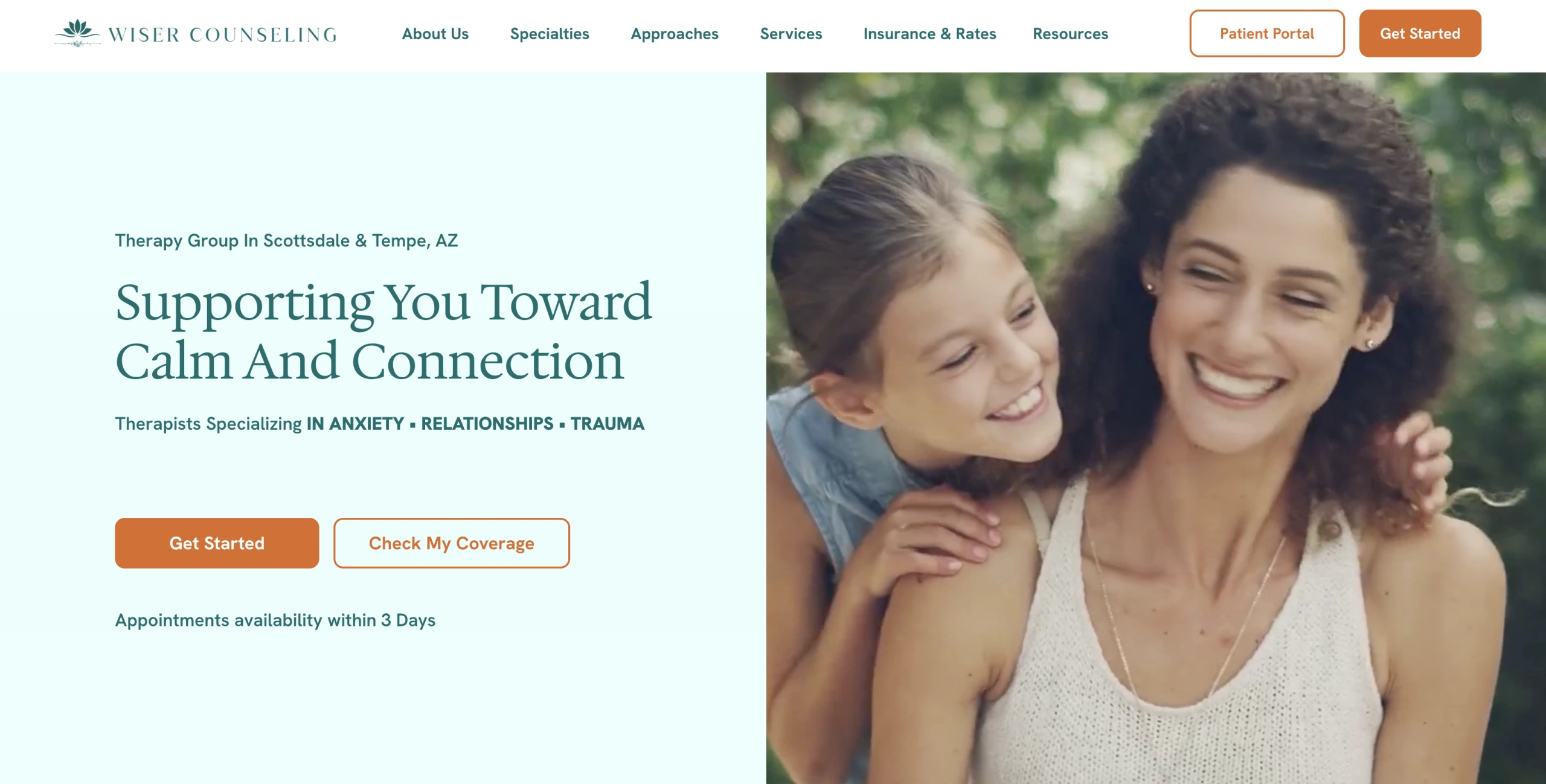
When an individual lands on a website for a counseling or mental health practice, they are almost always operating under a high level of emotional or cognitive load. Whether they are managing acute panic, navigating a painful relationship fracture, or coping with long-term professional burnout, their brain is scanning the digital horizon for one thing: safety.
If your digital presence mimics a corporate law firm or functions like a sterile medical database, that exhausted user will back out immediately. They aren’t just shopping for a list of clinical credentials; they are trying to determine if your practice feels warm, inviting, and emotionally secure.
In our cornerstone manual, The Ultimate Blueprint for Therapist Marketing: How to Stop Wasting Your Practice Budget on the Wrong Digital Ads, we broke down the absolute necessity of maintaining a highly optimized digital home. You can engineer the most precise local search campaigns or deploy hyper-targeted local SEO location links in your footer, but if those high-intent users land on a disjointed layout, your client acquisition pipeline will dry up.
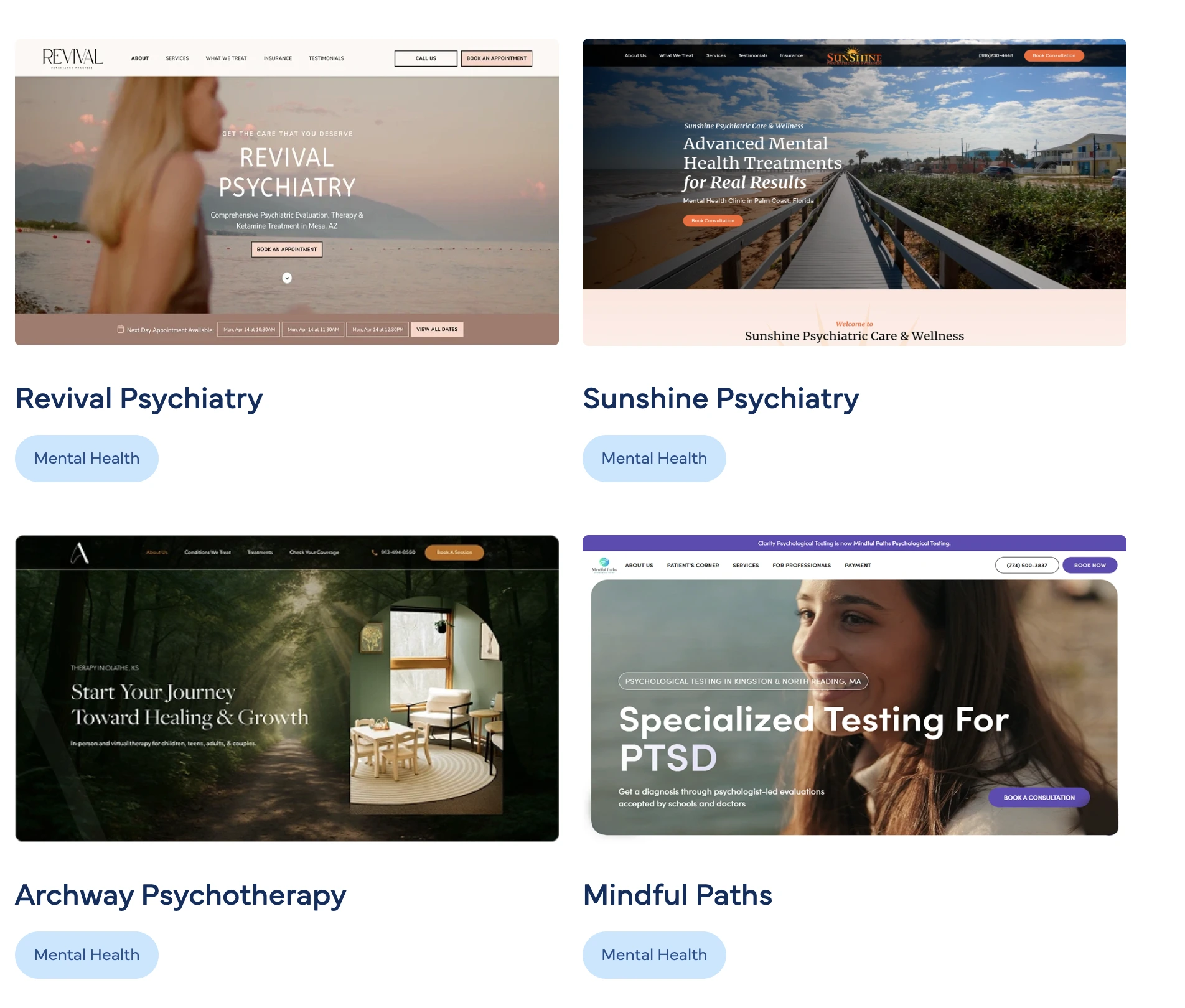
To turn vulnerable local searchers into committed weekly clients, your therapist website design must find the perfect equilibrium between comforting human-centric architecture and seamless backend automation. To see exactly what this looks like in the real world, you can explore beautiful live production examples like Revival Psychiatry or Sunshine Psychiatric Care. Here is the operational framework we use at PilotPractice to build digital sanctuaries that convert.
A premium healthcare website should look and feel like an intentional, calming conversation before a single word of copy is even read. The user interface layout must lower the visitor’s nervous system response within the first three seconds of the click.
Our design teams completely bypass generic medical trends, utilizing highly specific behavioral aesthetics tailored for effective clinical performance:
- The Color Story: Throw out harsh corporate blues, high-contrast black text, and cold clinical whites. If you look at high-converting sites like Revival Psychiatry, you’ll notice they anchor their custom builds in soft, grounded, natural palettes: warm sand tones, muted sages, and soft creams. These tones feel inherently human and cozy, immediately reducing visual strain for users in distress.
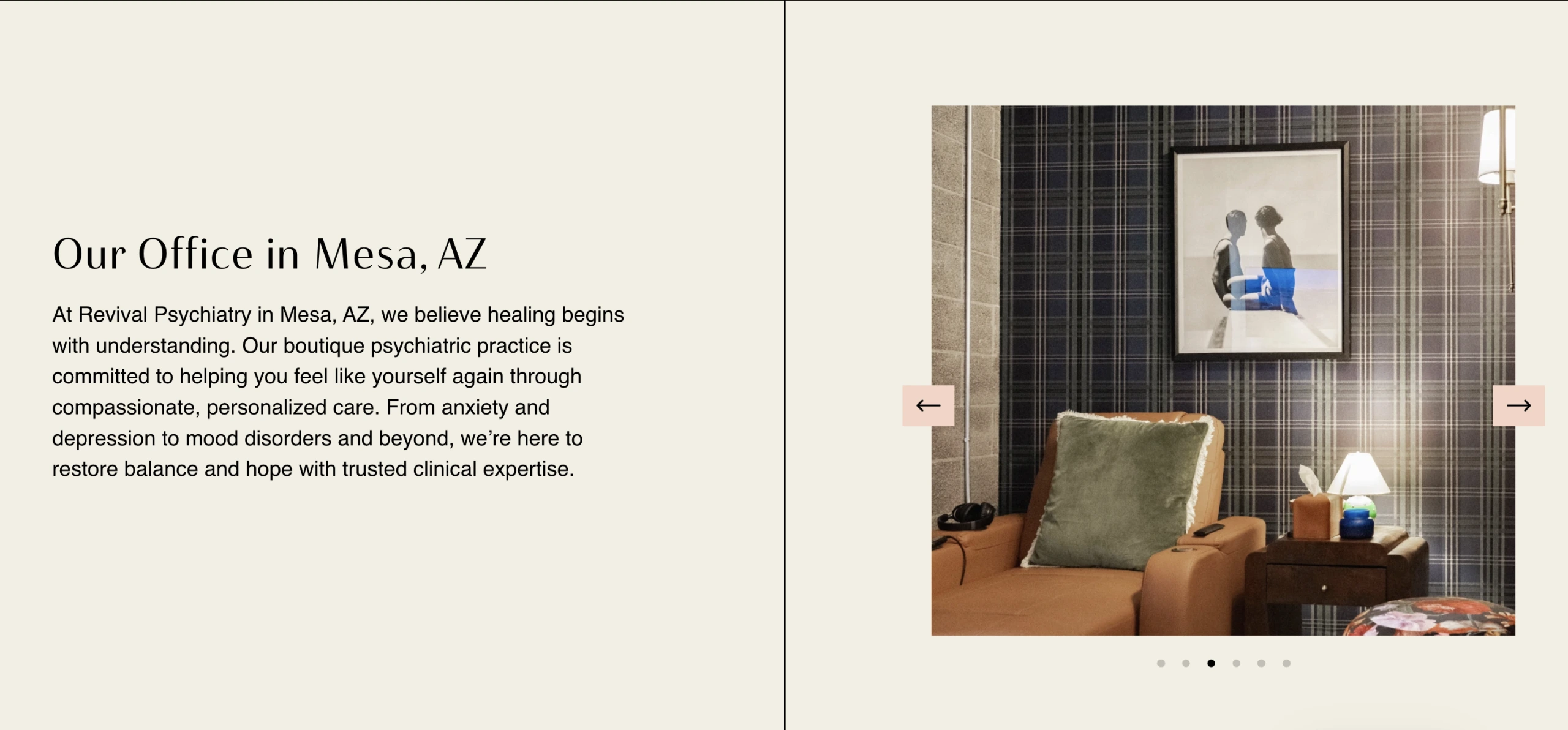
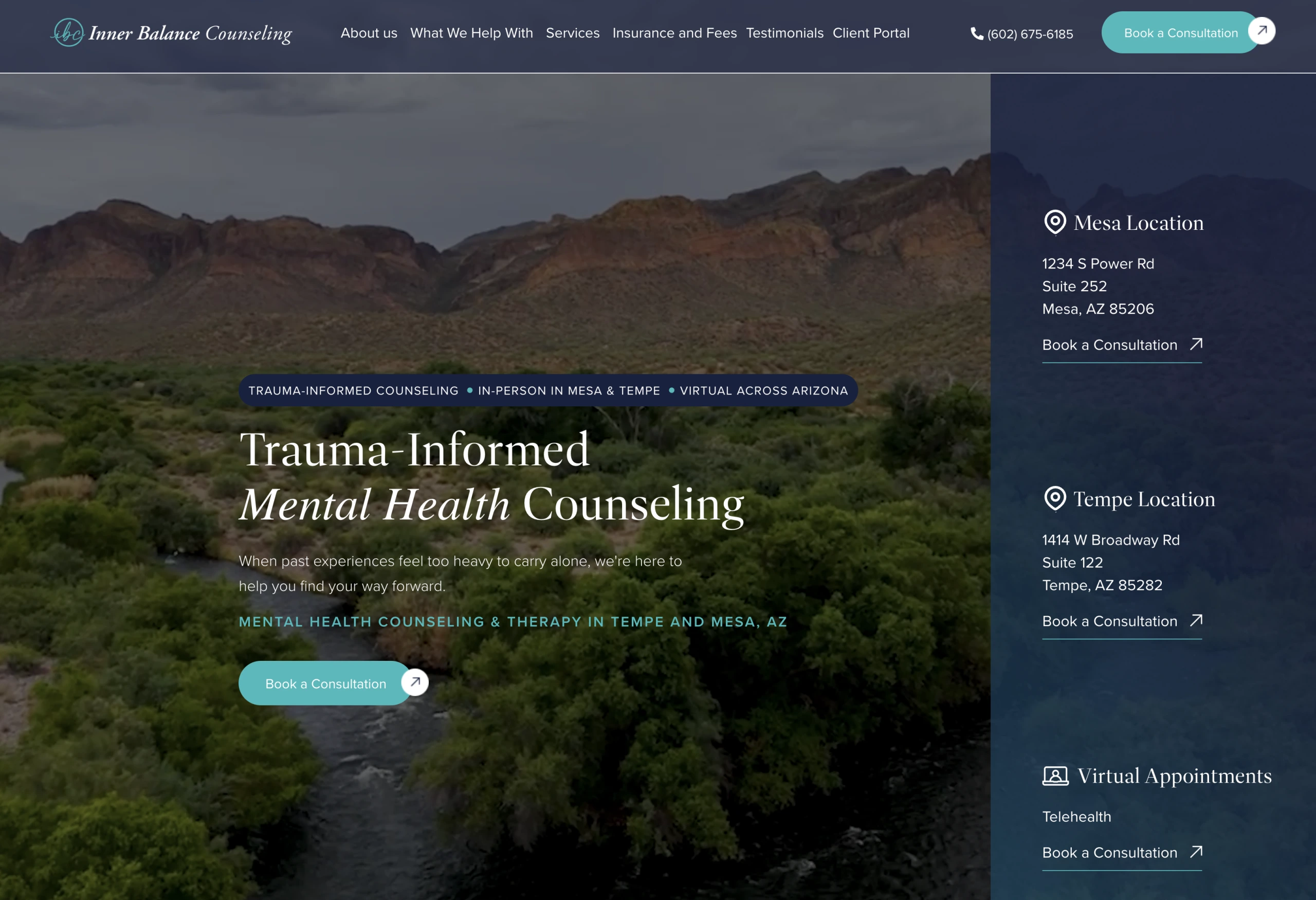
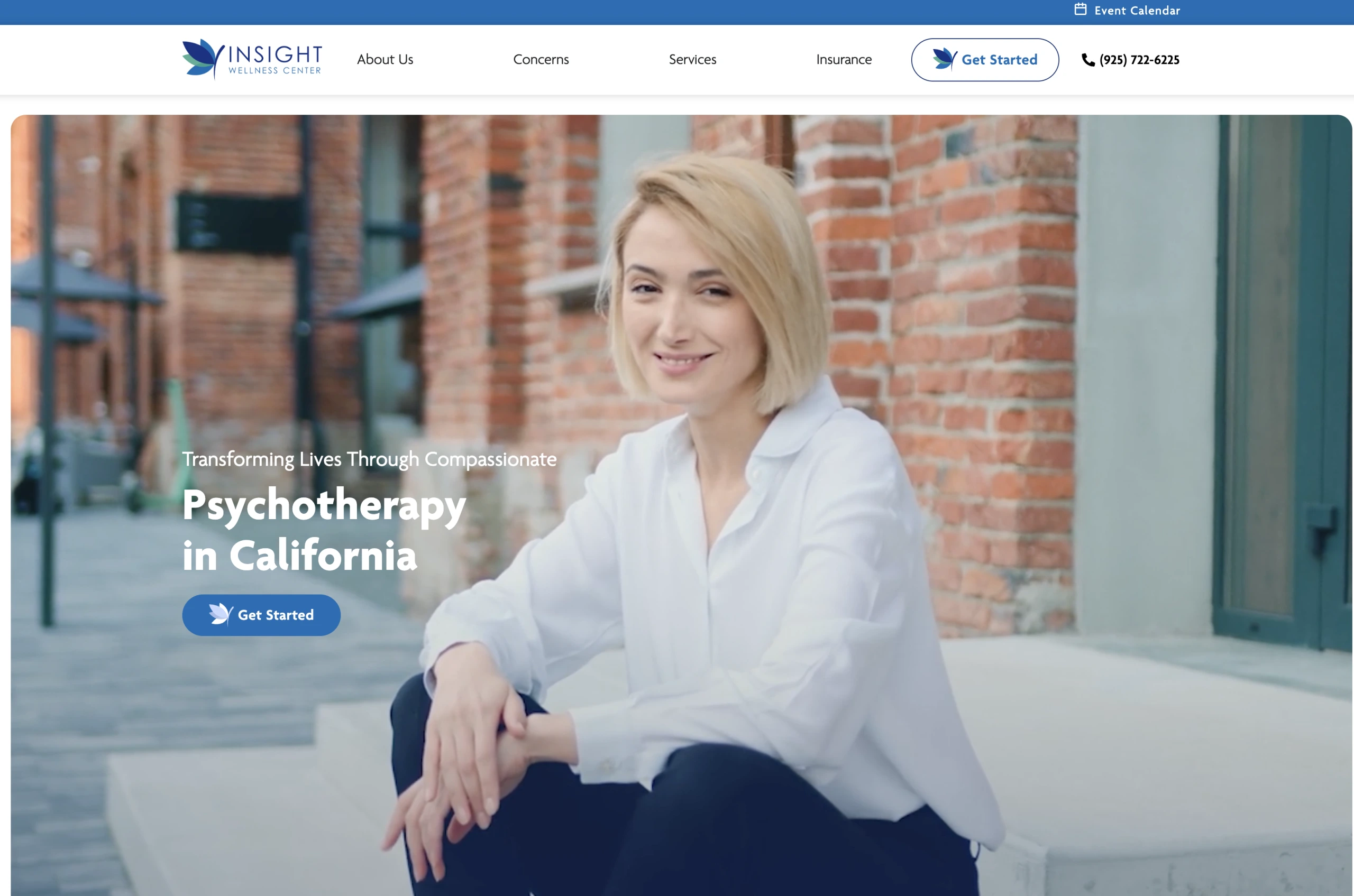
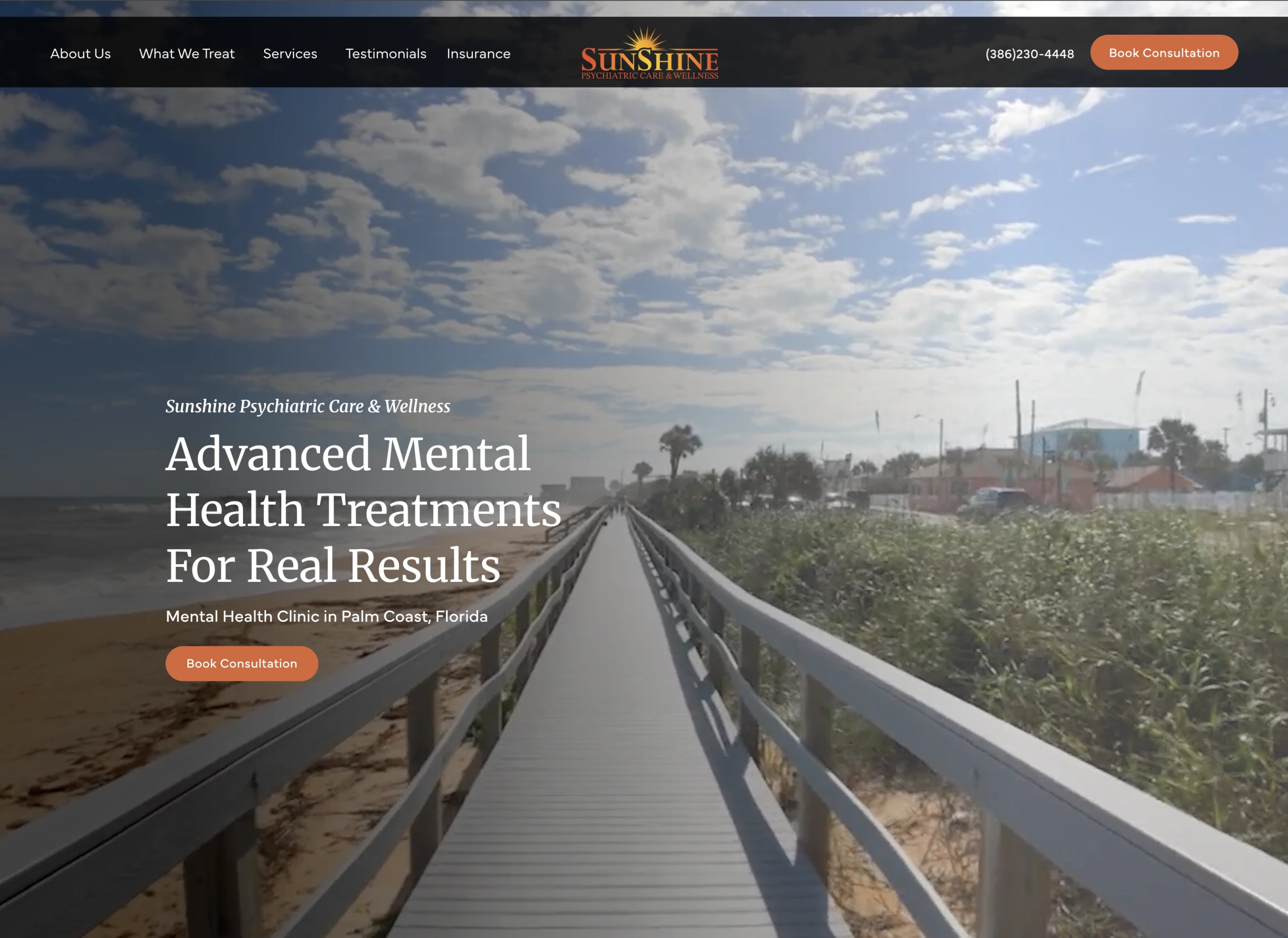
- Cliché-Free Visual Storytelling: We enforce a strict ban on standard medical stock photography, such as cartoon silhouettes of people holding their heads in despair or generic corporate actors holding clipboards. Follow the lead of platforms like Sunshine Psychiatric Care and display high-end, custom photography of your actual physical office space, warm natural landscapes, or authentic, welcoming portraits of your clinical team. This allows an anxious patient to visually place themselves in your safe environment before making contact.
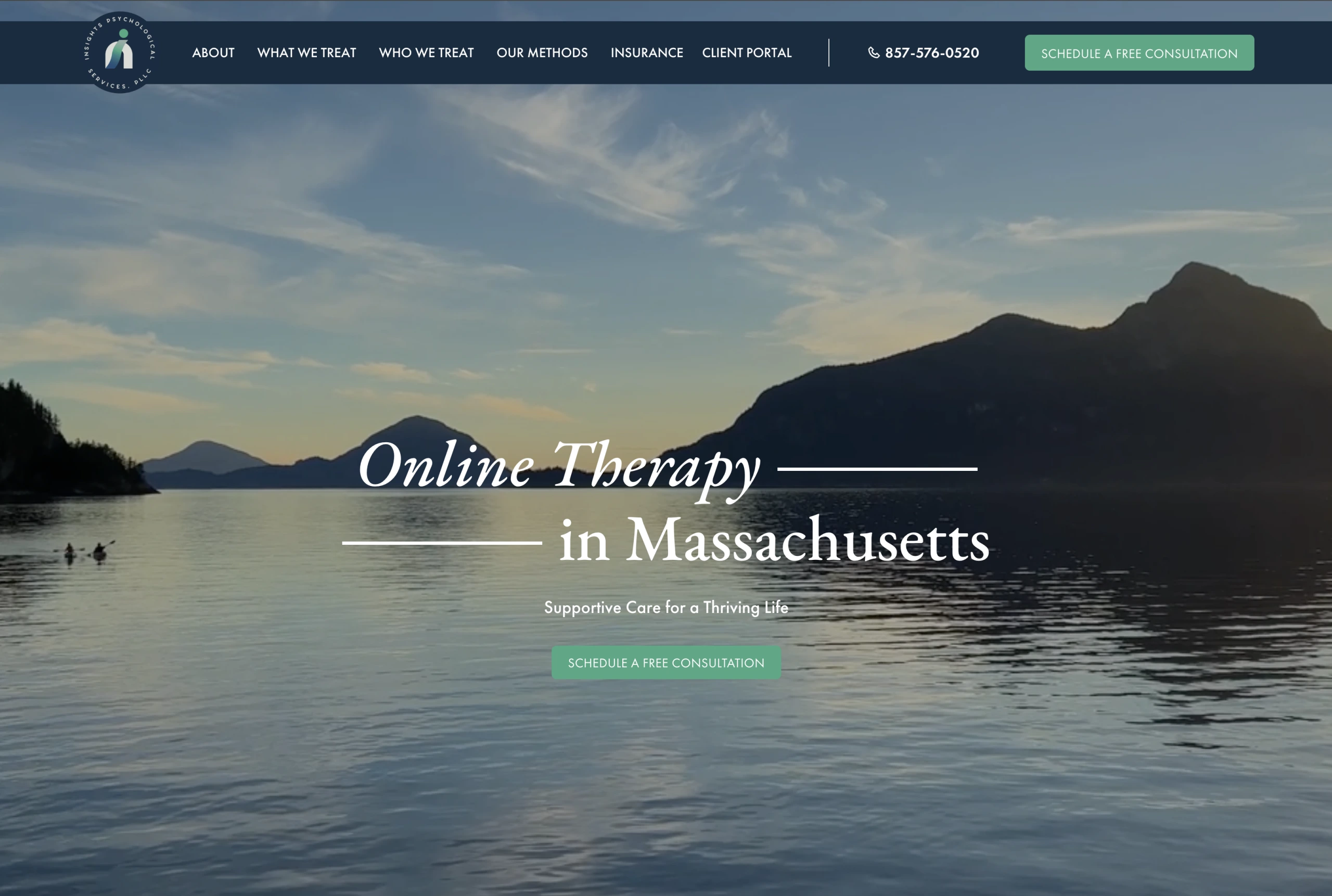
- Accessibility as Empathy: When a user is struggling with depression or anxiety, dense blocks of tiny, light-gray text can feel physically suffocating to read. A modern therapist website design utilizes large, clean typography with high-contrast balancing, wide section borders, and generous breathing room between paragraphs to ensure the text is easily scannable and digestible.
A high-converting therapist website design does not play hide-and-seek with critical logistical details. An anxious user who has to hunt through nested submenus to find pricing, insurance data, or office policies will experience decision fatigue and abandon the page to look for a more straightforward alternative.
To maximize your conversion rates, your homepage layout must clearly surface and answer the top three barriers to behavioral healthcare right above the fold:
[Visitor Arrival] ──> Sees Warm Clinician Faces ──> Verifies Covered Insurance ──> Launches Interactive Booking Widget
Barrier 1: “Who exactly is going to sit across from me?”
Therapy is driven entirely by human-to-human relationships. Your homepage must feature high-quality, approachable portraits of your counseling team immediately. If you operate a large group practice with more than 10 clinicians, do not make visitors scroll through a giant, overwhelming wall of bio text. We implement advanced search and sorting filters directly onto the team directory, allowing users to filter professionals instantly by therapeutic approach, clinical specialty, or direct availability.

Barrier 2: “Can I actually afford this?”
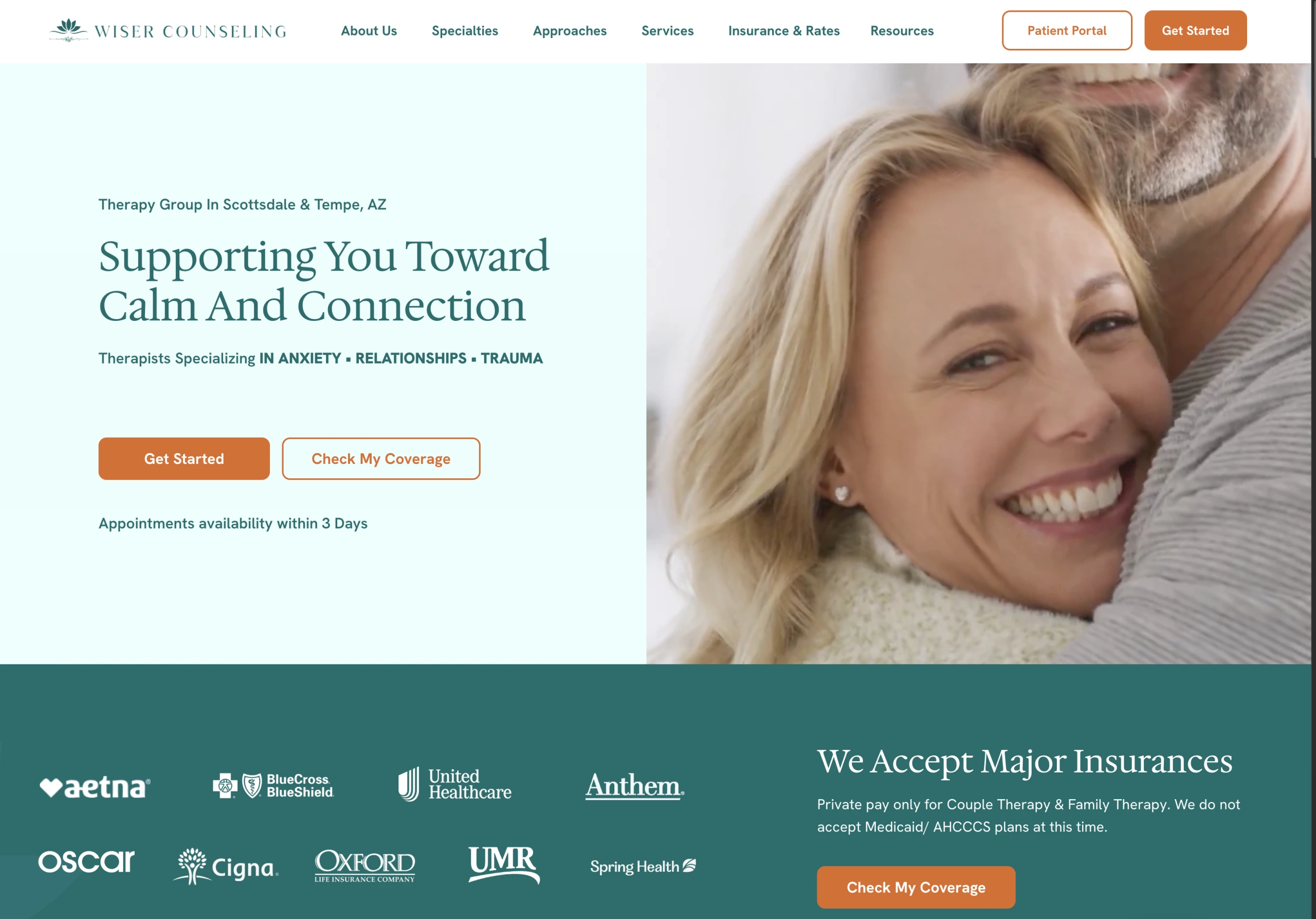
Financial uncertainty is one of the single biggest reasons people hesitate to reach out for mental health support. Your accepted commercial insurance networks (like Aetna, Cigna, BCBS, and UnitedHealthcare) or Medicare statuses must be visually prominent right away. If you run a cash-pay or out-of-network practice, speak about your session rates and superbill processing with absolute clarity. Transparency builds immediate clinical trust.

Barrier 3: “How does the physical process work?”
Clearly delineate between your in-person physical footprint and your virtual telehealth options. For your local community, detail your neighborhood location, your parking setup, or direct transit directions. For virtual clients, include an explicit “How Telehealth Works” module detailing your secure, private connections to strip away the technical intimidation of online care.
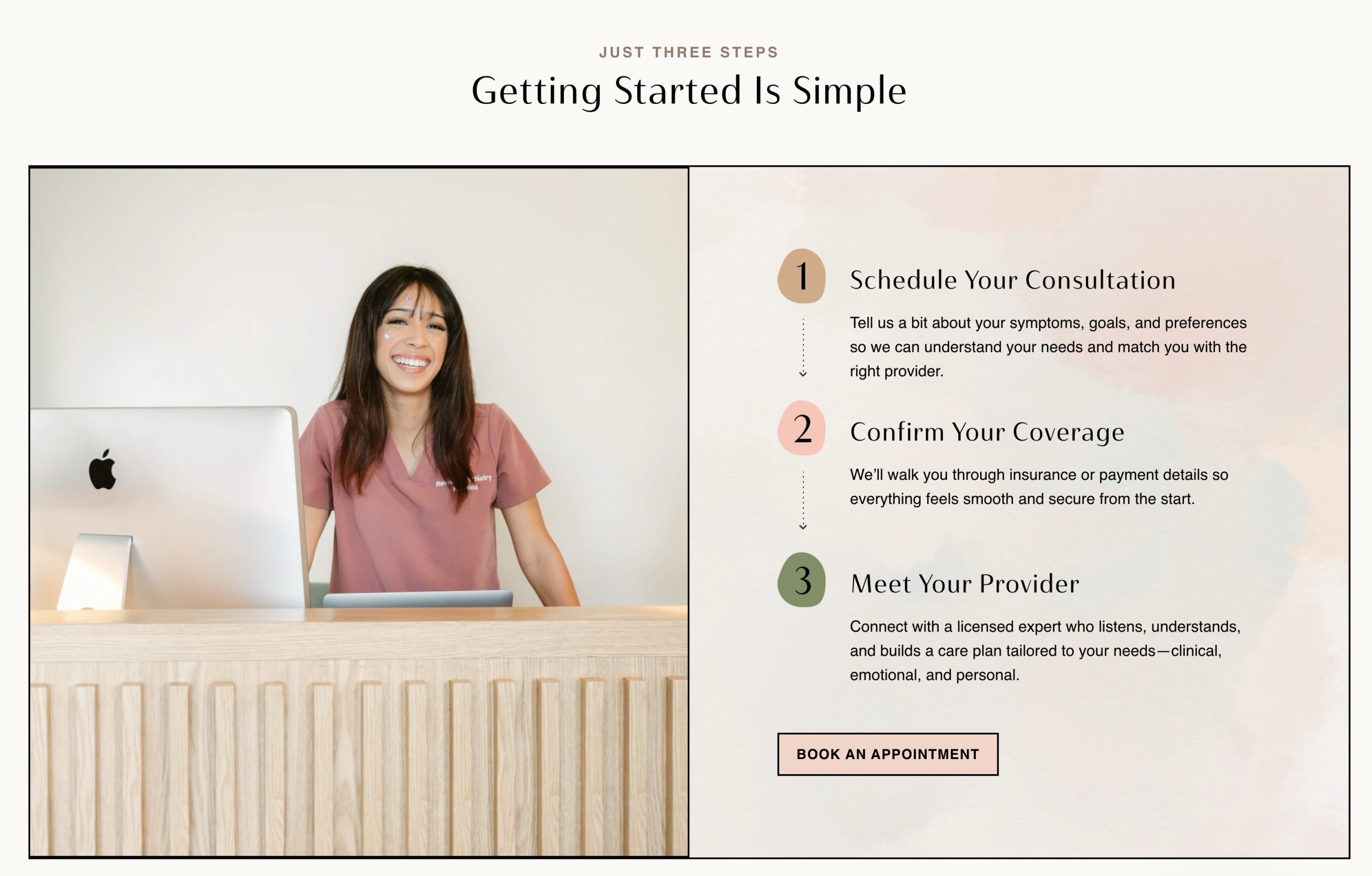
Once your visual layout has established unshakeable credibility and de-escalated the patient’s initial anxiety, you must make taking action completely frictionless.
Forcing a low-energy, stressed user to pick up a phone during a personal crisis, or making them fill out a generic, open-ended “Contact Us” text box, will actively destroy your booking margins. When a client finally finds the courage to seek help, the onboarding pathway must be wide open.
We build interactive, step-by-step screening widgets cleanly into the user interface of your therapist website design. Instead of an intimidating, empty contact box, the visitor is guided through a series of short, gentle, and private questions regarding what they are currently experiencing, their preferred therapy style, and their primary insurance provider.
The exact millisecond they submit this interactive screener, the patient profile is securely funneled directly into our backend management systems and proprietary KloudMD CRM. This digital bridge effortlessly automates your entire clinical operation:
- Immediate Patient Support: The CRM instantly triggers an exceptionally warm, reassuring, and automated email or text message to the client, acknowledging their courage and setting clear expectations for their intake timeline when their motivation is highest.
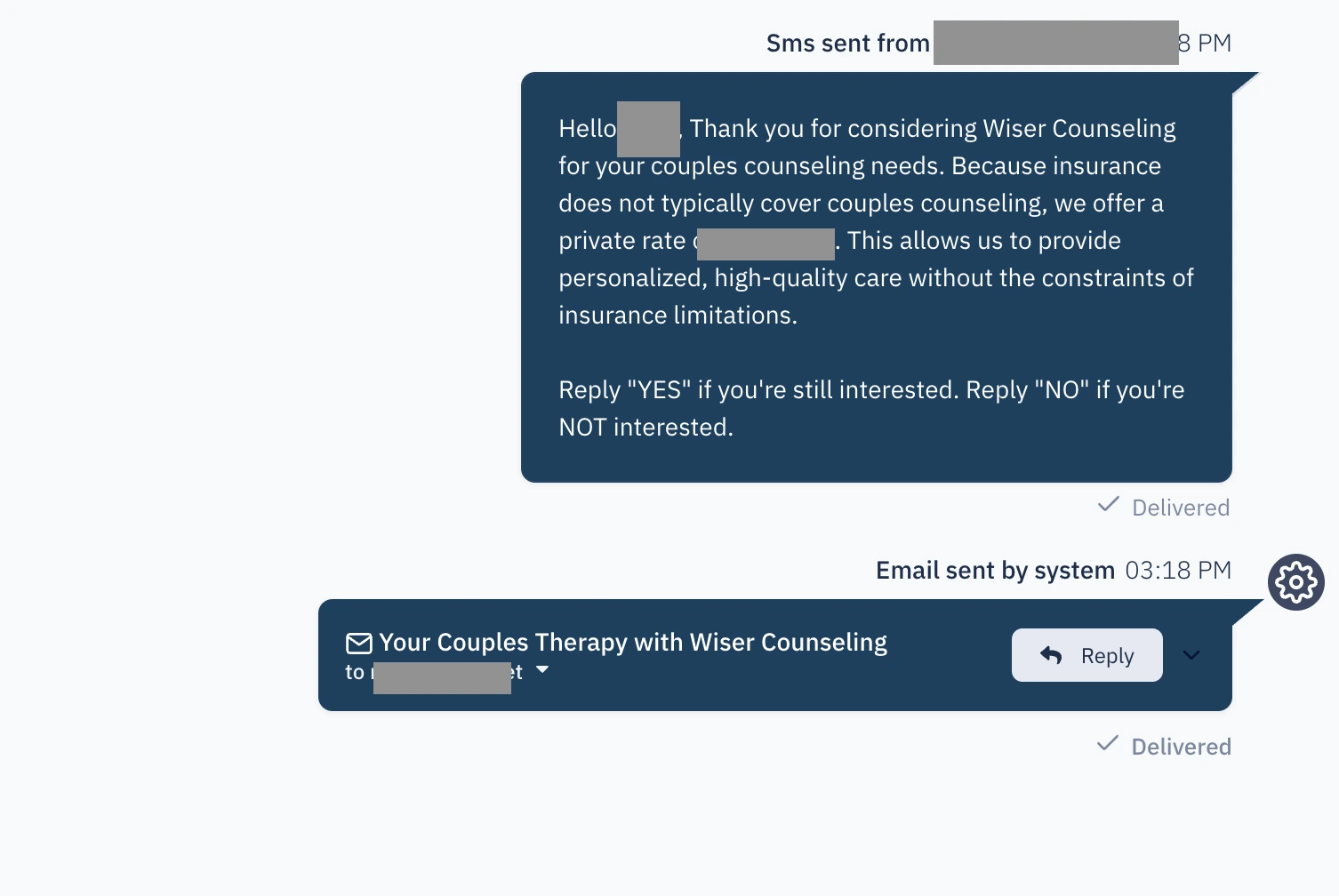
- Front-Desk Administrative Relief: Your office staff completely steps off the manual tracking hamster wheel. The incoming lead is perfectly categorized, labeled by their exact ad-acquisition source, and pre-screened based on insurance compatibility, allowing your intake specialists to spend 100% of their energy onboarding high-probability, ideal clinical matches instead of messing with unorganized spreadsheets.
We don’t just specialize in visual theory; we build real digital platforms that scale actual clinics. From scaling TMS patient pipelines and filling Spravato observation chairs to stabilizing regional talk therapy practices, our local-first layouts consistently beat standard healthcare web development benchmarks.
If you want to see exactly how we bypass corporate competition, scale hyper-local pipelines, and help independent psychiatric and counseling clinics maximize their margins via conversion-tuned design, explore our complete case histories:
 Review Our Mental Health Marketing Case Studies and Portfolios
If your current digital setup looks like an outdated medical portal or drops your patients into a frustrating loop of unanswered phone tags and static contact boxes, your marketing strategy will never reach its true potential. You cannot afford to deploy high-intent search ad campaigns or hyper-local footer SEO architectures only to lose the client’s trust the moment they view your homepage.
At PilotPractice, we build gorgeous, custom mental health website layouts engineered from the ground up around real patient psychology and data-driven performance. We marry warm, hand-holding aesthetics with powerful automated intake funnels to protect your marketing margins, free up your internal staff, and predictably fill your clinicians’ calendars.
[Schedule a Free, Data-Driven Website and Conversion Audit with Our Team Today]