If you are a therapist or a mental health group practice owner plotting out your digital marketing strategy, the most efficient path forward seems to be going all-in on virtual care. The narrative sounds perfect: target an entire state or province with digital ads, build a slick website, and watch the online consultation requests roll in.
But behind the scenes of digital media buying, a brutal advertising reality is draining private practice budgets. Within months of launching a broad, statewide telehealth campaign, owners watch their daily ad spend hit maximum while their actual client roster barely moves.

Working with dozens of mental health practices, we have unmasked a major structural flaw in standard digital healthcare marketing. Advertising virtual therapy on a broad scale is highly inefficient for independent practices. From a pure return on investment (ROI) standpoint, the math is clear: Focusing your ad budget on local, location-based searches yields a vastly lower client acquisition cost (CAC) than trying to buy virtual leads on a giant digital playing field.
Successful, sustainable therapist marketing isn’t about chasing broad internet trends. It requires a synchronized local ecosystem. Here is our agency’s strategic blueprint for running high-efficiency, targeted local campaigns that outsmart the massive corporate budgets by dominating four distinct pillars: local Google Ads, social media retargeting, hyper-local SEO, and a warm website design, all backed by automated lead management.

When a small practice launches an ad campaign targeting broad terms like “online therapy” or “virtual counselor,” they aren’t just bidding against other local clinics. They are entering a massive digital ad auction against corporate giants like BetterHelp, Grow Therapy, Rula, Alma, and Sondermind.
Because these massive entities market on a national scale, they pour millions of dollars into broad digital ad networks monthly. Their aggressive spending artificially drives up the price you have to pay for a single click on any keyword associated with virtual or online care. They can afford to absorb incredibly high client costs because they operate on pure volume, whereas an independent clinic cannot. If you try to market your services across a wide geographic net for virtual care, your budget gets chewed up by these high-priced auctions in minutes.
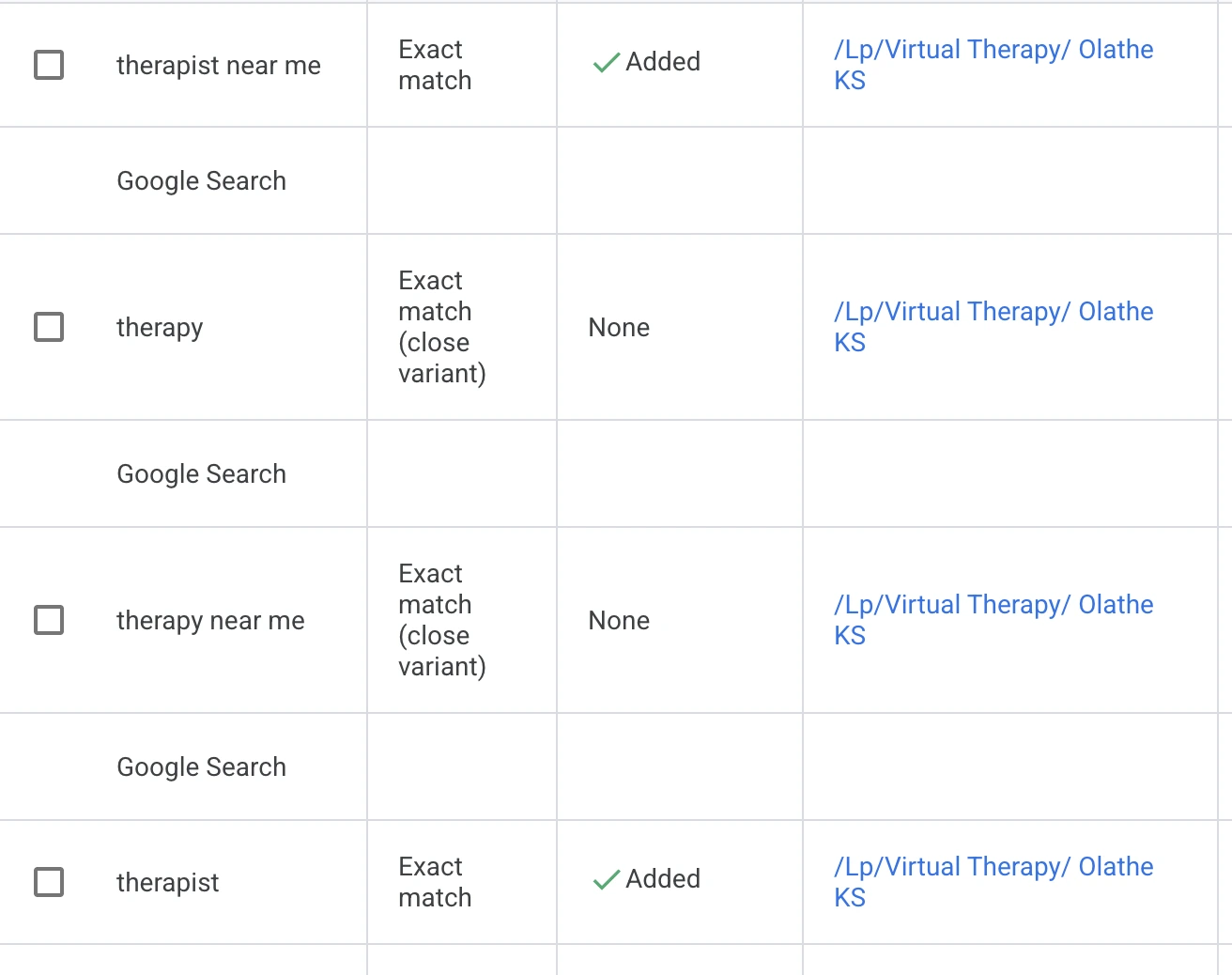
Shifting to Precision Local Search Campaigns
Traditional counseling is fundamentally different from newer, lesser-known treatments like TMS or Spravato. People already know what a therapist does; you don’t need to spend thousands of dollars educating the public on the concept of talk therapy. When someone realizes they need support, they are highly intentional.
As we detail in our complete guide, The Transactional Blueprint: Why Google Ads Form the Core of Talk Therapy Marketing, we strictly restrict keyword bidding to local phrases with high intent. Effective marketing for therapists means targeting the exact phrases people type when they are ready to book an intake:
- “Therapist in [Your City Name]”
- “Counseling clinics near me”
- “Best marriage counselor near me”
When we build Google Ads campaigns fenced strictly within a 10-to-15-mile radius of your office, we exit the expensive statewide virtual auction entirely. The cost-per-click drops significantly, the competition is limited to a few local practices rather than billion-dollar corporations, and your cost-per-lead drops because the traffic intent is hyper-specific.
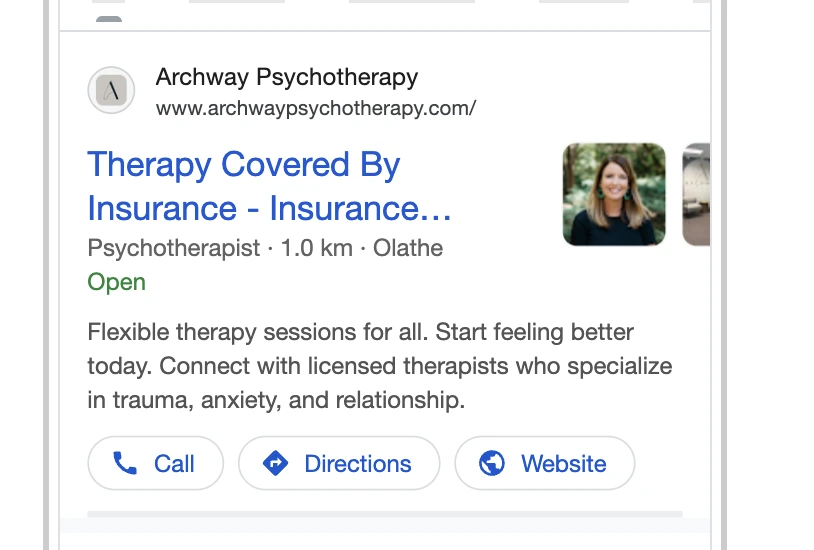
The secret to efficient mental health marketing isn’t having the biggest budget; it’s finding the spaces where your competition is lowest. While corporate sites dominate broad virtual terms, they cannot efficiently optimize for local search intent.
Despite the rise of digital options, a significant portion of patients still actively look for a therapist within their immediate community. Because therapy typically requires a recurring, weekly or bi-weekly commitment, convenience is the ultimate determining factor for in-person clients. Patients are highly willing to drive up to 20 or 30 minutes to sit down with a local therapist, which means your true market includes every neighboring suburb and adjacent town surrounding your physical front door.

[Main Website Hub]
│
├──> Link in Global Footer ──> Suburb A Landing Page ──> Ranks for “[Specialty] Therapist in Suburb A”
├──> Link in Global Footer ──> Suburb B Landing Page ──> Ranks for “[Specialty] Counseling in Suburb B”
└──> Link in Global Footer ──> Suburb C Landing Page ──> Ranks for “[Specialty] Therapist Near Suburb C”
The Multi-City Location Page Strategy
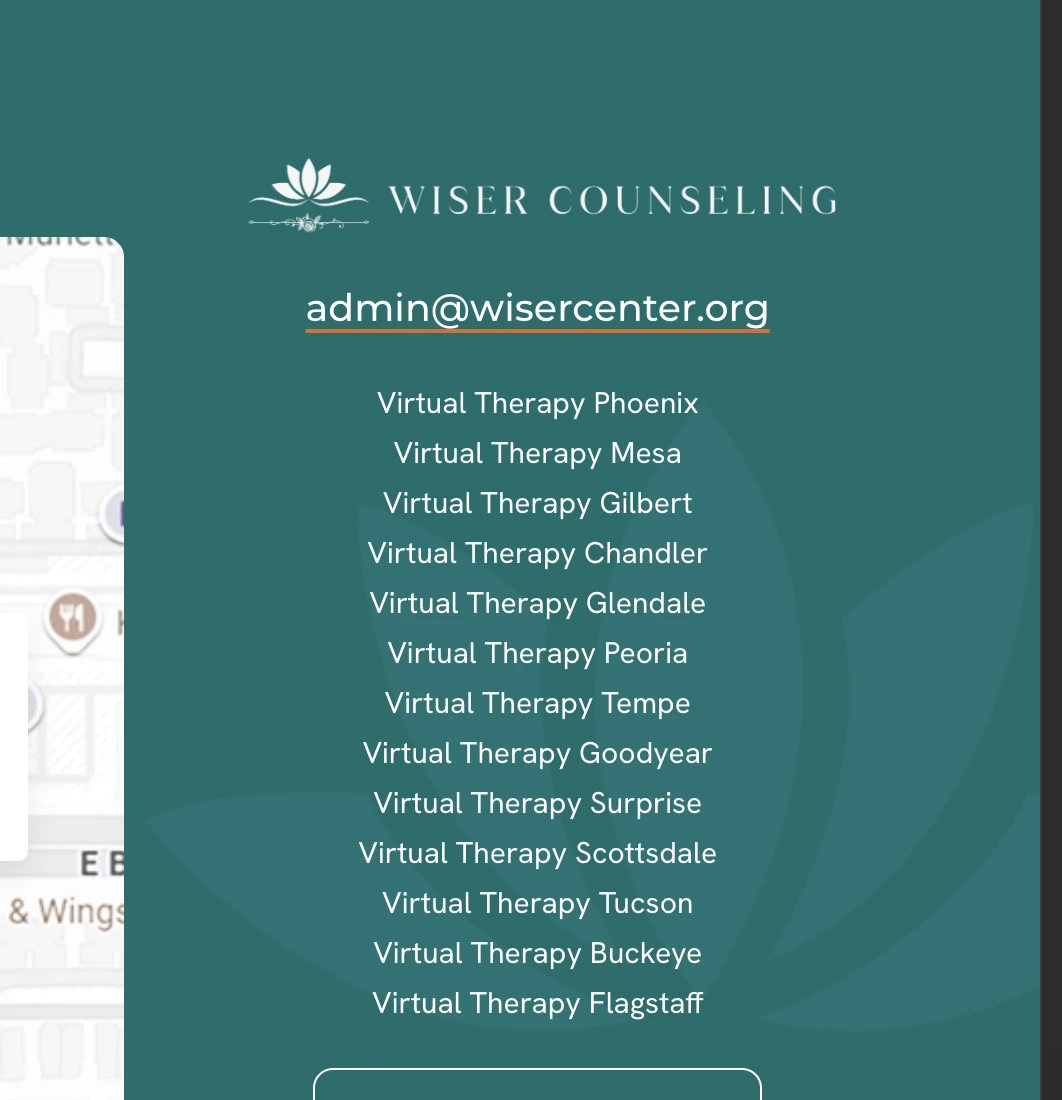
To capture this hidden, free organic volume, we deploy a targeted local framework based on custom location pages. In our deep-dive tutorial, The Hyper-Local Footprint: Why Your Practice Needs a Dedicated Strategy for Therapy SEO, we explain how to establish a dominant presence across your entire 30-minute commute circle.
We construct entirely separate landing pages for each target city featuring unique local descriptions, regional landmarks, and driving instructions. To keep your website looking clean, beautiful, and welcoming for an anxious visitor, we tuck these links cleanly into your website’s global footer section. This keeps the top header menu distraction-free for human users while providing an invisible highway for Google to find your pages and rank your practice at the top of local organic search results.
Unlike complex interventional treatments like TMS or Spravato, traditional talk therapy does not have a public education problem. Patients already know what a therapist does. Seeing a generic graphic or video about mental health while scrolling through Facebook or Instagram in bed at night isn’t going to suddenly trigger a stranger to book a session.
Because of this, running cold Meta Ads to target brand-new audiences for talk therapy is a waste of your marketing budget. Instead, smart counseling practice marketing structures paid social media strictly as a second-impression tool.
Closing the Loop with Micro-Budgets
Statistically, over 90% of high-intent users who click your Google Ads or find you via SEO will leave your website without booking a consultation on their first visit. They get distracted, busy, or emotionally overwhelmed.
As we broke down in The Retargeting Loop: Why Meta Ads for Talk Therapy Only Work as a Second Impression, you can deploy retargeting campaigns to catch that leaking traffic. Because your target audience is strictly limited to the small pool of people who have actually visited your website over the last 14 to 30 days, these campaigns are remarkably cheap and safe to run. For just a few dollars a day, you can serve warm social media ads highlighting your team’s real faces, credentials, and simple messages like, “Taking the first step is the hardest part. We’re ready when you are.” This builds top-of-mind trust without burning ad capital on broad, cold audiences.

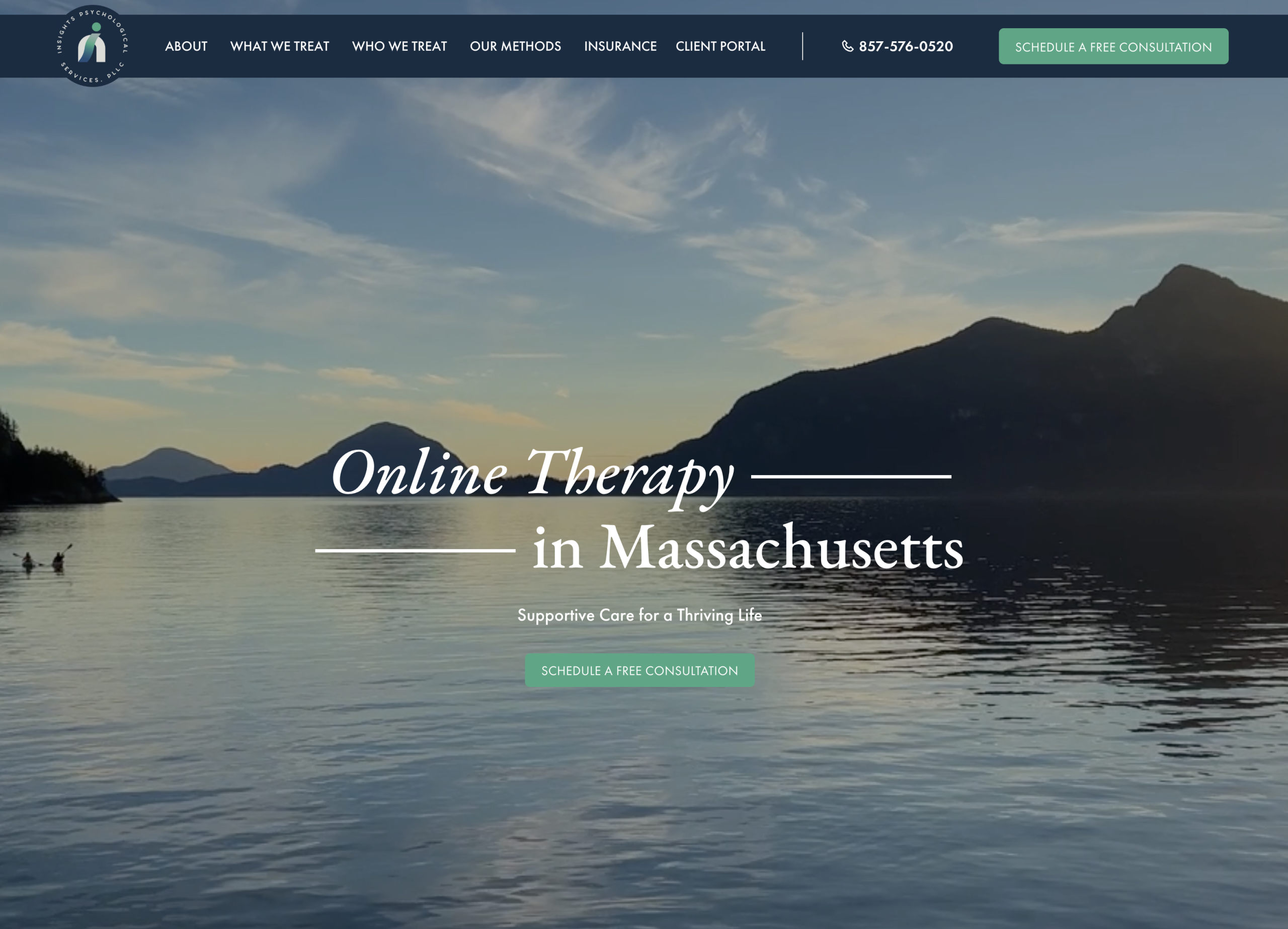
Winning the click via local SEO or precision Google Ads is only half the battle. If a user lands on a website that feels cold, confusing, or too clinical, an emotionally exhausted patient will back out immediately. Your online presence must act as a comforting sanctuary that balances a warm design with a simple intake process.
In our design guide, The Sanctuary Layout: Engineering a High-Conversion Therapist Website Design, we outline the visual signals that build immediate emotional security. Our high-conversion layout framework focuses on removing all confusion:
- A Warm, Comforting Look: We anchor our website builds in soft, natural palettes: warm sand tones, muted sages, and soft creams that immediately reduce visual strain. We replace sterile medical stock photos with real pictures of your cozy office spaces and welcoming portraits of your clinicians.

- Transparent Logistics: We put your accepted commercial insurance networks, clear clinician bios, and office location details right at the top of the page. Removing the mystery around pricing and logistics builds immediate trust.
- Easy Booking Tools: Instead of an intimidating contact form or forcing someone to make a phone call during a personal crisis, we integrate step-by-step screening widgets right into the website. The site gently guides the user through an approachable, private quiz to check their insurance compatibility and main concerns.
Getting local leads onto your website is a massive win, but how you handle those leads on the back end determines whether your private practice marketing actually succeeds. Far too many mental health clinics make the mistake of tracking new inquiries on a standard spreadsheet or manually copying them out of an email inbox.
If you are still using spreadsheets to manage your prospective clients, you are leaking money. Spreadsheets are completely passive. They do not send text updates, they cannot follow up automatically, and they rely entirely on your busy front-desk staff remembering to manually email someone back. When a person reaches out for therapy, they are often in an emotional crisis. If they have to wait hours (or days) for a manual reply, they will simply click on the next clinic in the search results.
[New Inbound Lead] ──> Ditch the Spreadsheet ──> Automated CRM Hub ──> Instant Text/Email Nurture ──> Scheduled Session
The Power of Automation
The exact millisecond an inquiry is made on your website, that data must flow directly into a dedicated CRM (Customer Relationship Management) software like our KloudMD system. By using an automated CRM instead of a static spreadsheet, you immediately upgrade your clinic’s operational speed:
- Instant, Automated Response: The system immediately drops the lead into an automated nurturing sequence. It sends a warm, supportive text message and email acknowledging their courage for reaching out and confirming their next steps. This keeps them engaged when their intent is highest.
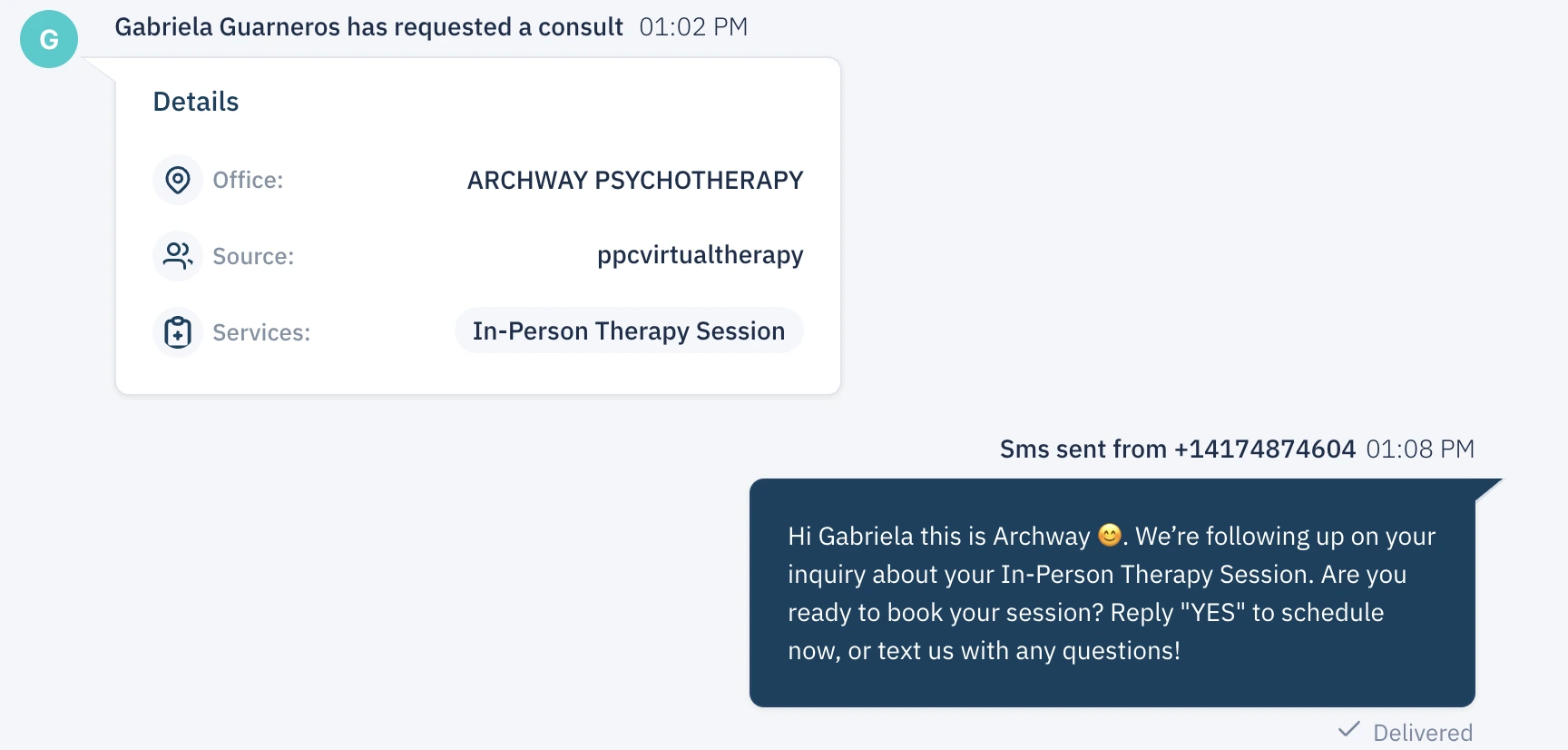
- Smart Follow-Up Logs: If a lead doesn’t book a slot right away, the CRM handles the follow-up work for you over the next few days with gentle, automated reminders. It ensures no patient slips through the cracks.
- Front-Desk Relief: Your team no longer wastes administrative hours on manual data entry or hunting through old emails. They only spend time talking to pre-screened, highly interested individuals who are ready to fill your open calendar slots.
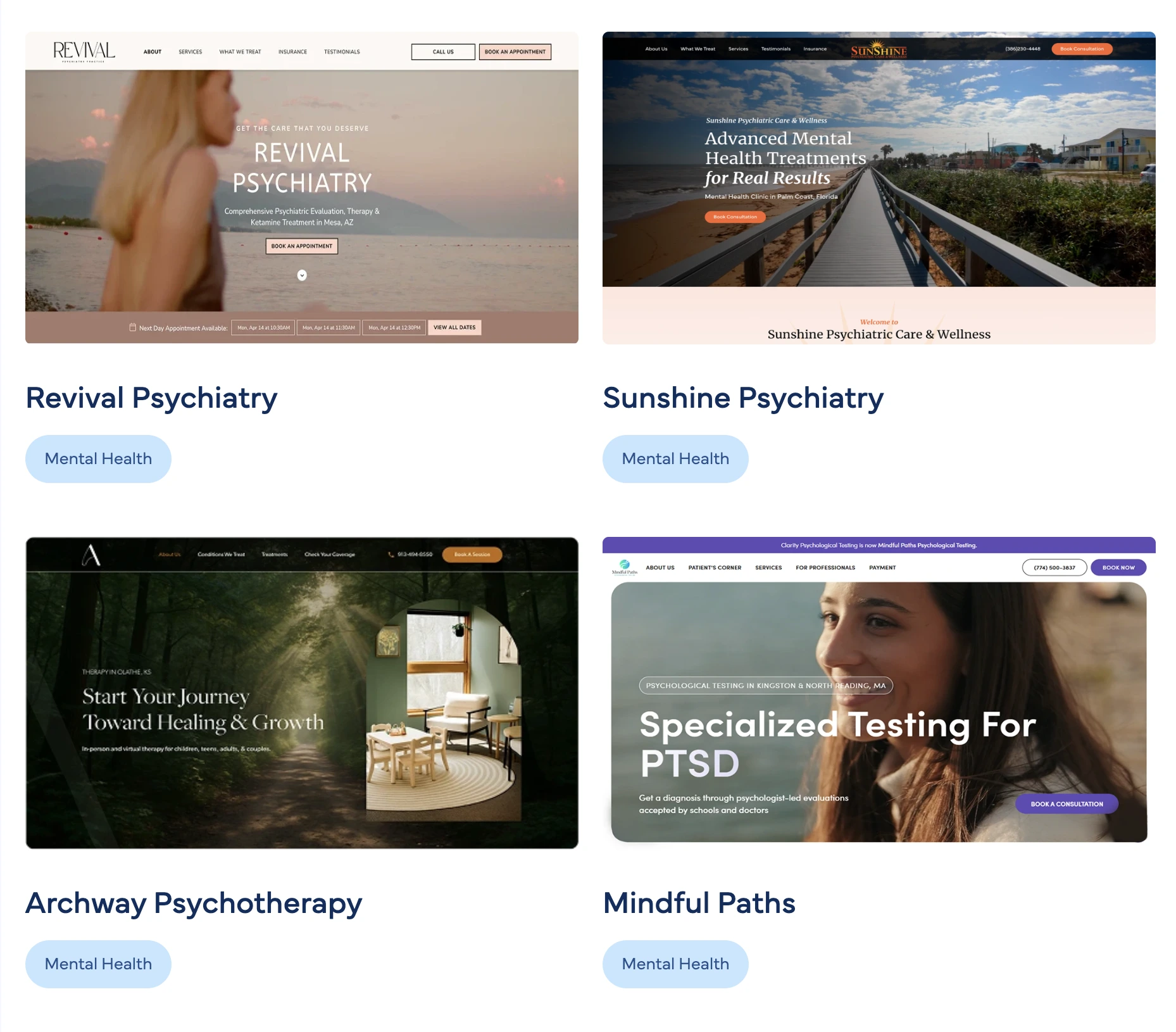
We don’t just specialize in marketing theory; we build real systems that scale actual clinics. From scaling TMS patient pipelines and filling Spravato observation chairs to stabilizing regional talk therapy practices, our local-first models consistently beat standard agency outcomes.
If you want to see exactly how we bypass corporate competition, scale hyper-local pipelines, and help independent psychiatric and counseling clinics maximize their margins, explore our complete case histories:
 Review Our Mental Health Marketing Case Studies and Portfolios
Stop letting generic agencies run broad digital campaigns that pit your marketing budget against multi-million-dollar corporate platforms. At PilotPractice, we specialize in therapist marketing that actually impacts your bottom line. We build hyper-targeted, location-centric ad systems, multi-city SEO footprints, high-conversion website designs, and automated backend CRM systems that turn local search intent into your practice’s greatest competitive advantage.
[Schedule a Free, Data-Driven Practice Strategy Session with Our Team Today]