Updated October 2026 · 12-minute read
SEO for doctors means making your practice easy to find when a nearby patient searches Google for the care you give. It is mostly three things: your Google Maps listing, your reviews and your website pages. A fourth thing matters just as much: what happens after a patient finds you.
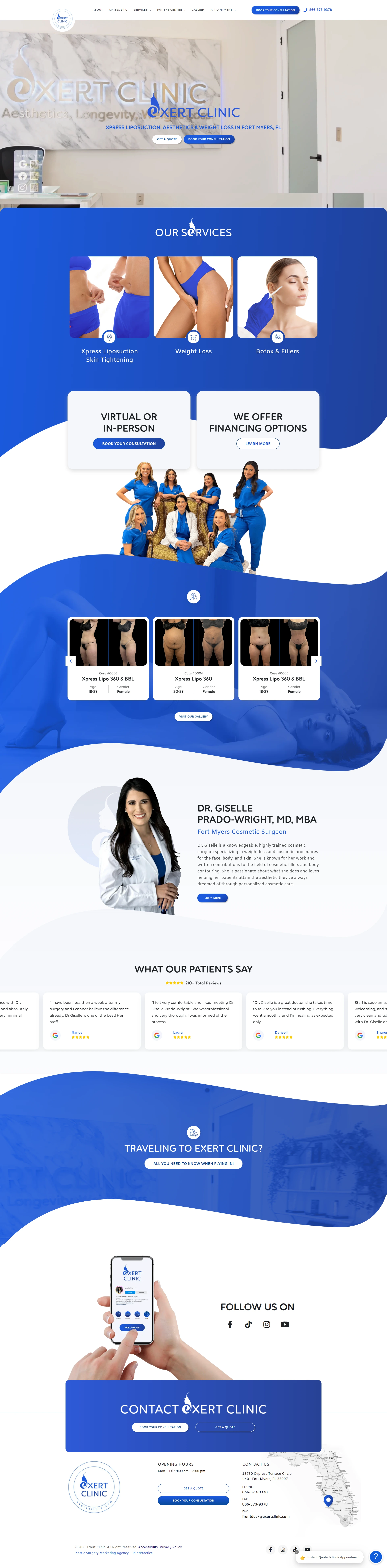
This guide explains each part in plain words. You will see what to do, what to skip and how to tell if it is working. We are a healthcare marketing agency, so we also show real examples from practices we work with.
TL;DR
The short answer: start with Google Maps and reviews, then build one clear page for each treatment you offer. Make booking easy, and judge SEO by booked patients, not by rankings.
- Maps come first. For “near me” searches, the map listings sit above the regular results.
- About half of online bookings happen after hours. Across 134 practices on our booking system, 51% of patients booked before 8 AM, after 6 PM or on a weekend.
- Expect 3 to 6 months. Maps can move in weeks. Website pages usually take longer.
What is SEO for doctors?
SEO stands for search engine optimization. For a doctor, it means showing up on Google when someone near you looks for help.
Google shows three kinds of results for most health searches:
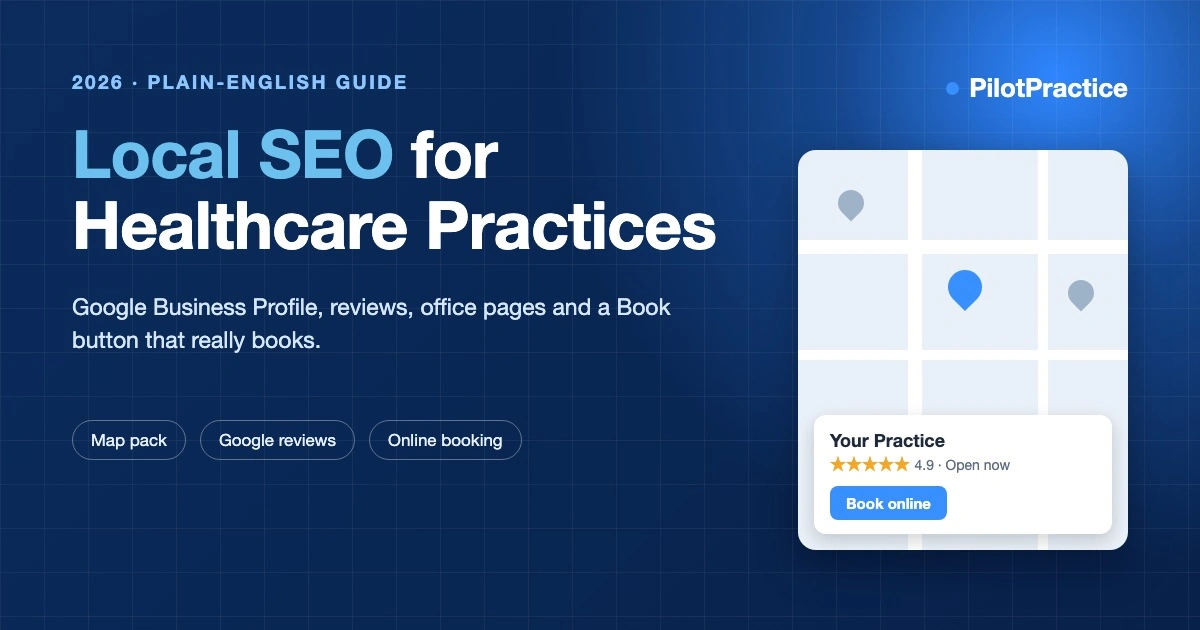
- The map. Three practices with stars, hours and a phone button.
- The regular list. Ten website links under the map.
- AI answers. A short summary at the top, plus tools like ChatGPT that name practices.
Good medical SEO works on all three. Paid ads are a separate thing. SEO is the free spot you earn over time.
Our take: SEO is not a trick. It is making it obvious to Google who you are, what you treat and where you are.
How do patients search for a doctor?
Patients search in four main ways. Each one needs something different from you.
- “Near me” searches, such as “dermatologist near me.” These are won on Google Maps.
- Treatment plus city, such as “TMS therapy Mesa.” These are won with a page about that treatment that names your city.
- Your name, such as “Dr. Smith podiatrist.” These are won with a strong Google listing and good reviews.
- Questions, such as “why does my heel hurt in the morning.” These are won with helpful articles, and they often show up in AI answers.
The first three bring patients who are ready to book. The fourth brings people who are still learning. Start with the first three.
How do you show up on Google Maps?
Your Google Business Profile is the listing that shows on the map. It is free, and it is the fastest win in medical SEO.
Do this
- Pick the most exact main category, such as “Podiatrist” rather than “Doctor.”
- Add every service you offer, with a short line each.
- Keep your hours right, holidays included.
- Add real photos of your office, team and doctors.
- Use the same name, address and phone everywhere online.
Skip this
- Adding city names or keywords to your business name. Google can suspend you for it.
- Stock photos.
- A second listing for the same address.
- Leaving questions in the Q&A section unanswered.
Have more than one office? Each office gets its own listing and its own page on your website.
How do reviews help you rank?
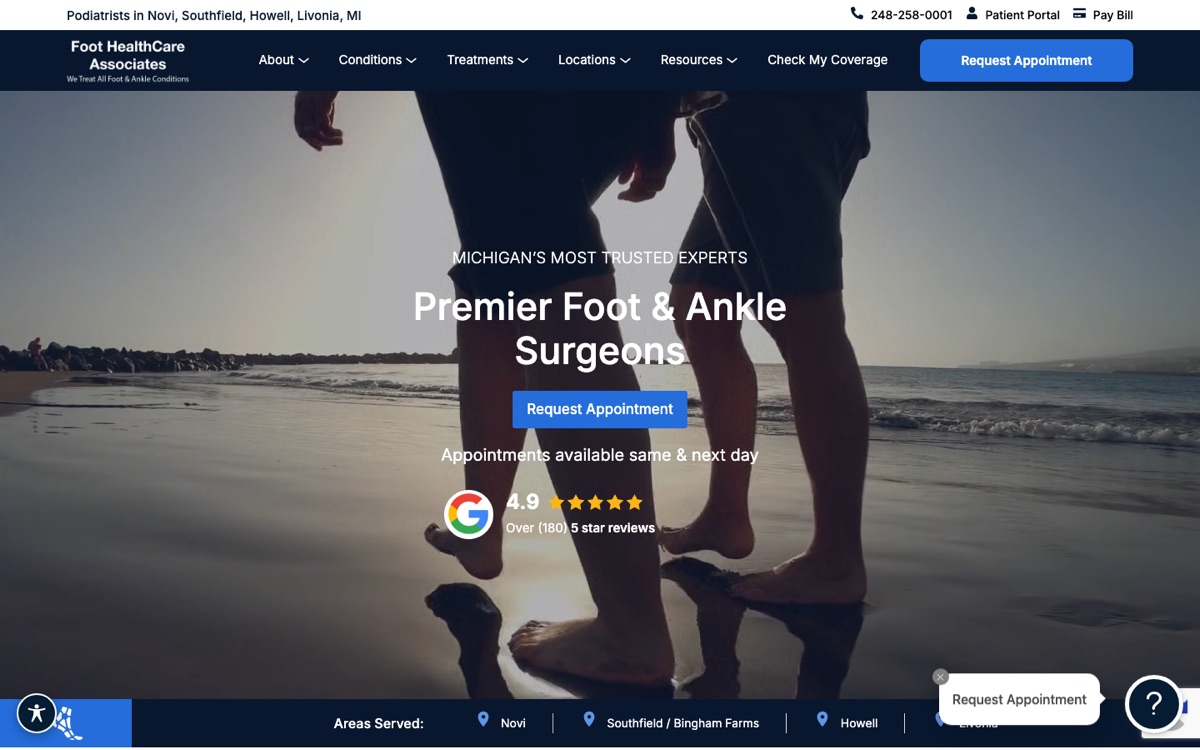
Reviews help in two ways. Google uses them to pick who shows on the map. Patients use them to pick who to call.
What matters most is a steady flow of new reviews, not a big pile from years ago. A practice that gets a few reviews every week usually beats one that got 200 reviews in 2019.
- Ask every patient. A text with a link a few hours after the visit works best.
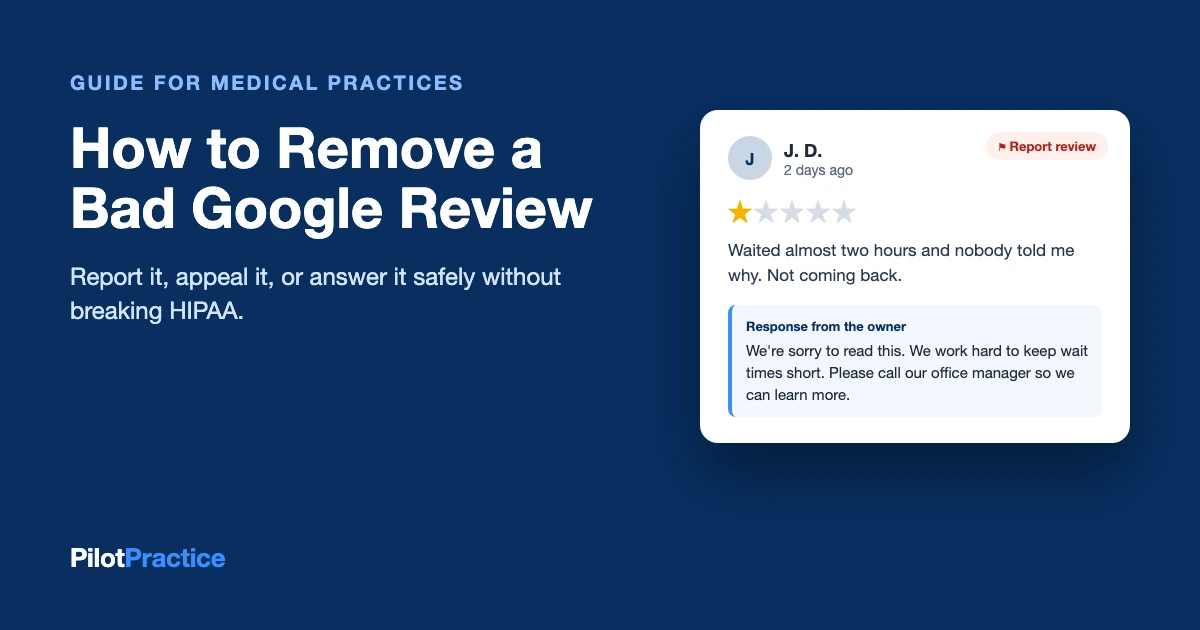
- Reply to every review, good or bad, within a few days.
- Never confirm someone is a patient in a reply. “Thank you for the kind words” is safe. “Glad your knee surgery went well” breaks patient privacy.
More on this in our guide to HIPAA-safe patient reviews and our review request tools.
Our take: if you only have time for one thing, set up review requests that go out on their own.
What should each page on your website say?
Give every main treatment its own page. One page called “Services” with a list of 20 things will not rank for any of them.
Each treatment page should answer what a patient asks before they book:
- What is it, and who is it for?
- What happens at the visit, and how long does it take?
- Who does it here, and what training do they have?
- Where are you? Put your city in the main heading.
- How do I book? Put a clear button near the top.
Use your own photos and your own words. A page that sounds like every other practice gives Google no reason to pick you.

What do Google and AI tools look for in medical content?
Health pages are held to a higher bar. Google wants to know a real expert stands behind them. AI tools like ChatGPT and Google’s AI answers look for the same signs before they name a practice.
- A named author or reviewer. Add “Reviewed by Dr. Jane Lee, board-certified dermatologist” with a link to her bio.
- Full doctor bios. Training, board certification, years in practice and hospital ties.
- Clear, direct answers. Answer the question in the first sentence, then explain.
- The same facts everywhere. Your website, Google listing and directory listings should all agree.
- Real photos and videos of your team and office.
AI answers also pull from review sites and directories such as Healthgrades and Zocdoc. Keep those profiles complete too.
Does your website need to be fast?
Yes. Most patients search on a phone. If your page is slow or hard to tap, they go back and pick the next practice.
Do this
- Check your site on your own phone, on cell data.
- Make the phone number tap-to-call.
- Shrink big photos before you upload them.
- Run Google’s free PageSpeed Insights test once a quarter.
Skip this
- Pop-ups that cover the page on a phone.
- Autoplay videos at the top.
- Paying for a full redesign just for speed before you test the cheap fixes.
You do not need to understand the technical scores. You need a site that loads quickly and works with one thumb.
How do you get other websites to link to you?
When a trusted website links to yours, Google treats it like a vote. For a local practice, a few local votes beat hundreds of random ones.
Good places to earn links:
- Hospitals where your doctors have privileges
- Medical schools and residency programs on their bios
- Your state and specialty associations
- Your local chamber of commerce
- Local news, when a doctor gives an expert quote
- Teams, races and events you sponsor
Start with the easy ones. Check that every hospital, school and group that lists your doctors links to your site, not an old address. Then ask for a link each time you sponsor something or speak at an event.
Watch out: skip anyone selling “500 backlinks” for a low price. Those links come from junk sites, and they can hurt you more than help.
What happens after a patient finds you?
This is the part most SEO guides skip. Ranking only gets you the visit. You still have to turn that visit into a booked patient.
Two things lose the most patients:
- A “request an appointment” form. The patient fills it in, then waits for a call back. Many book somewhere else in the meantime.
- Nobody answering. In our booking data, about half of patients booked outside office hours. If they can only call, many of those calls ring out.
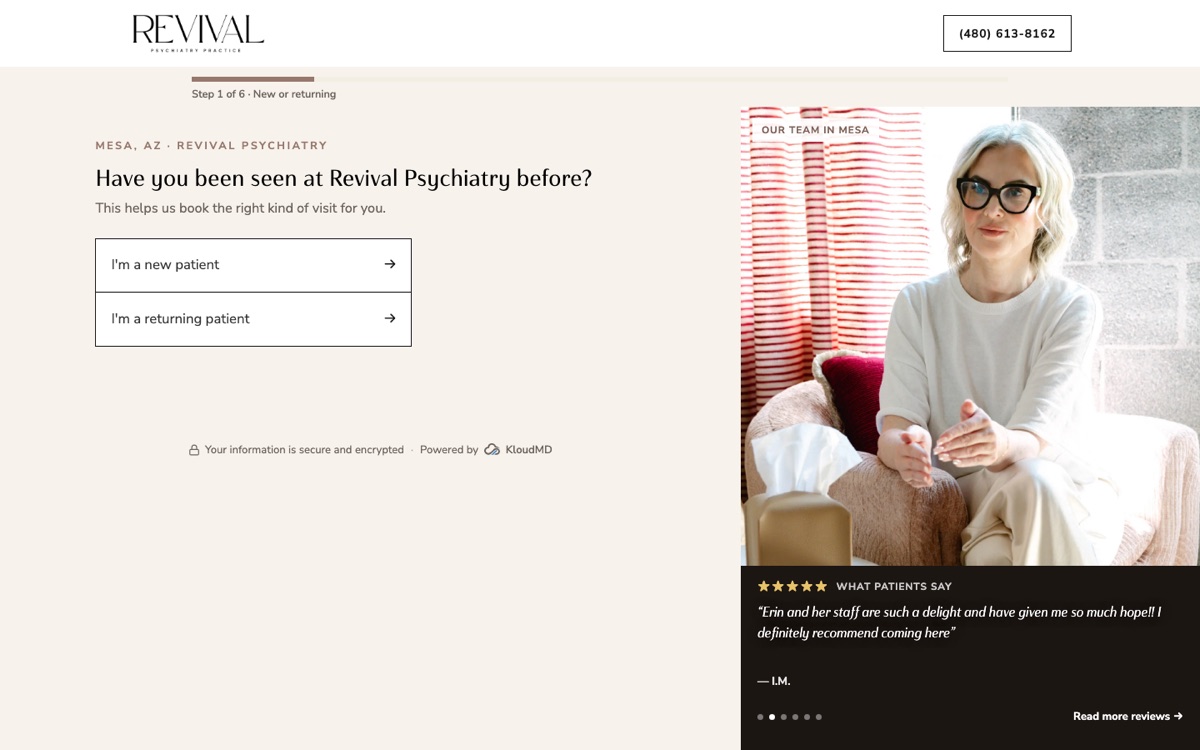
The fix is booking that shows real open times and puts the visit straight into your practice software. When the office is closed, an AI phone assistant can answer and book too.
Best for
Practices with open time on the schedule that lose patients to slow call-backs.
Watch out
Online booking only helps if it connects to your real schedule. A booking page that sends an email to the front desk is still a request form.
See which systems we connect to on our practice software page.
Is your website tracking HIPAA-safe?
Most practices use tools to see where patients come from. Some common ones can share patient details with Google or Facebook without you knowing.
The risk is highest on booking pages and forms. When a tracking tool sees “booked a visit for depression” next to a name, that can be a privacy problem.
- Check what tracking codes run on your booking and contact pages.
- Ask your web team for a signed agreement to protect patient data, called a BAA.
- Track bookings in a way that sends counts, not patient details.
Our guides go deeper: is Google Analytics HIPAA compliant?, is the Meta pixel HIPAA compliant? and our full HIPAA-compliant marketing hub.
How do you know if SEO is working?
Rankings are easy to show off and easy to fake. A report full of “you rank #3” means little if the phone is quiet.
Ask for these numbers every month:
- Booked patients from Google, split between Maps and the website.
- Calls from your Google listing.
- New reviews this month.
- Searches you show up for in Google Search Console, a free Google tool.
The best reports tie each booked visit back to where the patient came from. That is only possible when booking and tracking are connected.
You can check most of this yourself. Google Business Profile shows calls and direction requests. Search Console shows which searches bring people in. Your booking system shows who booked online and when.
Our take: if a report does not mention patients, ask why.
How long does SEO take for a medical practice?
Most practices see real movement in 3 to 6 months. Here is the usual order:
- Weeks 1 to 4: fix the Google listing and start review requests. Maps often move first.
- Months 2 to 4: new treatment pages get found and start showing up.
- Months 4 to 12: pages climb, links add up and AI tools start naming you.
It takes longer in big cities and in busy specialties like plastic surgery and dentistry. Be careful of anyone who promises page one in 30 days.
SEO also does not stop. Pages need fresh facts, new reviews keep coming in and other practices keep working on theirs. Plan to check your top pages at least twice a year.
What mistakes cost practices the most?
We see the same few problems again and again when we look at a new practice’s site.
- One page for every treatment. A single “Services” page with a list of names gives Google nothing to rank.
- The wrong phone number. An old number on Yelp or a directory makes Google less sure about you.
- No reviews in the last year. Patients notice when the newest review is 2 years old.
- A booking form that only sends an email. The patient waits, and many book somewhere else.
- Tracking tools that send health data out. This one can turn into a legal problem.
None of these need a big budget. Most can be fixed in a few weeks.
Our take: fix these first, before you pay for anything new.
Should you do SEO yourself or hire an agency?
You can do the basics yourself: the Google listing, review requests and your bios. That alone helps many small practices.
Do it yourself if
- You have one office and little competition.
- Someone on staff has 2 to 3 hours a week.
- Your website is already in good shape.
Hire help if
- You are in a busy city or specialty.
- You need new treatment pages written.
- You want to see booked patients by source.
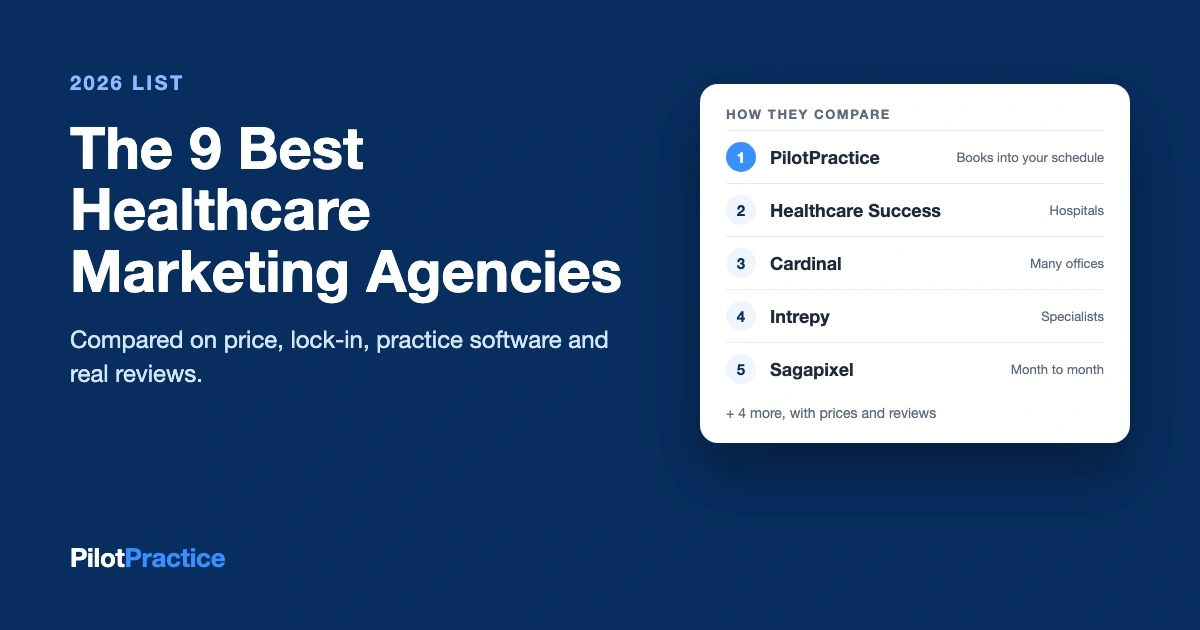
When you hire, ask how they report results, how long you are locked in and whether they have healthcare clients like you. Our lists of the top agencies for dental, plastic surgery, dermatology, chiropractic and mental health compare prices and contracts side by side.
See how we handle SEO for medical practices, or our pages for plastic surgeons, med spas, mental health practices and dentists.
Frequently asked questions
What is SEO in healthcare?
It is the work of getting a practice, hospital or clinic to show up on Google when patients search for care. For most practices, it means Google Maps, reviews and clear treatment pages.
How long does SEO take for a doctor’s office?
Most practices see real movement in 3 to 6 months. Google Maps can improve within weeks. Busy cities and specialties take longer.
Is SEO being replaced by AI?
No. AI tools like ChatGPT and Google’s AI answers pull from the same places Google does: your website, your Google listing, reviews and directories. Good SEO is how you get named in AI answers.
Can a small practice beat a hospital on Google?
Yes, especially on Google Maps. Maps care about distance, reviews and a complete listing. A small practice with steady reviews and clear treatment pages often shows above a big hospital nearby.
Do doctors need a blog for SEO?
Not at first. Treatment pages and your Google listing matter more. Once those are done, articles that answer common patient questions can bring extra visits and help with AI answers.
How much does SEO cost for a medical practice?
It depends on your city, specialty and how many offices you have. Ask any agency what is included, how they report results and how long you are locked in before you compare prices.
What does SEO stand for in medical marketing?
SEO stands for search engine optimization. In medical marketing it means making your practice easy to find when patients search Google, Google Maps or AI tools for a doctor or a treatment.
How do I get a good SEO score?
Free tools give your site a score, but Google does not use that score. Focus on what Google does use: a complete Google listing, steady reviews, one clear page per treatment and a fast site on phones.
Want more booked patients from Google?
We help practices show up on Google and turn those visits into booked appointments, straight into your practice software.