When a patient arrives on a website looking for Transcranial Magnetic Stimulation (TMS), they are almost always coming from a place of deep emotional and physical exhaustion. They are likely dealing with Treatment-Resistant Depression (TRD), fighting severe systemic medication side effects, or managing the frustration of having tried multiple anti-depressants without any sustainable relief.
Furthermore, because neurostimulation involves advanced medical technology and an electromagnetic coil, it can sound incredibly intimidating or scary to someone who has never experienced it.
If your digital presence feels cold, clinical, or overly corporate, a vulnerable patient will click away instantly. In our cornerstone framework, TMS Marketing Strategy: How to Overcome Generic Medical Ad Failures and Fill Your Treatment Chairs, we broke down how real growth requires a synchronized multi-channel ecosystem. At the absolute center of that ecosystem is your digital hub.
To convert an anxious visitor into a scheduled patient, you must master premium website design for tms clinics. Your site cannot just act as a digital business card; it must serve as a comforting, educational sanctuary that holds the patient’s hand while completely streamlining the intake process. Here is how we engineer high-trust, high-conversion websites for interventional psychiatry.
The primary goal of intentional website design for tms providers is to reduce psychological friction and eliminate fear. The design must communicate sub-textually that the patient is safe, that your team is kind, and that recovery is entirely possible.
We build our clients’ sites using specific, comforting visual and textual signals:
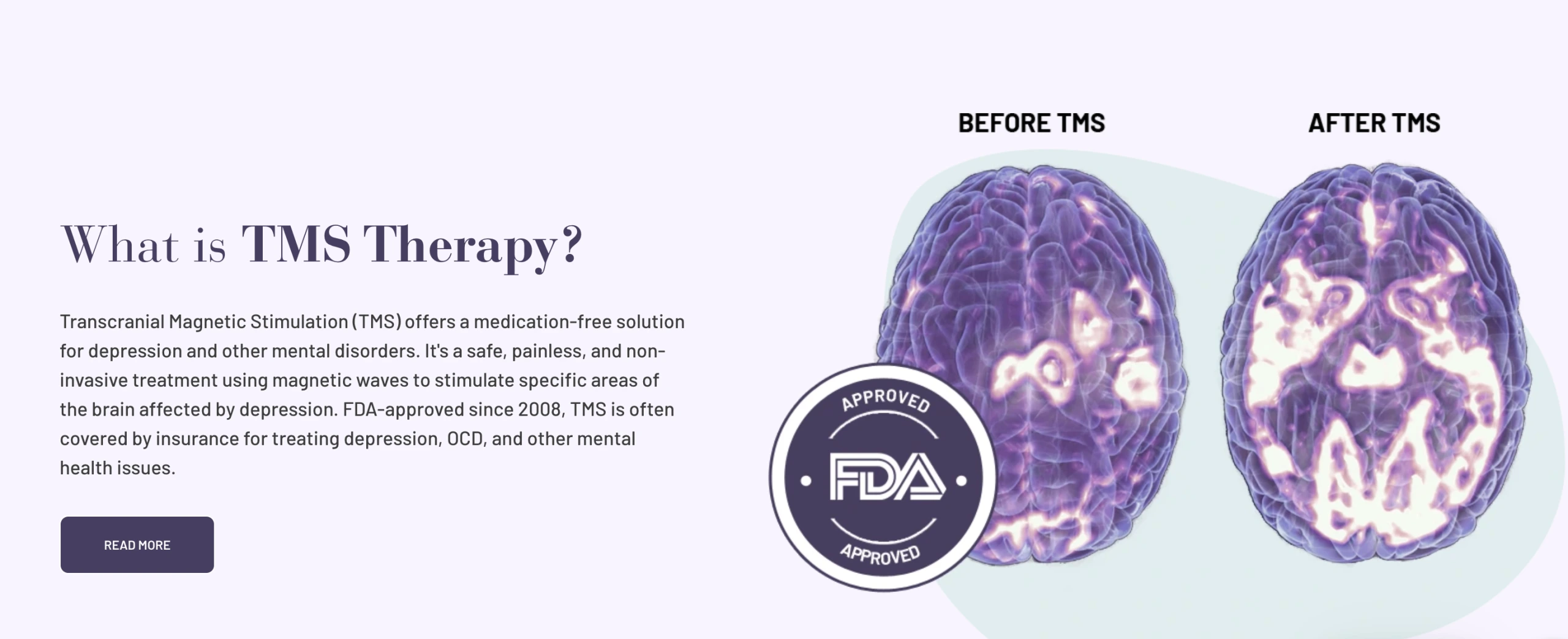
- The Visual Aesthetic: We steer completely clear of stark clinical whites, harsh corporate blues, high-contrast text, or scary brain scans. Instead, we anchor the layout in soft, grounded palettes: warm creams, muted sages, and gentle sand tones that act as an immediate psychological sigh of relief for the nervous system.
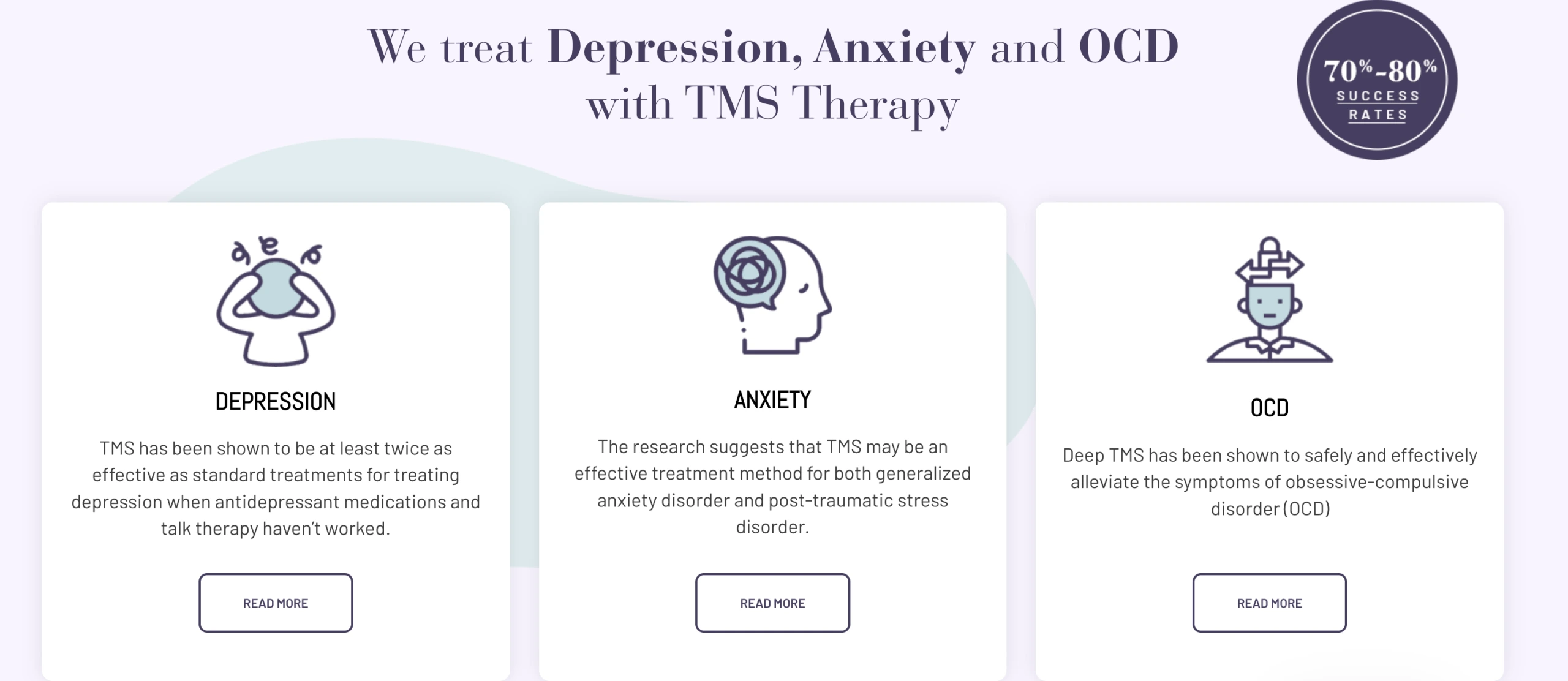
- Demystifying the Chair Experience: Patients are often terrified that the treatment will be painful, involve shocks, or require invasive anesthesia. Your design must explicitly break down “Day One.” We dedicate prominent website real estate to showing inviting, comfortable treatment environments, explaining clearly that the protocol is entirely non-invasive, allows them to sit relaxed watching Netflix or reading, and features zero downtime.
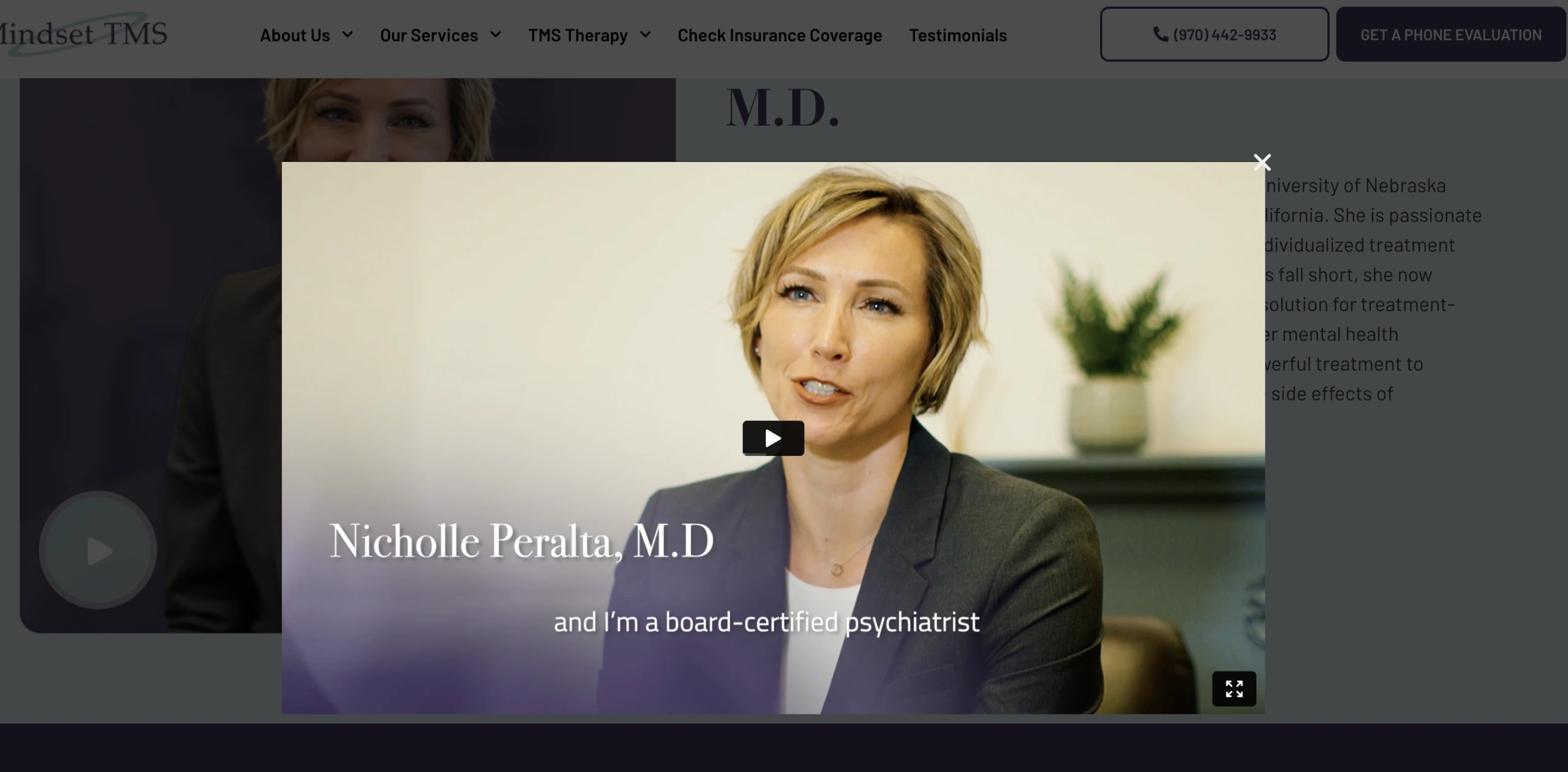
- Aggressive Insurance Prominence: Financial anxiety is just as restrictive as clinical anxiety. The phrase “Covered by Most Major Insurance” and clear logos of commercial payers (Aetna, Cigna, BCBS, UnitedHealthcare, Medicare) must be clearly visible above the fold within the first three seconds of landing on the page.
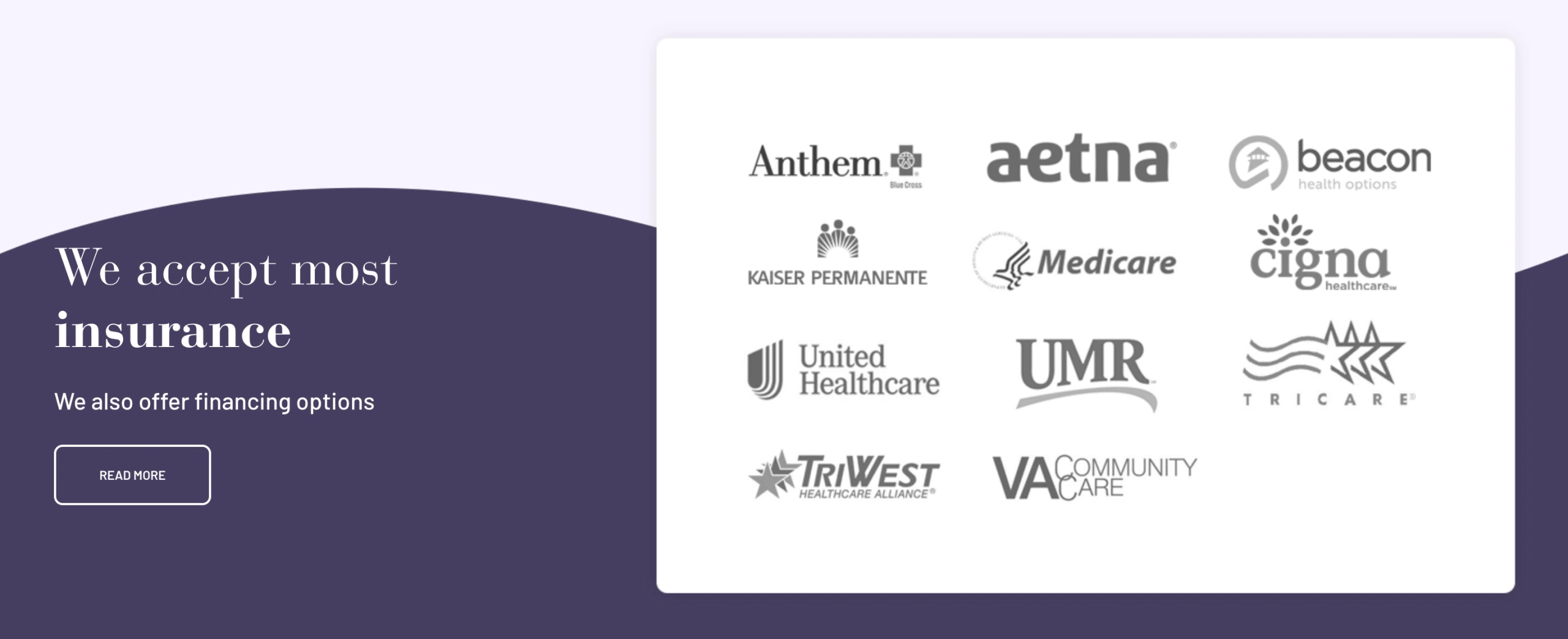
While your front-facing TMS marketing website design must be soft, warm, and welcoming, your back-end operational architecture must be incredibly sharp, responsive, and automated.
A critical leak for growing clinics is forcing an interested patient to fill out a generic, open-ended “Contact Us” text box, or worse, making them dial a manual phone number during an acute mental health crisis. When an exhausted individual finally gathers the cognitive energy to seek help, you must make the path to booking completely effortless.
Instead of a cold, static contact box, we integrate high-trust, interactive screening widgets directly into the user interface. The website gently guides them through a step-by-step pre-qualification screener regarding their commercial insurance network and medication history.
The moment a user interacts with this tool, the data routes directly into our backend practice workflows. This automation radically transforms clinical efficiency:
- Zero Data Entry: It completely eliminates manual, error-prone data entry for your front-desk administrative staff.
- Closed-Loop Attribution: It automatically logs the clinical inquiry, tracks their exact ad acquisition source, and handles immediate, reassuring follow-up notifications via SMS or email.
- High-Probability Pipelines: Your intake team stops chasing cold, unqualified phone tags and only spends time onboarding high-probability candidates whose insurance requirements are already mapped out.
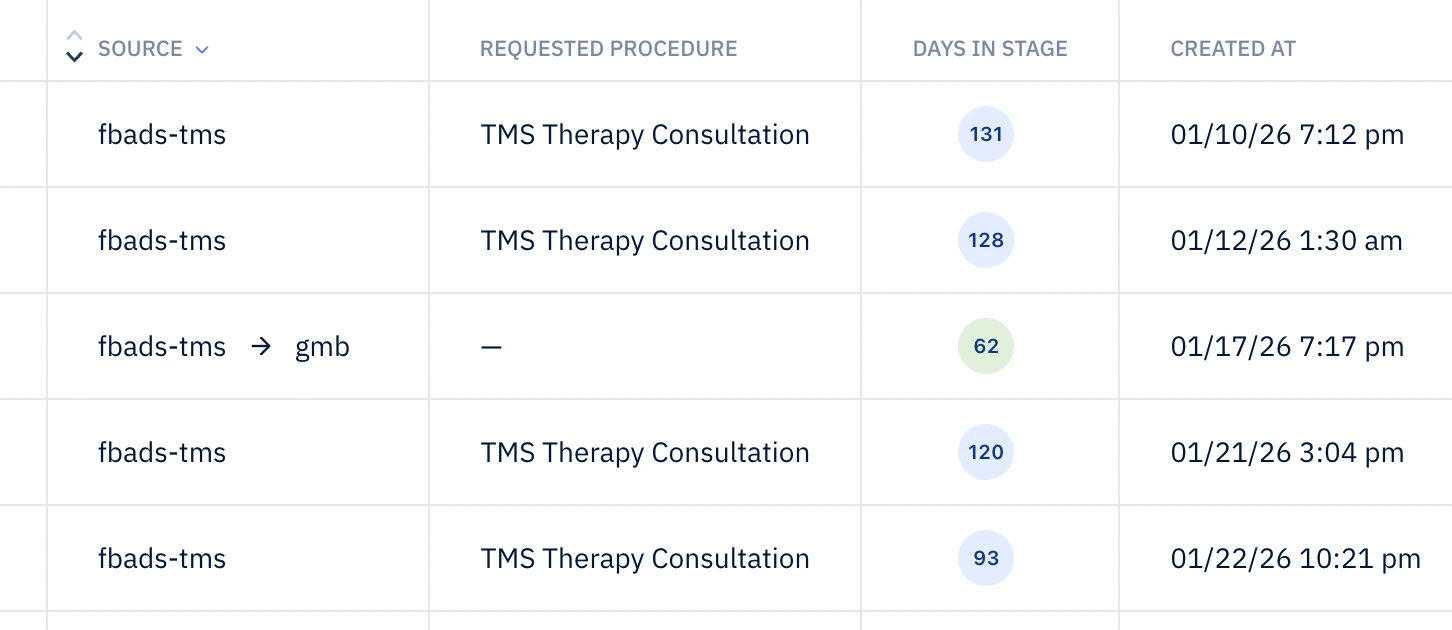
To see exactly how we blend beautiful, comforting brand aesthetics with automated conversion engines, look at two distinct examples of high-converting website design for tms clinics that we engineered for our active clients:
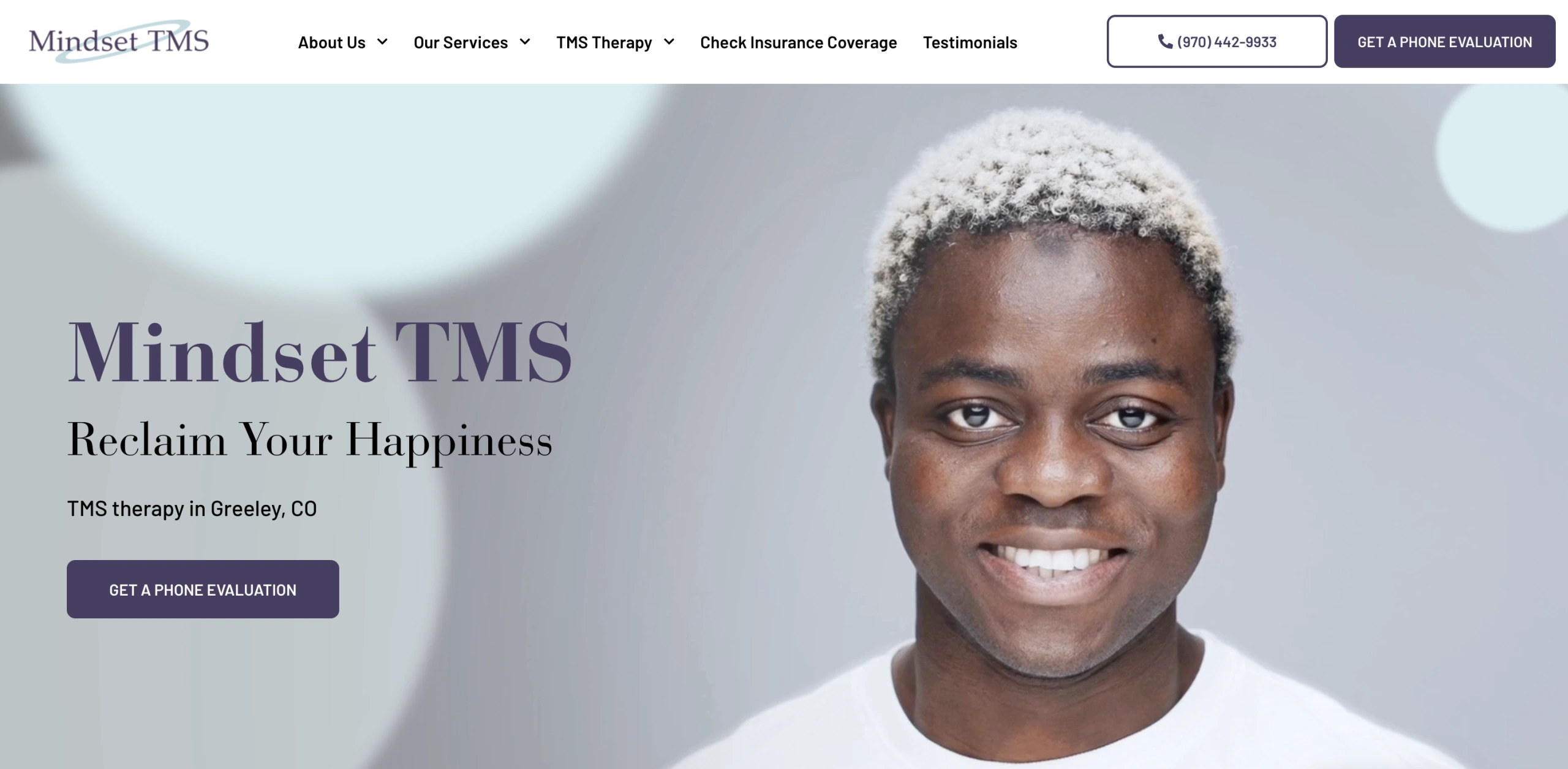
- Mindset TMS: Mindset TMS showcases how to build a highly educational, warm, and supportive digital environment. The copywriting completely avoids dense medical jargon, speaking directly to the heart of the patient’s daily struggles. It incorporates smooth navigation, soft visual signals, and friction-free calls-to-action that allow users to comfortably verify their insurance network. Explore their platform live at Mindset TMS.
- Brain Health Solutions: This custom interface is a masterclass in clean, approachable structure combined with modern branding elements. It highlights clear, comforting pathways for patients, integrates clear insurance transparency right out of the gate, and utilizes a highly responsive, fast-loading layout structure. Review their conversion layout live at Brain Health Solutions.
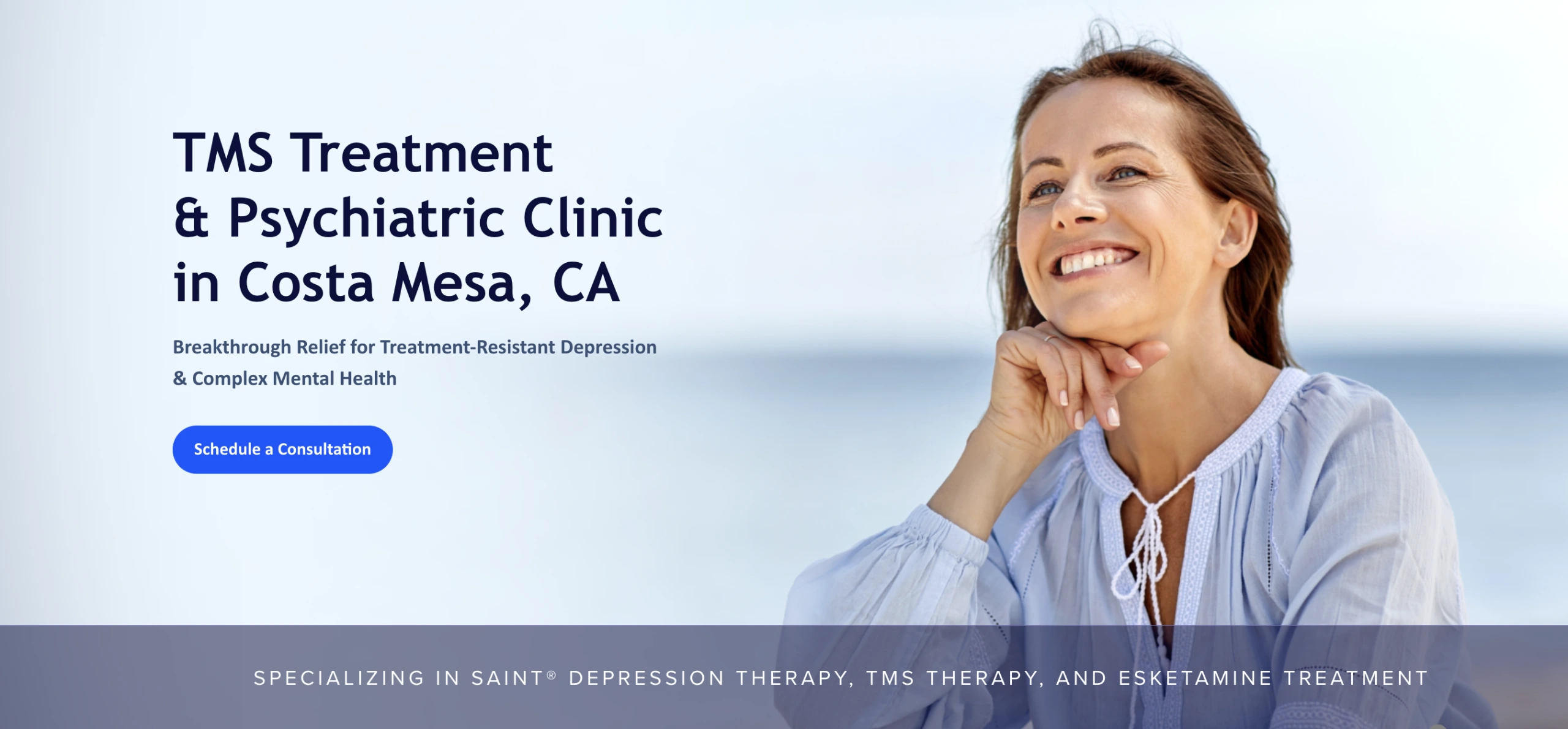
We don’t just build pretty landing pages; we engineer end-to-end local patient pipelines that structurally reduce lead costs, protect your profit margins, and keep your advanced treatment chairs consistently full.
If you want to view the real operational data, local ranking milestones, and conversion metrics we have generated for independent psychiatric and mental health clinics nationwide using specialized web design frameworks, explore our comprehensive project portfolio:
 Explore Our Mental Health Marketing Case Studies Portfolio
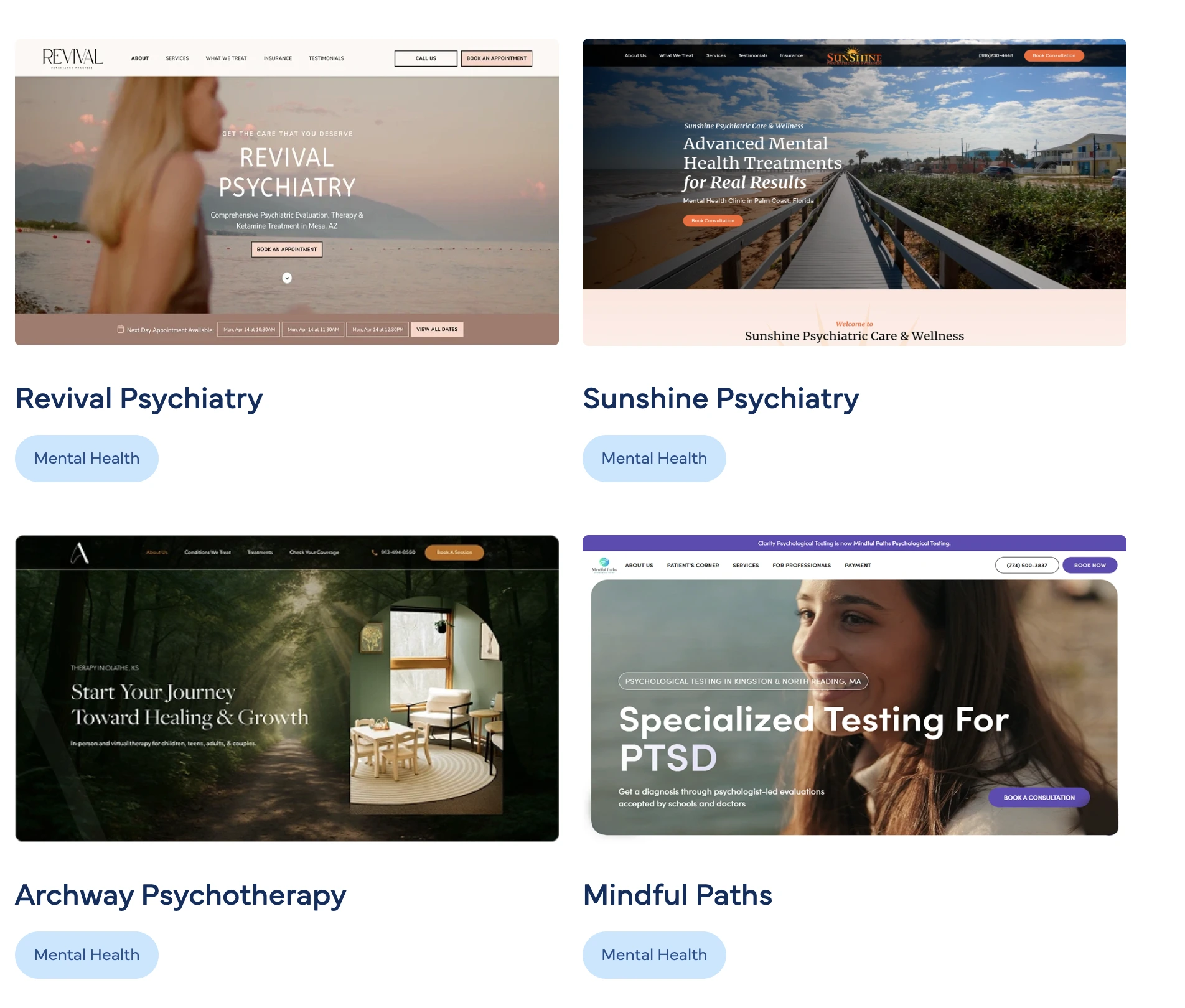
If your current website looks like a generic medical directory or forces vulnerable patients through a frustrating, manual phone tag loop, your digital ad campaigns will fail. You cannot afford to spend marketing dollars on high-intent Google Search or disruptive Meta ad channels only to drop the lead at your website’s front door.
At PilotPractice, we build bespoke mental health websites designed explicitly around operational clinical metrics and patient psychology. We merge soft, hand-holding branding with advanced conversion automation to maximize your ad spend, optimize your staff’s workflow, and predictably fill your treatment chairs.
[Schedule a Free, Data-Driven Website and Conversion Audit with Our Team Today]