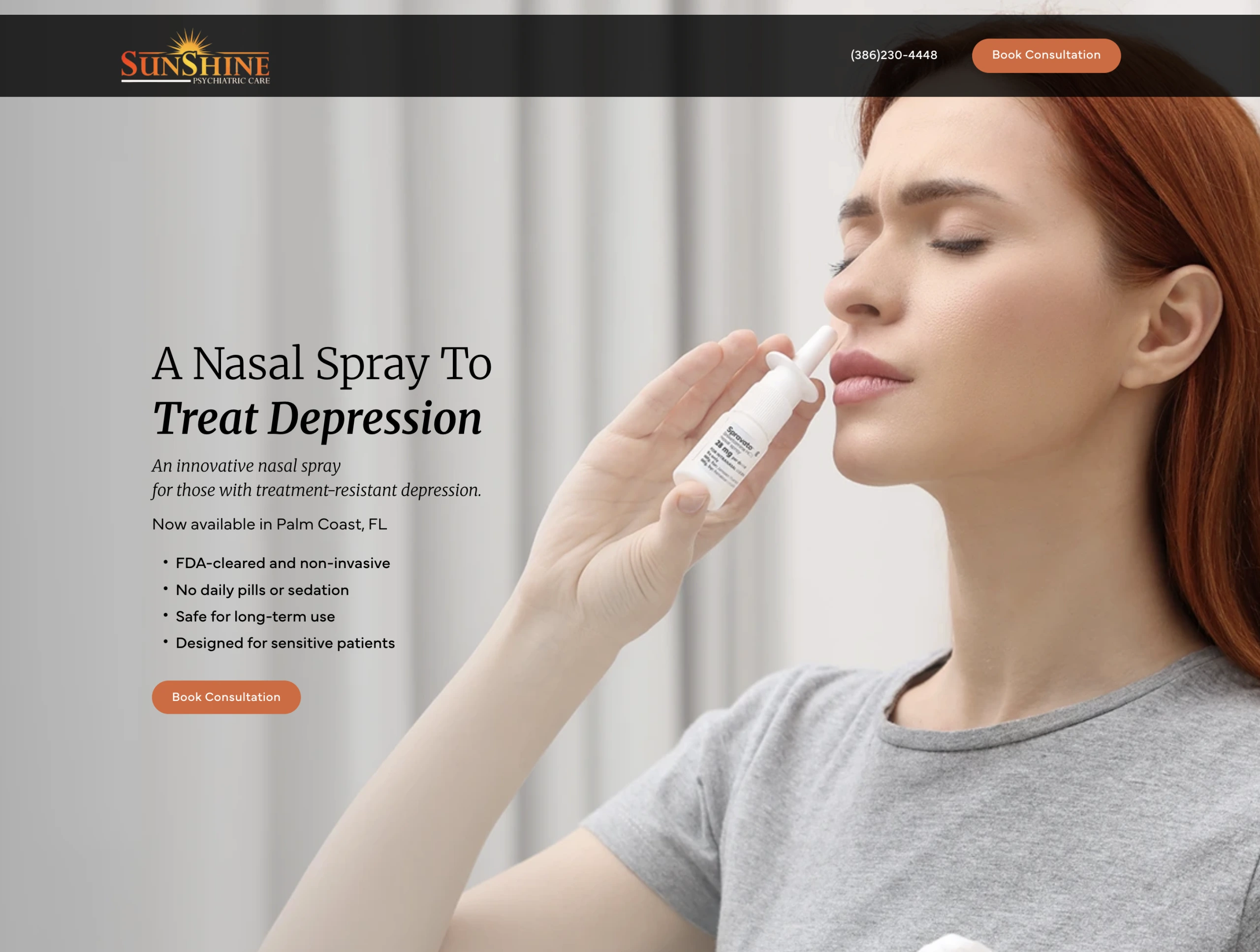
When an interventional psychiatric practice integrates SPRAVATO® (esketamine nasal spray) into its clinical workflow, the growth projections look incredibly promising. It represents an exploding market opportunity, it addresses the massive treatment-resistant depression (TRD) demographic, and unlike traditional IV Ketamine, it is widely covered by commercial insurance networks.
Naturally, the standard agency playbook says to take that new service line and dump a heavy portion of your budget into local Google PPC search campaigns.
At PilotPractice, we have managed performance marketing for dozens of mental health clinics across the country, testing every imaginable budget split, keyword configuration, and matching type. Through years of hard operational data, we have unlocked a truth that generic agencies refuse to admit: running unoptimized Google ads for spravato campaigns will completely stall your practice growth.
When we say standalone paid search fails to perform efficiently, we aren’t talking about a minor dip in performance. The cost-per-conversion for esketamine on Google is consistently 3 to 4 times higher than it is on Meta Ads. Running paid search for this specific medication is an inefficient use of marketing capital. To understand why, you must look at the fundamental difference between demand capture and demand creation.
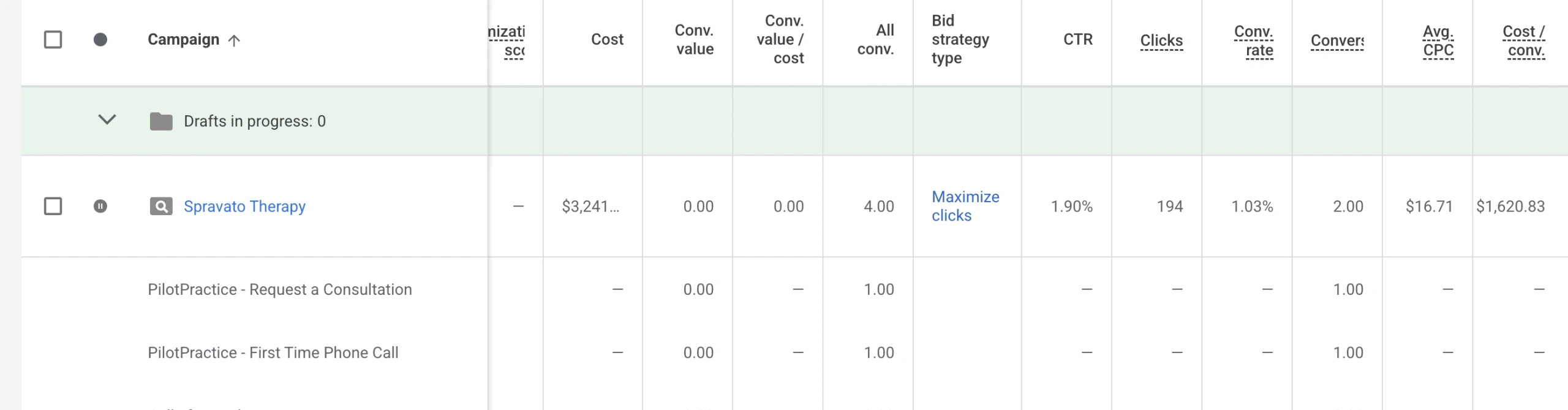

If you want to scale your Spravato volume, you must exit the text-only search landscape and move your budget over to Meta (Facebook & Instagram).
In our foundational framework, Spravato Marketing Strategy: Why Google Ads Fail, Meta Scales, and How to Clear the “Ketamine Stigma”, we broke down how to navigate the strict operational, REMS compliance, and drive-time radius restrictions that govern this service line. Meta is the ultimate engine for this because it allows for visual, video-first storytelling.
[Google Search Ads] ──> Demands Existing Knowledge ──> Empty Spravato Chairs (High CPC)
[Meta Video Ads] ──> Delivers Pattern-Interrupt ──> High-Volume Bookings (Low CPC)
You cannot properly educate a skeptical patient on a text-based search results page. On Meta, however, you can completely disrupt their feed with compassionate, educational content that tackles the stigma head-on:
- The Provider-Led Explainer: We have our clients film brief, warm, face-to-camera videos right inside their clinic. The provider holds the Spravato device, explains exactly how esketamine targets underactive brain pathways differently than an SSRI, and emphasizes that it is a safe, FDA-approved, in-office medical treatment covered by insurance.
- The Patient Testimonial: We integrate raw, real video stories of graduated patients talking about what it felt like when the depression fog finally lifted.
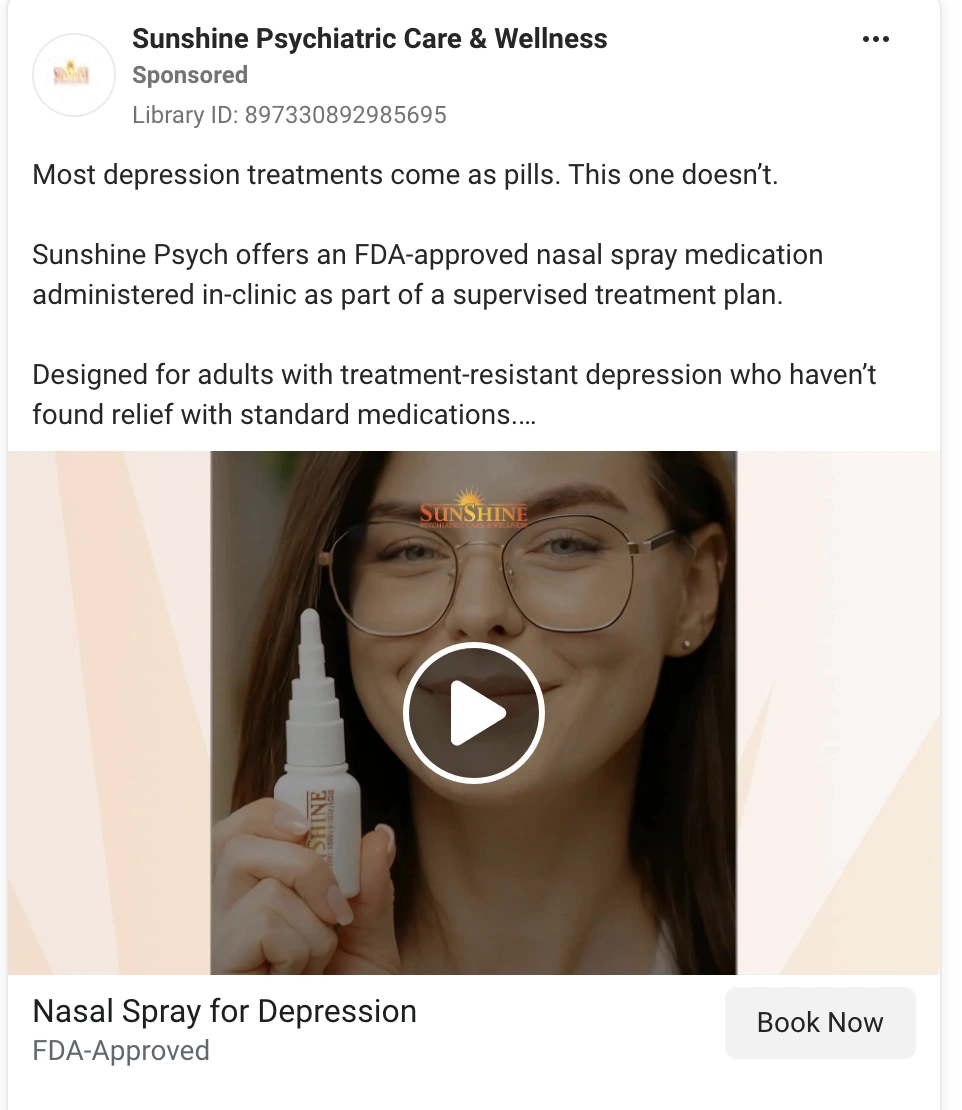
This video approach shifts the consumer mindset from fear to immediate hope, driving an influx of highly qualified leads at a fraction of the cost of an unoptimized Google click.
To be clear, we do not advise clinical owners to turn off Google Ads entirely. Paid search is still the absolute backbone of a modern mental health group practice. The secret lies in strategic service-to-channel allocation.
When we design a multi-modality patient acquisition system for our clients, we split the service lines across the platforms where they mathematically perform the best:
Service Line | Primary Ad Channel | Marketing Mechanism |
Spravato (Esketamine) | Meta Ads (100%) | Top-of-Funnel Education, Stigma De-escalation, Video Proof |
TMS Therapy | Meta & Google Ads Hybrid | Meta for awareness/education; Google to capture localized intent |
Medication Management | Google Ads (100%) | Hyper-local targeting for “psychiatrist near me” searchers |
Talk Therapy / Counseling | Google Ads (100%) | Local radius-fenced search intent to outpace national aggregators |
By migrating Spravato demand-generation entirely to Meta, you free up your Google Ads capital to bid heavily on high-converting, high-intent keywords for medication management and talk therapy. Those standard services bring patients right through your front door, allowing your Psychiatric Nurse Practitioners to evaluate them internally and naturally transition qualified, treatment-resistant candidates into your open Spravato chairs.
When these users land on your website from any platform, the architecture must instantly validate your ads and strip away financial anxiety. To see how to execute this level of design performance, look at our active client layout at Revival Psychiatry. They seamlessly blend an approachable visual aesthetic with clear insurance prominence and friction-free patient conversion pathways.
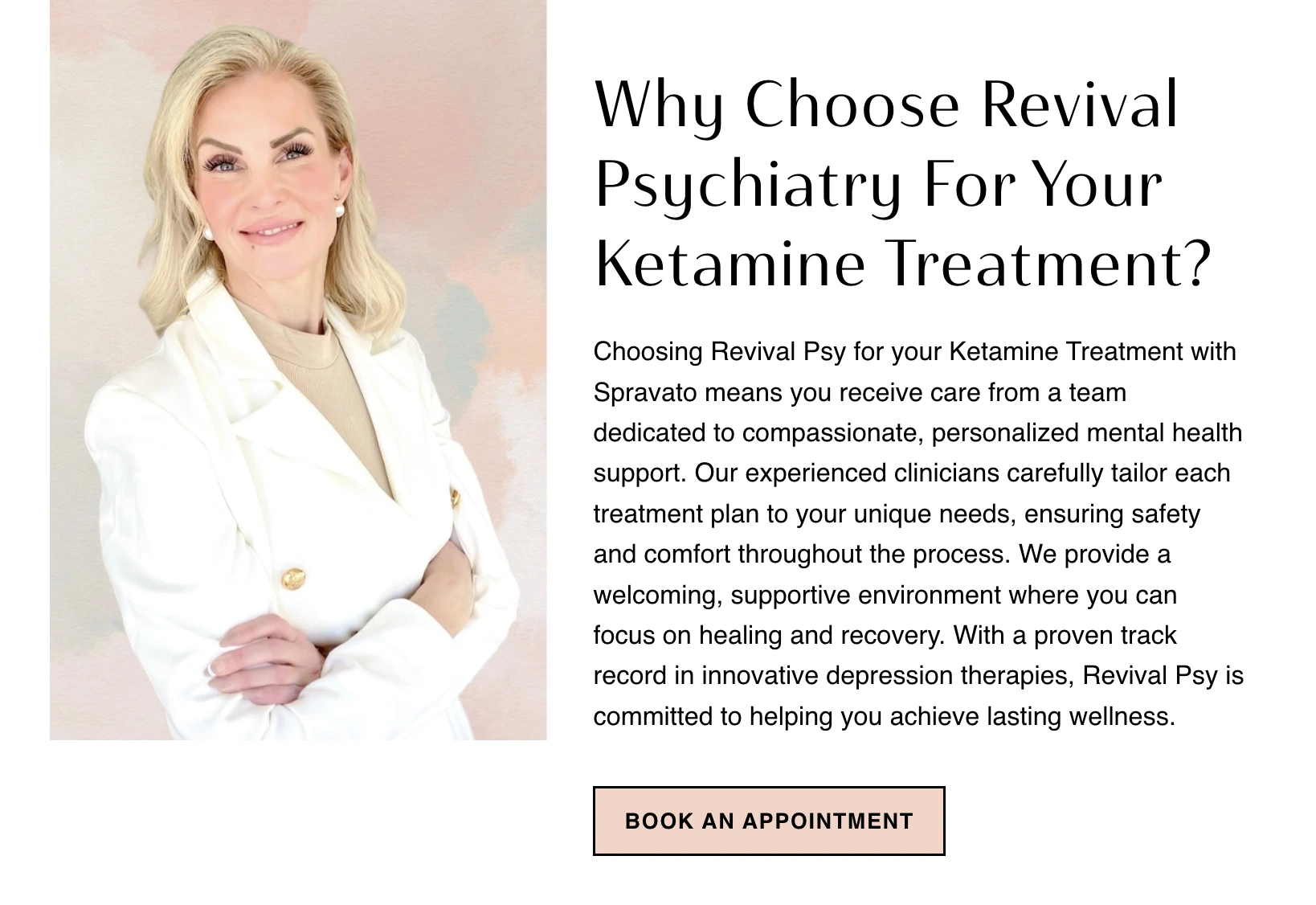
We don’t just specialize in click metrics; we engineer full-funnel patient acquisition systems that consistently outperform general healthcare benchmarks. By combining targeted paid social demand generation with conversion-tuned web design and automated intake pipelines, we protect your practice margins and keep your treatment calendars full.
If you want to view the real operational data, local ranking milestones, and scaling histories we have generated for independent psychiatric and mental health clinics nationwide using specialized multi-channel frameworks, explore our comprehensive project portfolio:
 Explore Our Mental Health Marketing Case Studies Portfolio

If your current marketing agency is treating esketamine like a standard medical keyword on Google without a specialized framework, they are driving up your acquisition costs and stalling your growth. You cannot capture search demand that hasn’t been actively created yet.
At PilotPractice, we build location-centric, operationally sound systems designed around real patient psychology. We deploy highly authentic, video-first Meta campaigns that break down the ketamine stigma, paired with precision google ads for spravato setups that catch high-intent search traffic without wasting your budget.
[Schedule a Free, Data-Driven Campaign Strategy Session with Our Team Today]