Published on May 22, 2026
Roy Kesserwani

Table of contents
If you are a psychiatric or interventional mental health practice owner looking to fill your active Transcranial Magnetic Stimulation (TMS) chairs, it is incredibly tempting to look at organic platforms as your primary solution. You see national healthcare brands posting daily reels, aesthetic infographics, and patient stories on Instagram or TikTok, and you think, “That is what my clinic needs to do to scale.”
Naturally, you begin searching for the best approach to setting up social media for TMS clinics. You look into hiring a dedicated content manager, or you prepare to spend dozens of administrative hours every single week filming videos and editing captions.
But here is our blunt, data-driven advice at PilotPractice: Stop. Do not spend a single dollar or an ounce of creative energy on organic social media posting for your clinic right now.
In our cornerstone framework, TMS Marketing Strategy: How to Overcome Generic Medical Ad Failures and Fill Your Treatment Chairs, we broke down the exact multi-channel ecosystem required to make an interventional practice profitable. We revealed how real growth requires a synchronized combination of hyper-local paid traffic and an empathetic, reassuring website experience.
Working with dozens of mental health practices, we have experienced firsthand that organic social media posting is an incredibly high-effort, low-yield patient acquisition strategy for advanced medical procedures. Most practices looking to launch a comprehensive social media for TMS campaign haven’t even covered the foundational basics of their local online search presence.
Before you launch an organic content calendar, you need to ruthlessly audit your core conversion engines. Here is the operational sequence you must maximize before social media ever makes financial sense.
In healthcare digital marketing, there is a strict sequence of execution. Organic social media content sits at the absolute top of the pyramid, meaning it is the last thing you should optimize, not the first. Why? Because the organic reach on modern platforms is at an all-time low. It is incredibly difficult to turn a casual scroller into a patient who commits to a 6-week clinical protocol.
Before you allocate resources to organic posting, you must be able to answer these four foundational performance questions with absolute certainty.
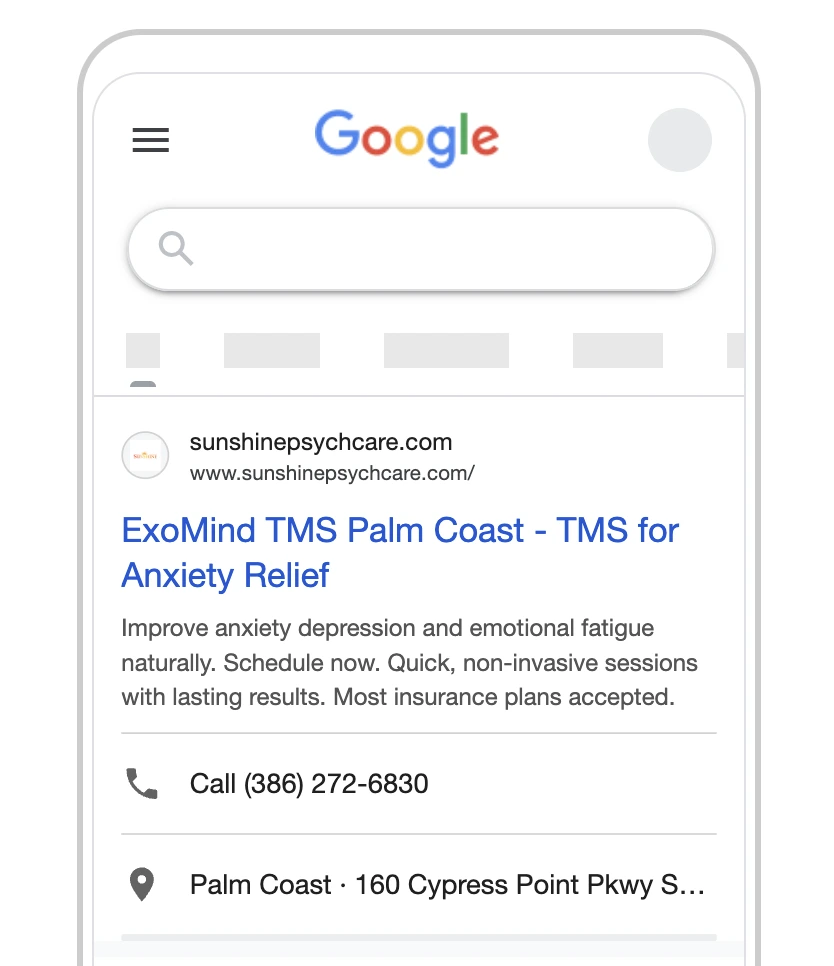
Are you capturing active, high-intent local demand? If someone in your 20-minute drive-time radius types “TMS therapy near me” or “treatment-resistant depression clinic” into Google right now, does your clinic appear at the top of the search results? If you haven’t maximized your budget on pure, transactional search terms, you are leaving the easiest patient wins on the table.
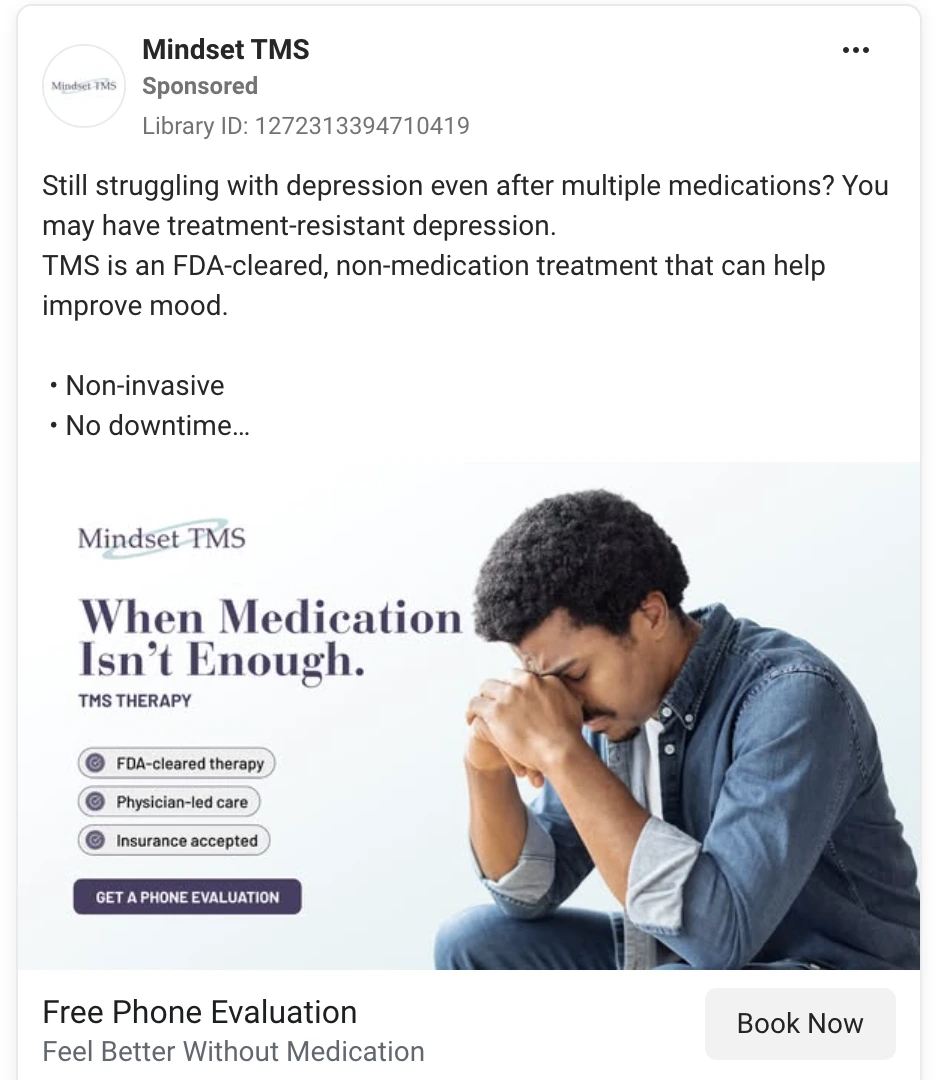
Running a paid, hyper-targeted ad campaign on Facebook and Instagram is completely different from basic organic posting grids. Paid tms meta ads allow you to target specific localized zip codes with high-budget, educational video assets that actively push patients into an insurance pre-qualification screener. What is your cost-per-lead on paid social? If you aren’t scaling your practice through paid conversion funnels, organic posts will not fill your chairs.
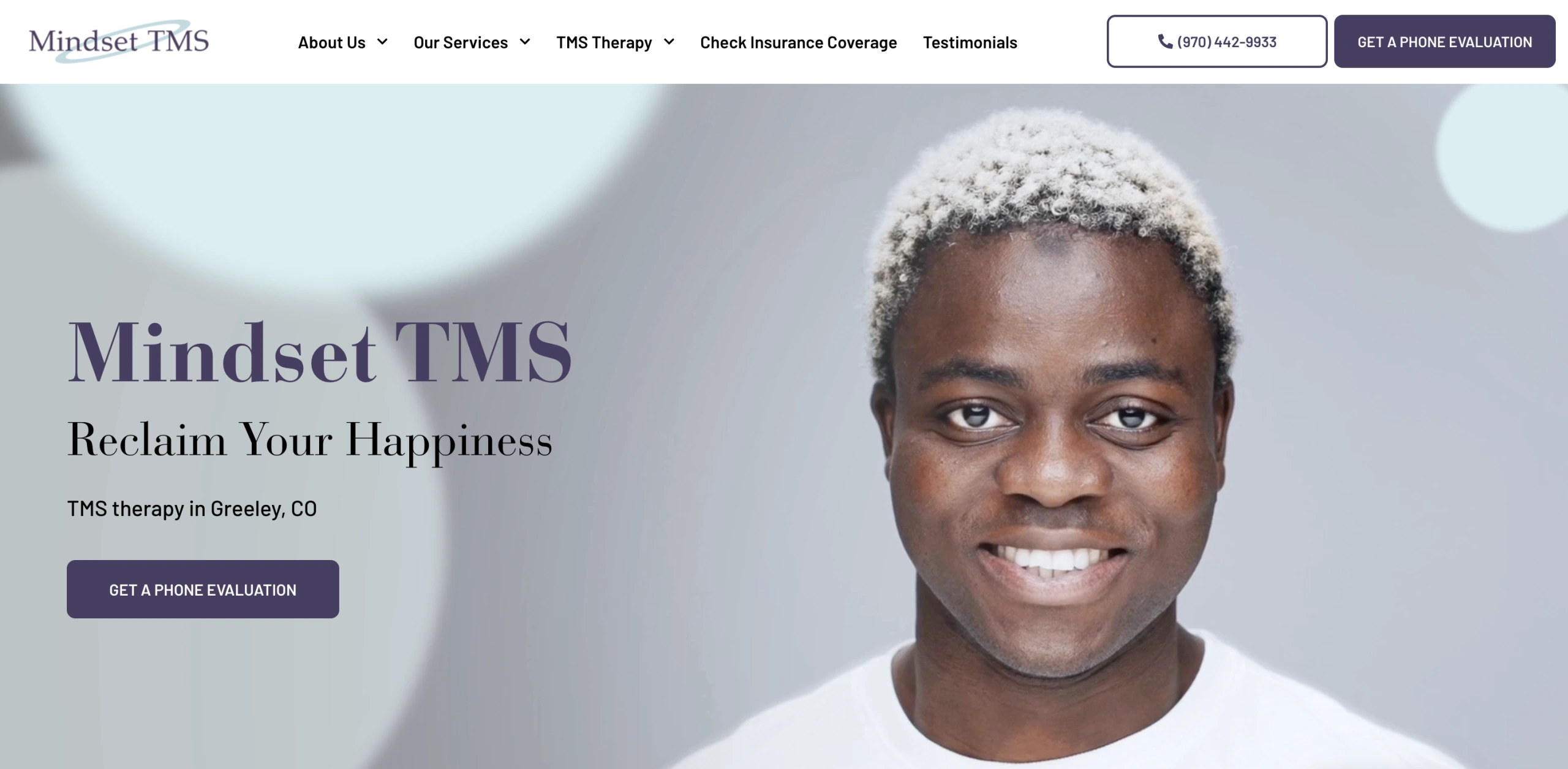
If your Google or Meta ads are working, where is that traffic landing? If a skeptical, anxious patient clicks your link and lands on a clinical, sterile, or confusing website, they will bounce immediately out of fear. Is your main website optimized with soft colors, clear insurance visibility, and real, patient-recorded video testimonials? If your website design isn’t structured to hold the patient’s hand and de-escalate their fear of the technology, your marketing engine has a massive leak.
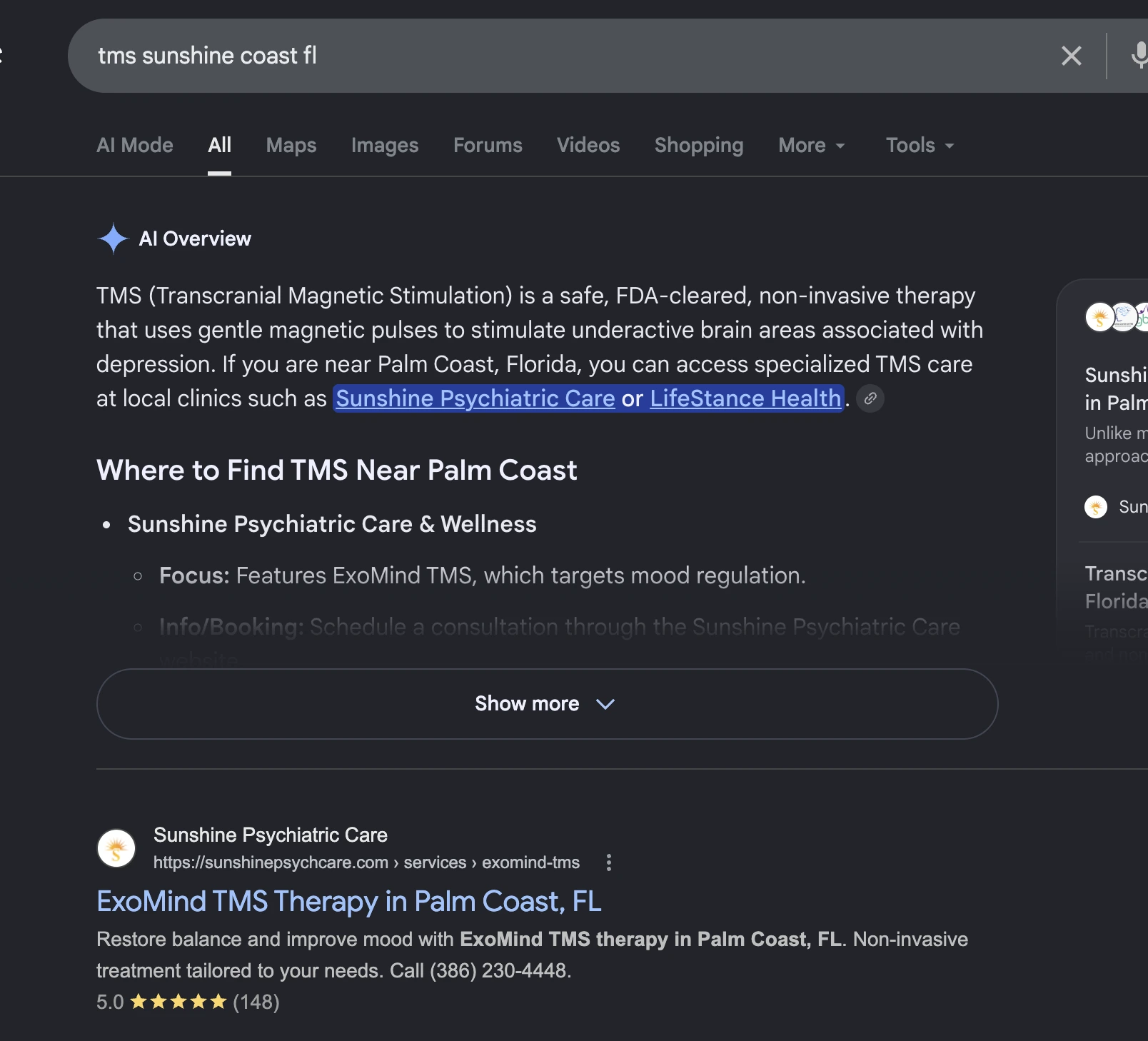
When a local patient gets a recommendation for your clinic, the very first thing they do is search your practice name on Google Maps. Is your local search engine optimization completely locked down? Do you have dedicated multi-city landing pages mapped in your footer to capture neighboring suburbs? Your local search presence drives far more high-trust phone calls than an Instagram grid ever will.
Let’s look at the operational math behind a standard organic social media campaign. To run an active channel, your internal team must continuously brainstorm content ideas, film clinicians, edit videos, design graphic carousels, engage with comments, and keep up with changing algorithms.
This requires dozens of administrative hours every single month. And what is the actual return on investment?
Because of how modern social media algorithms work, your organic posts are primarily shown only to people who already follow your page: your existing patients, your personal friends, your internal staff, and your direct competitors. It rarely ever reaches the local, undiagnosed, treatment-resistant depression patient sitting 15 minutes away from your clinic who has the exact commercial insurance network required to qualify for care.
Organic social media is an excellent tool for long-term brand validation, but it is an incredibly inefficient tool for immediate patient acquisition.
We are not saying you should never post on social media. A vibrant, authentic social profile adds an undeniable layer of human warmth to your practice over time. But it must be funded by the retained earnings generated by your foundational marketing assets.
Once your Google Ads for TMS are running at a predictable, low cost-per-conversion, your paid Meta funnels are consistently filling your intake pipeline, your website is converted into a high-trust sanctuary, and your chairs are mostly occupied, then, and only then, should you expand your strategy for social media for tms clinics.
At that stage, social media is no longer a stressful mechanism used to try and cover your monthly device lease payments; it is a passive asset used to showcase your clinic’s culture, celebrate your patients’ graduation days, and solidify your position as the top interventional psychiatric authority in your region.
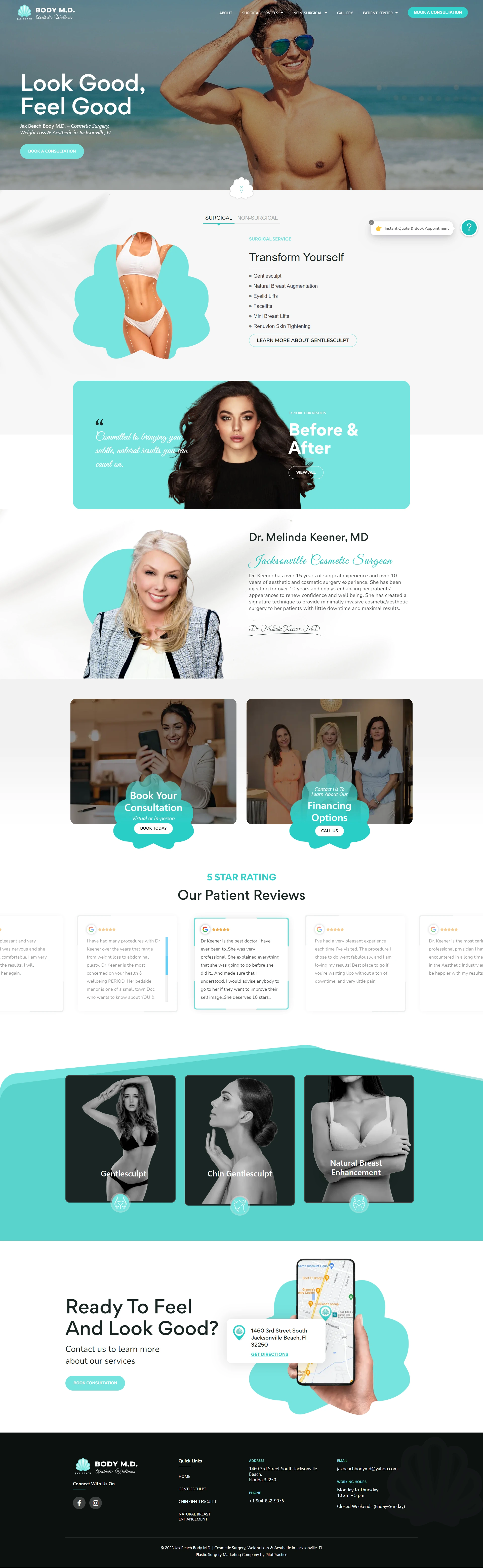
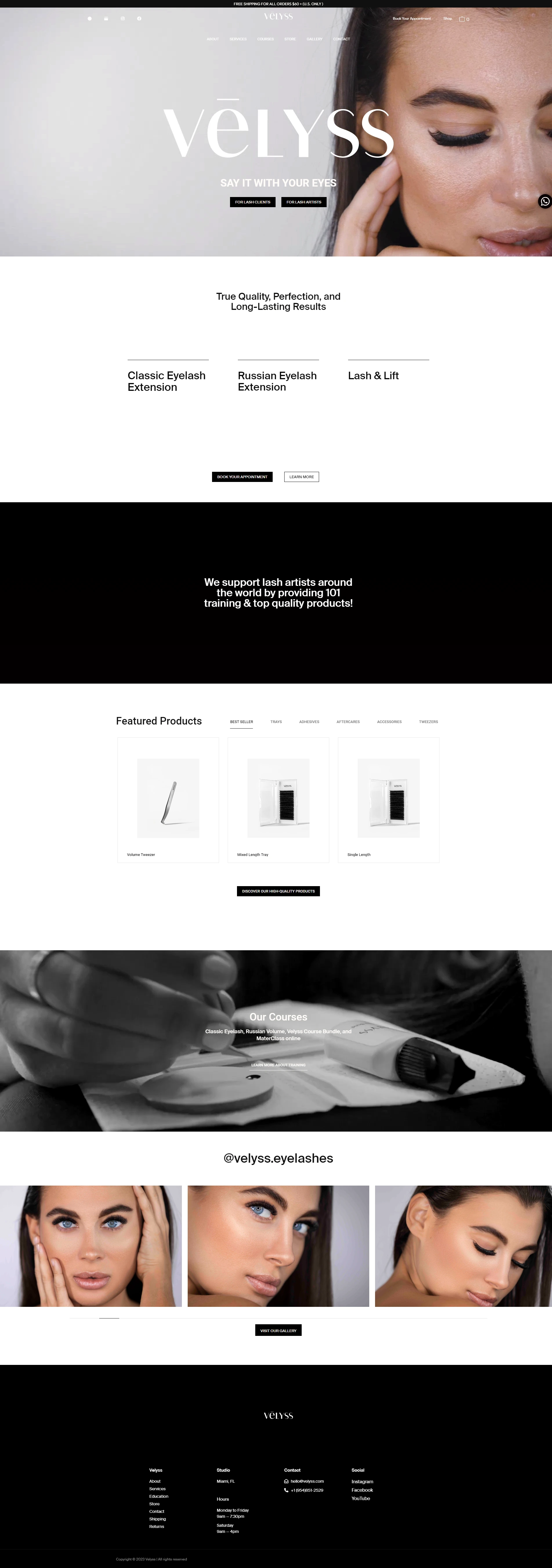
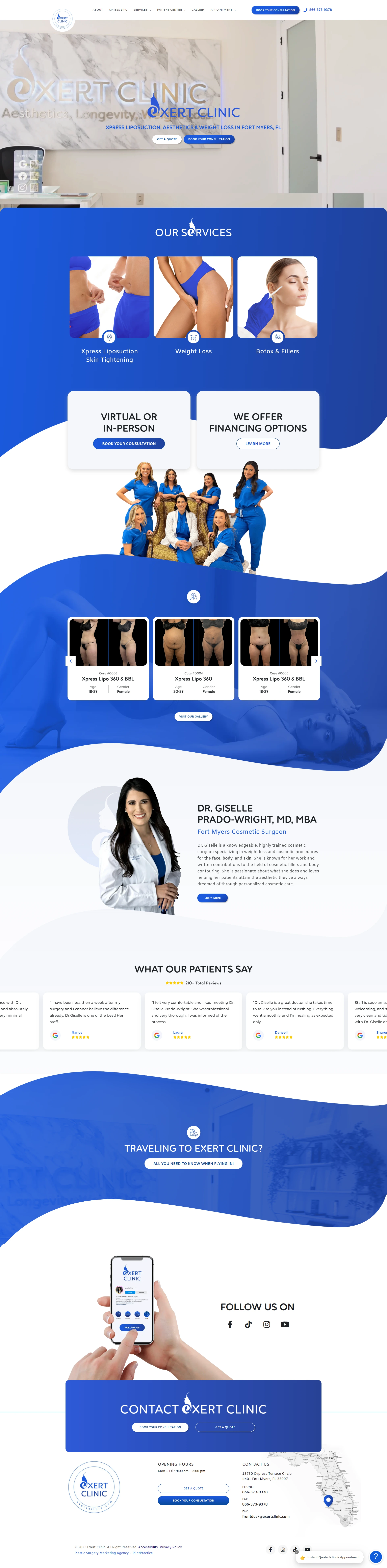
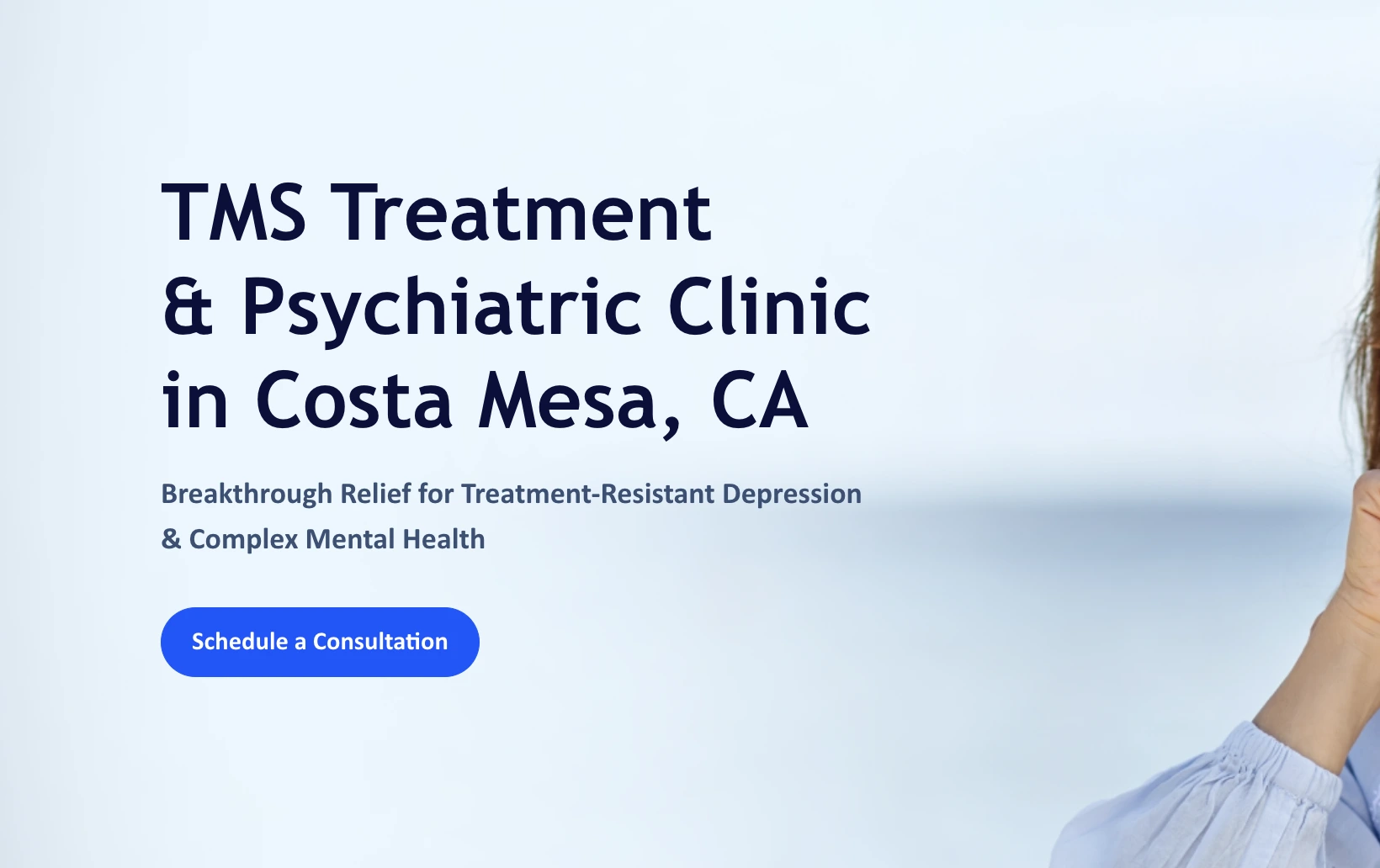
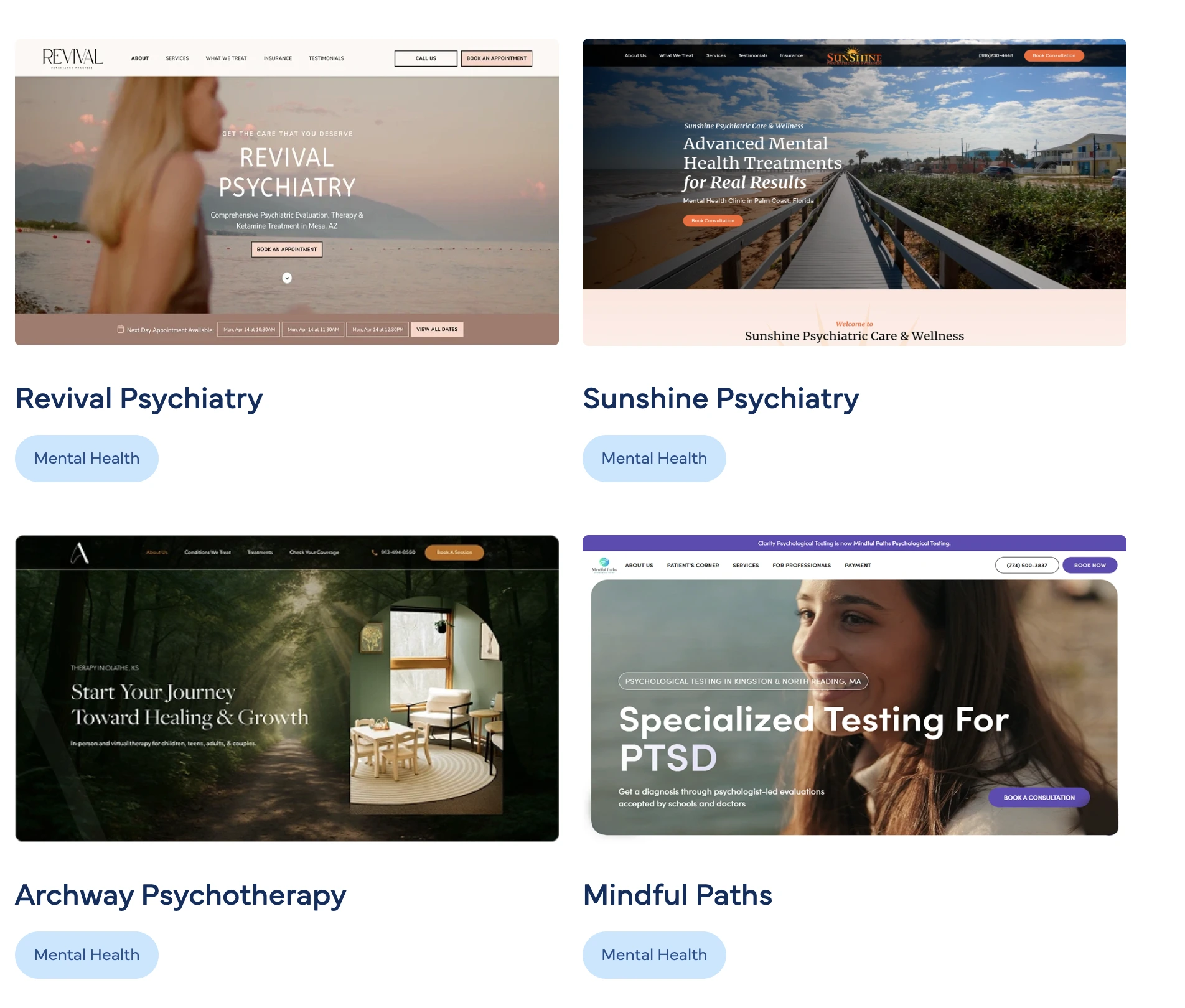
To see exactly how we align foundational, high-conversion web architectures before layering on broader brand trust, review these live production layouts running for our active clients:
We don’t just specialize in organic grids; we engineer full-funnel patient pipelines that consistently outperform industry benchmarks. By aligning precision paid keyword strategies with conversion-tuned web design and backend intake automation, we keep interventional schedules consistently full.
If you want to view the real operational data, local ranking milestones, and scaling histories we have generated for independent psychiatric and mental health clinics nationwide using specialized frameworks, explore our comprehensive project portfolio:
Explore Our Mental Health Marketing Case Studies Portfolio
Stop letting generic agencies sell you low-converting social media posting packages while your core patient-acquisition systems remain broken. At PilotPractice, we focus on operational realities. We build and secure your high-intent advertising pipelines first, ensuring your clinic builds predictable cash flow before expanding into top-of-funnel brand plays.
[Schedule a Free, Operational Practice Strategy Session with Our Team Today]


Roy Kesserwani
Roy combines operational and software engineering expertise to develop innovative, streamlined solutions that support brand growth. His strategic thinking and problem-solving skills help medical practices establish strong systems and processes that build trust and loyalty.
Erin Jones, FNP, PMHNP
Founder and Psychiatric
Nurse Practitioner

Revival Psychiatry - Mesa, AZ
Enterprise
Private Practice
Let’s Discuss Your Growth