Is Wix / Squarespace HIPAA Compliant for a Medical Practice Website? (2026)
The enforcement era has settled the question of whether website plumbing "counts": University of Rochester Medical Center paid $2.85M and Froedtert Health paid $2M over patient data moving through their web and marketing stacks. So when a practice builds its site on the platform every YouTube ad recommends, the question is worth asking precisely: is Wix HIPAA compliant? Is Squarespace?
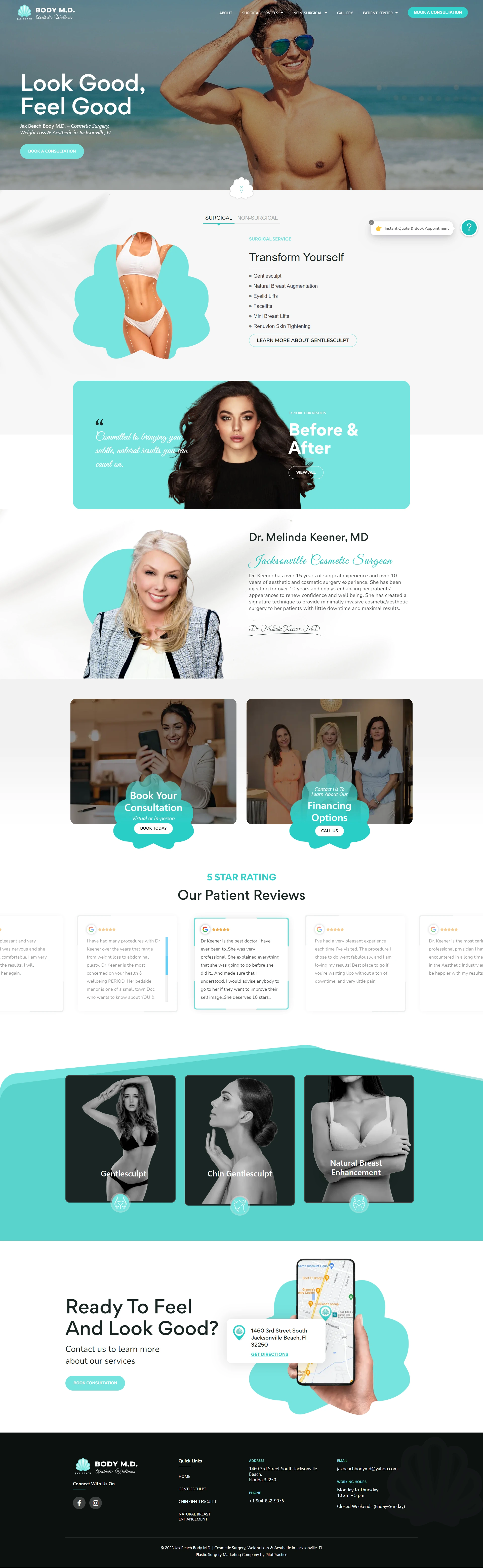
The short answer: No. Neither Wix nor Squarespace will sign a Business Associate Agreement for a standard website plan, which means their built-in forms, scheduling, chat, and member features cannot legally touch patient data. A brochure-only site on either platform can be fine — but almost no practice site stays brochure-only, and the platforms make it one drag-and-drop away from a violation.
Why the BAA is the whole ballgame
HIPAA's rule is mechanical: any vendor that creates, receives, maintains, or transmits PHI on your behalf is a business associate and must sign a BAA. A website builder that stores your form submissions and appointment bookings is maintaining PHI — full stop.
Wix and Squarespace are consumer website platforms. Their standard terms don't offer a BAA, and their documentation tells health businesses not to collect sensitive health information through the platform. That's not a knock on either company — they're excellent at what they're built for. What they're built for isn't holding medical data.
So the compliance math for a practice site on Wix/Squarespace:
- Static pages: fine. Your services, providers, hours, and location on a Squarespace page involve no PHI. A pure brochure site is not a violation.
- The native contact form: violation. The moment a visitor submits "name + phone + I'd like a consult for my back pain," Wix/Squarespace is storing PHI with no BAA. Impermissible disclosure, on every submission.
- Wix Bookings / Squarespace Scheduling (Acuity): violation. An appointment is PHI by definition — person, provider, date, reason. Stored on a non-BAA platform.
- Native chat, member areas, email campaigns: same problem, compounded by the analytics and marketing trackers these platforms embed by default, which is its own leak vector.
And here's the practical trap: the platform's entire design pressure pushes you toward violating. The form block is right there. Scheduling is one toggle. A front-desk hire "improving the website" on a Tuesday can move you from compliant brochure to daily violations without anyone making a decision.
"But we'll just bolt on a HIPAA form tool"
You can embed a BAA-covered third-party form or scheduler in an iframe on a Wix/Squarespace page — that's a real pattern, and it's the right shape of solution (the site never stores the data). But on these platforms you're still left with: default trackers you can't fully control firing on the pages around the embed, no server-side control for compliant analytics or ad attribution, styling and mobile-UX fights inside iframes you don't own, and a monthly stack of separate tools that don't share a CRM. You end up paying platform simplicity's price without keeping its benefit.
What we build instead: hardened WordPress with the PHI kept out
The architecture that actually works for medical practices isn't "find a website builder that signs a BAA." It's a website that never holds PHI at all, in front of a platform that does — under a BAA. Ours looks like this (full build documented here):
- Booking is iframed off WordPress entirely. Our EHR-integrated booking widget runs from the compliant platform's own origin; intake and appointment data never touch the WordPress database. The appointment writes into the practice's actual EHR (30+ integrations), not a standalone calendar.
- Forms POST server-to-server to app.pilotpractice.com with a per-site bearer token — entries are never stored in WordPress (the full architecture).
- The site itself is hardened like it matters, because it does:
- Fail-closed, self-healing two-factor authentication on admin access — if the 2FA layer is tampered with or degrades, access closes rather than opens, and the enforcement restores itself.
- A nightly allow-list malware scanner that flags any file not on the known-good list — an approach that has caught attackers planting backdoors disguised as allow-listed files. Signature-based scanners miss what they've never seen; an allow-list can't.
- Off-site backups to Google Cloud Storage, so recovery never depends on the compromised host.
- Fleet-wide reCAPTCHA v3 on forms, rolled out with automatic revert if a deployment misbehaves — spam protection that can't silently break form submissions.
- Patient before/after galleries noindexed by default, so clinical photos never leak into Google Images (why that matters).
The principle: your marketing site is a doorway. Everything sensitive flows through it into a BAA-covered, SOC 2-audited platform — never into it.
See it live on your own practice
EHR-integrated booking, HIPAA-safe tracking, and marketing that reports in kept appointments — in one platform.Book a Demo
The ungated checklist: is your current site a violation?
Ten minutes, no email gate.
- What platform is your site on? Wix, Squarespace, GoDaddy Builder, Weebly — assume no BAA until you hold a signed one.
- Submit a test through your contact form. Where did it land? If the answer is "the platform's inbox/entries," that's stored PHI with no BAA.
- Check for native scheduling (Wix Bookings, Acuity). Every booking on it is a disclosure.
- Check for native chat and email marketing connected to patient inquiries.
- Inventory the trackers the platform injects — analytics, pixels, session tools — especially on contact and booking pages.
- Ask the platform for a BAA in writing. The "no" is your documentation that the site must change.
- Check where old submissions live — export/delete workflows matter for the data already collected.
- Check your host and DNS/CDN layers too if you're on WordPress — the builder isn't the only vendor in the chain.
- Confirm nothing patient-facing stores to the site's own database — forms, booking, uploads.
- Re-test after any fix with a real submission, and verify the platform's own storage stayed empty.
Verdict
Is Wix or Squarespace HIPAA compliant? No — no BAA on standard plans means their forms, scheduling, and chat cannot take patient data, and a practice site that uses any of them is violating daily. A brochure-only site survives on a technicality, but it's a technicality one form block away from breaking. Medical practices belong on infrastructure where the website holds nothing and a BAA-covered platform holds everything.
The do-marketing answer
The website platform question is really a growth question in disguise: the practices winning their markets have sites that do things — real-time EHR booking, fast intake, compliant analytics and ad attribution, review engines — and none of that runs on a consumer builder. Migrate once, to a stack built for healthcare, and every channel gets easier.
That's what PilotPractice does end to end: we build and harden the site, wire the server-to-server intake and EHR-integrated booking, sign the BAA, and run the marketing — SOC 2 and HIPAA controls documented at trust.pilotpractice.com, full playbook in the 2026 HIPAA-compliant marketing guide.
Find out what your current site is leaking first: run the free PHI scanner — it checks your pages for trackers and form exposure in about a minute, no email gate (or do the deeper self-audit). Then book a demo and we'll map your migration.
PilotPractice security & compliance documentation: trust.pilotpractice.com
See it live on your own practice
EHR-integrated booking, HIPAA-safe tracking, and marketing that reports in kept appointments — in one platform.Book a Demo